Real Maestranza de Caballeria de Granada and Its Bull Licence
Seven years resident in Granada. Specialist in Nasrid architecture, Al-Andalus history, and Andalusian walking routes.
In this article
Jump to a section
Why a city of nobles copied Seville
The riding club the Crown tried to turn into cavalry
Explore nearby · Monument
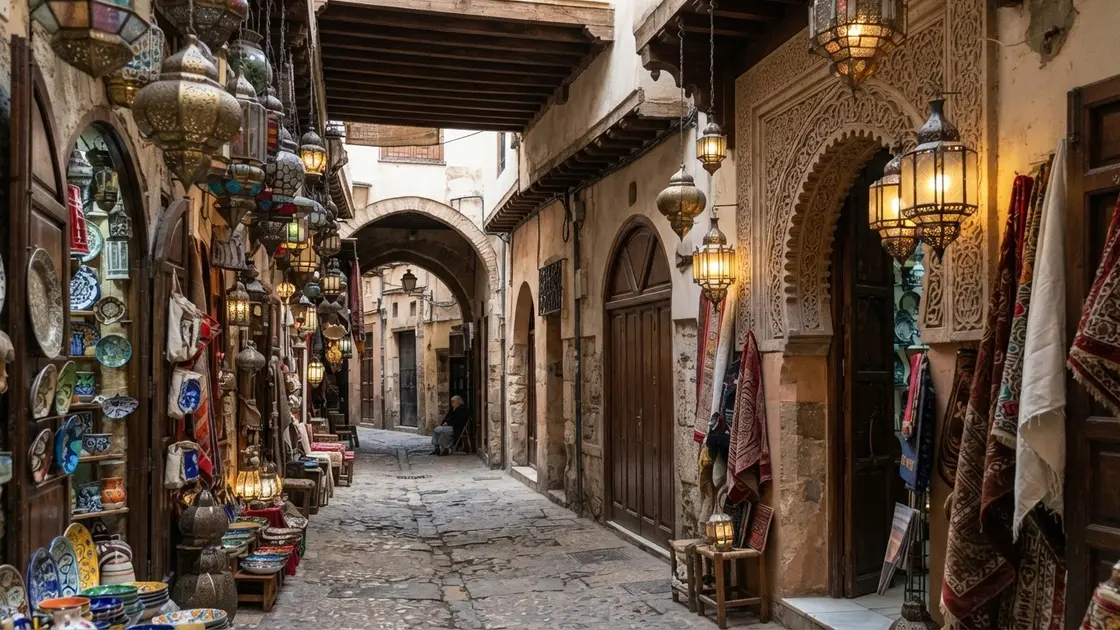
Alcaicería
Granada's historic silk market, rebuilt after 1843 in Neo-Moorish style. Small shops sell ceramics, taracea woodwork, spices, and leather goods. Free to enter.
What the 1739 and 1741 grants changed
- 1739, cedula of 19 February: the hermandad became the Real cuerpo de la Maestranza, and the corporation and its members received privileged jurisdiction.[16]
- 1741, cedula of 4 September: a royal infante became honorary director with the title Hermano Mayor, and Philip, Duke of Parma, was the first.[17]
- 1748, cedula of 13 September: after suspicion of the fuero militar held by the Seville and Granada maestranzas, it was narrowed to the corporation and to members resident in the seat city.[18]
From a wooden ring on the Genil to the Plaza del Triunfo
Deep dive · Article
1066 Granada Massacre: When the Jewish Golden Age Ended in a Day
The 1066 Granada massacre killed Joseph ha-Nagid and thousands of the city's Jews in a single day, ending three decades of Jewish power under Samuel ha-Nagid.
Opening day and the rules of the ring
Bans, novilladas and the fire
What the order is today and where it sits
Recommended tours
Tours are selected for quality, not commission. We earn a small fee if you book — at no extra cost to you.




Check before you go
Frequently asked questions
What is the Real Maestranza de Caballeria de Granada?
When was the Real Maestranza de Granada founded and by whom?
What does Nuestra Señora del Triunfo mean for the Real Maestranza?
Did the Real Maestranza de Granada run the city's bullring?
Can you visit the Real Maestranza de Caballeria de Granada?
How many royal maestranzas are there in Spain?
Who is the Hermano Mayor of the Real Maestranza de Granada?
Sources
41 references Show Hide
- www2.ual.es (opens in a new tab)
“la de Granada fracasó como institución paramilitar que pudiera servir a la Corona como fuerza de caballería de reserva y solo sirvió los intereses de la propia nobleza.”
- www2.ual.es (opens in a new tab)
“se concedió a la corporación la celebración anual de “dos festejos de toros de vara larga”, en un lugar extramuros de la ciudad, para financiarse con sus fondos.”
- dialnet.unirioja.es (opens in a new tab)
“destrucción por un incendio en 1876”
- granada.org (opens in a new tab)
“Requiere reserva previa en el teléfono 958 02 78 05”
- rmcg.es — Historia (opens in a new tab)
“La Real Maestranza de Caballería de Granada fue fundada el 12 de enero de 1686, por privilegio del rey Carlos II, tras acuerdo del Cabildo municipal adoptado el día anterior.”
- www2.ual.es (opens in a new tab)
“En 1686 nació la Maestranza de Granada a imitación de la de Sevilla.”
- www2.ual.es (opens in a new tab)
“Un grupo de veinticinco nobles granadinos, liderados por Pedro Verdugo y Albornoz, caballero de Alcántara, y por el alcaide de la Alhambra, Blas Manuel de Paz, autorizados por el corregidor, conde de Torrepalma”
- www2.ual.es (opens in a new tab)
“Para ser admitido como maestrante era imprescindible, además de ser noble, conocer el arte de la equitación y poseer al menos un caballo y una serie de pertrechos”
- www2.ual.es (opens in a new tab)
“Su emblema inicial representa dos caballos y los pertrechos necesarios para éstos y su lema, Pro republica est dum ludere videmur, hace alusión a estos juegos.”
- censoarchivos.cultura.gob.es (opens in a new tab)
“Las constituciones de la Maestranza fueron impresas en marzo de 1687. Estos Estatutos no fueron sometidos a la aprobación real, por lo que no tenían carácter oficial.”
- rmcg.es — Historia (opens in a new tab)
“Se nombró por Titular Patrona a María Santísima, Nuestra Señora, en el Soberano Misterio de su Concepción Inmaculada, con su advocación de Nuestra Señora del Triunfo.”
- www2.ual.es (opens in a new tab)
“Los ejercicios ecuestres eran su actividad exclusiva, se contrató un profesor de equitación y anualmente se realizaban funciones públicas en el campo del Triunfo o en las carreras del Genil y del Darro”
- www2.ual.es (opens in a new tab)
“El proyecto incluyó a las Maestranzas, que fueron consideradas una fuerza de caballería de reserva, que podía contribuir al fomento de la ganadería caballar.”
- www2.ual.es (opens in a new tab)
“En 1748 los maestrantes granadinos contribuyeron a la represión de un motín popular surgido en Granada por la carestía del pan.”
- www2.ual.es (opens in a new tab)
“Creó una academia de matemáticas que funcionó con desigual fortuna a partir de 1764”
- www2.ual.es (opens in a new tab)
“En 1739 se concederían los privilegios más importantes (real cédula 19-02): dejó de llamarse “hermandad” para titularse “Real cuerpo de la Maestranza” y la corporación y sus miembros obtuvieron jurisdicción privilegiada.”
- www2.ual.es (opens in a new tab)
“Dos años más tarde (real cédula 4-09-1741) se concedía que su director honorífico fuera un infante real, con el título de hermano mayor, siendo nombrado como tal el infante don Felipe, duque de Parma.”
- www2.ual.es (opens in a new tab)
“Ante los recelos provocados por el fuero militar de las Maestranzas de Sevilla y Granada, más tarde se restringió éste a la corporación y a los maestrantes residentes en las ciudades sede”
- dialnet.unirioja.es (opens in a new tab)
“Antes de esta concesión la Maestranza de Granada no había prestado demasiada atención a la fiesta de toros”
- rmcg.es — Historia (opens in a new tab)
“Don Felipe de Borbón, Duque de Parma (1741-1765), a Don Gabriel de Borbón (1765-1788), Don Carlos María Isidro de Borbón (1788- 1834).”
- rmcg.es — Preambulo (opens in a new tab)
“Esta conexión, hoy simbolizada por el hecho de que S.M. el Rey Felipe VI (q. D. g.) ostente el título de Hermano Mayor, forma parte esencial de su identidad.”
- www2.ual.es (opens in a new tab)
“Inicialmente los festejos se celebraban en la Carrera del Genil, frente al Humilladero, en una plaza de madera desmontable.”
- www2.ual.es (opens in a new tab)
“en 1751 se alcanzó una concordia con el ayuntamiento y ambas instituciones se turnaron en la celebración de los festejos, pasando la Maestranza a celebrar cuatro corridas cada dos años.”
- www2.ual.es (opens in a new tab)
“En 1763 la Maestranza decidió construir una plaza permanente como las de Sevilla y Madrid.”
- dialnet.unirioja.es (opens in a new tab)
“La plaza debería construirse, según el permiso regio, extramuros de la ciudad y sin exceder los 200.000 reales de costo”
- www2.ual.es (opens in a new tab)
“La construcción de la plaza y su ubicación en un extremo del Campo del Triunfo, junto al barrio de San Lázaro, originó fuertes tensiones locales con los ministros de la Chancillería”
- dialnet.unirioja.es (opens in a new tab)
“Pese a todo ello la Maestranza celebró las primeras corridas en la plaza del Triunfo en septiembre de 1768.”
- dialnet.unirioja.es (opens in a new tab)
“En la primera corrida celebrada en la Plaza del Triunfo se lidiaron once toros de D. Pablo Rivero de Jerez”
- www2.ual.es (opens in a new tab)
“Los diestros, picadores de vara larga y matadores de a pie, llevaban casaca azul con galones de plata, los colores y divisa de la Maestranza.”
- dialnet.unirioja.es (opens in a new tab)
“Por la mañana se lidiaba un número menor de toros, generalmente cuatro, y por la tarde solía lidiarse el doble”
- www2.ual.es (opens in a new tab)
“La prohibición de corridas de muerte en 1778 y 1785 solo afectó parcialmente a la Maestranza de Granada, que, haciendo valer sus derechos, consiguió conmutar las corridas por novilladas”
- www2.ual.es (opens in a new tab)
“Tras la invasión napoleónica se produjo su abandono progresivo, en beneficio de otros festejos sociales y actividades benéficas.”
- rmcg.es — Historia (opens in a new tab)
“La Real Maestranza de Caballería de Granada centra sus actividades en apoyar y estrechar cada día más los lazos con la CORONA, en fomentar y ayudar en actividades culturales y sociales”
- rmcg.es — Corporacion (opens in a new tab)
“—Ronda, Sevilla, Granada, Valencia y Zaragoza—”
- graorivas.es (opens in a new tab)
“El acto central se celebró en el Real Monasterio de San Jerónimo, presidido por Su Majestad el Rey Felipe VI”
- rmcg.es — Corporacion (opens in a new tab)
“La Casa de la Real Corporación de la Real Maestranza de Caballería de Granada se encuentra en la calle Laurel de las Tablas, n.º 12, en el histórico barrio de La Trinidad.”
- corpusgranada.com (opens in a new tab)
“Este coso taurino costó más de 200.000 reales, tuvo un ruedo circular y fue fabricado en madera, aunque los cimientos y la portada se realizaron en piedra.”
- dialnet.unirioja.es (opens in a new tab)
“todo parece indicar que las obras excedieron al costo fijado por el permiso regio”
- corpusgranada.com (opens in a new tab)
“El 10 de Septiembre de 1876 tuvo lugar un incendio que arruinó por completo la estructura.”
- miradordeatarfe.es (opens in a new tab)
“Hasta que en 1876, ésta quedó reducida a cenizas, destruida por un voraz incendio.”
- www2.ual.es (opens in a new tab)
“La plaza estable de madera, construida por la Maestranza en 1768, fue la única existente en Granada, hasta su destrucción por un incendio en 1874.”