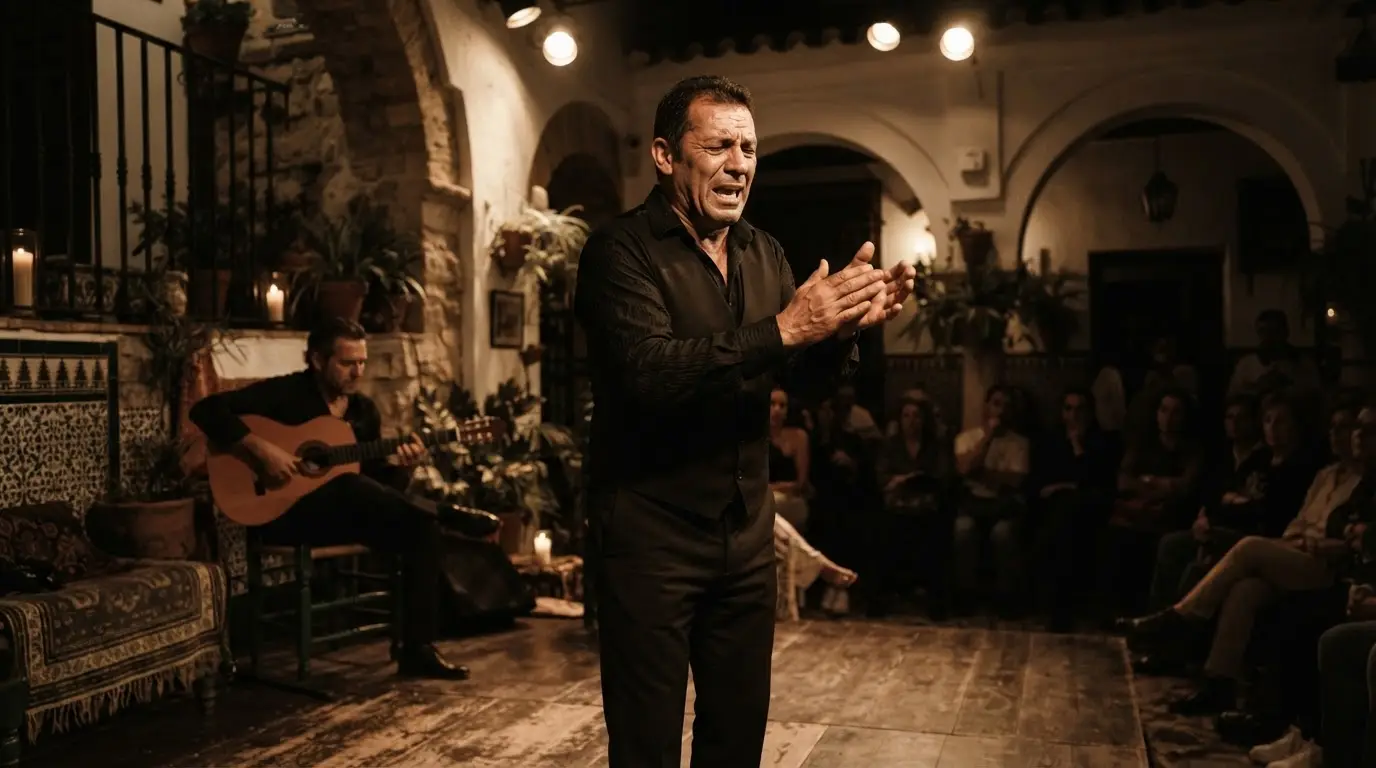
The Albaicín boy who became a cantaor without a school
Enrique Morente Cotelo was born in Granada on 25 December 1942 and died in Madrid on 13 December 2010 — sixty-seven years bookended by dates twelve days apart on the calendar.[1] In between, he spent five decades doing something flamenco singers weren't supposed to do: refuse to stay inside the tradition he was born into.
He grew up in the Albaicín, Granada's old Moorish quarter climbing the hill above the Darro, and his life was tied to singing before he had any say in the matter. As a boy he was a seise, a choirboy soloist, at the cathedral in his native city.[4] Cante wasn't a hobby he discovered as a teenager. It was simply how his life started.
Explore · Neighbourhood
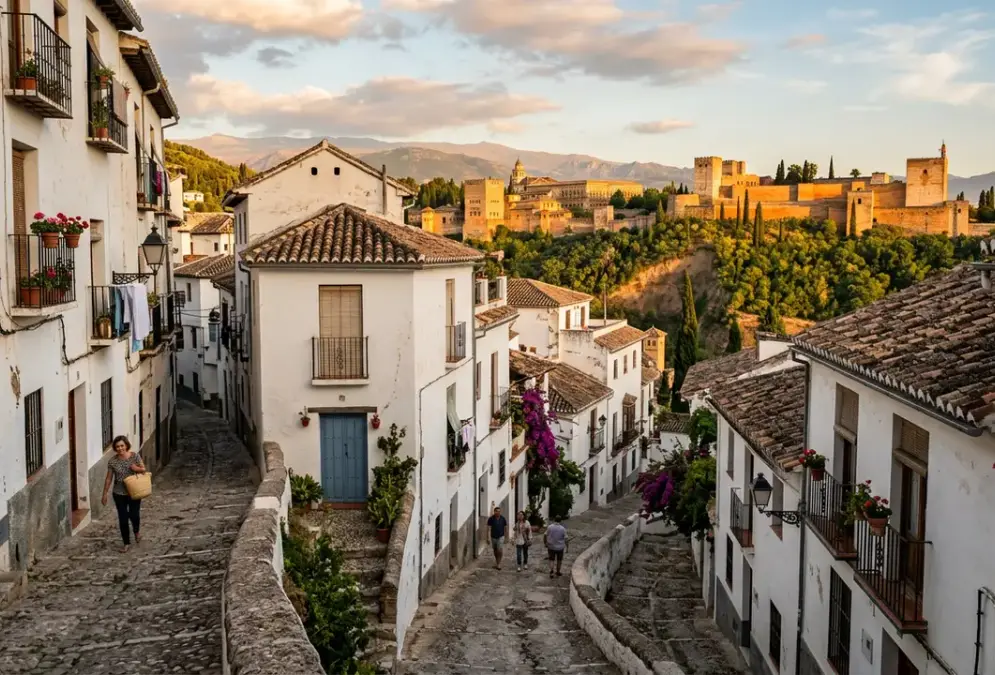
Albaicín
Granada's oldest neighbourhood: the Albaicín holds a UNESCO-listed maze of whitewashed lanes, Moorish cármenes, and the finest Alhambra views in the city.
The Albaicín he grew up in has never needed defending as flamenco territory. It sits within sight of the Alhambra, across the Darro from the cave quarter of Sacromonte, in a maze of whitewashed cármenes where a voice carries between courtyards on a still night. Morente absorbed that atmosphere as a child, then at eighteen walked away from it — which is exactly the tension that shaped everything he made afterward: a singer permanently rooted in Granada's oldest quarter, who refused to let that rootedness become a cage.
At eighteen he left for Madrid, and almost immediately unsettled a scene built on inherited regional lineage: a singer was usually understood as belonging to Cádiz, or Jerez, or Triana, carrying that school's particular cante. Morente did something else. Critics and flamencologists noted his curiosity and his appetite for absorbing the hardest, most demanding song forms regardless of which family or region they came from.[5] He wasn't apprenticing under one master's style. He was declining to pick a side.
His debut record, Cante Flamenco, appeared in 1967 with guitarist Félix de Utrera, a plain, functional title for a singer who would spend the next four decades making anything but plain records.[6]
Reviving the singer flamencology tried to write out of the canon
Flamenco has always argued about what counts as authentic, and in the mid-twentieth century that argument had a specific casualty: Antonio Chacón, the singer credited with creating the granaína, a Granada-linked style built from the local fandango. Between the 1950s and 1970s, the dominant flamencology of the day treated Chacón as representative of non-Romani flamenco and, on those grounds, as less legitimate: not "pure" enough to matter.[7] That argument over purity wasn't academic hair-splitting. It decided who got recorded, taught, and remembered inside the tradition, and who got treated as a deviation from it.
Morente disagreed, and said so on record. His 1977 album Homenaje a Don Antonio Chacón was a direct act of restoration: it put a sidelined Granada singer back at the centre of a tradition that had spent a generation writing him out.[7] It's the earliest clean example of the pattern that runs through Morente's whole career — he never treated flamenco orthodoxy as something owed obedience.
The restoration held. In 1982, flamencologist José Blas Vega folded Morente's own recordings into the Magna Antología del Cante, the genre's reference anthology, specifically to illustrate, among other styles, all the malagueñas and granaínas Chacón had created.[8] A style dismissed as impure one generation earlier was canon again within Morente's own lifetime, carried back in by Morente's own voice.
Setting national poets to cante — the award flamenco had never won
Morente's next move looked, on paper, like a detour from cante's usual material. His 1971 record Homenaje flamenco a Miguel Hernández set a modern poet's words to traditional song forms, and it wasn't a one-off experiment: over the following decades he recorded cante built on texts by Federico García Lorca, John of the Cross, Lope de Vega, Antonio and Manuel Machado, Jorge Guillén, and others.[9] Granada's own poet turns up across his catalogue more than once. Morente treated Federico García Lorca's verse as material cante could carry as naturally as any anonymous traditional copla.
This wasn't dilution, and Morente never framed it as a crossover experiment. Cante jondo has always dealt in loss and defiance without much need for high literary register; his bet was that it didn't need protecting from one either. The gamble paid off institutionally: in 1994, Morente received Spain's Premio Nacional de Música, the first time the award had ever gone to a flamenco artist.[2] A form treated for decades as folk entertainment was, through one of its own singers, finally being read as literature by the state itself.
Omega: the album that broke flamenco's borders
In 1994, the same year he won the Premio Nacional, Morente walked into a studio with Lagartija Nick, a young rock band from his own city, to attempt something no one in flamenco had tried: fuse Leonard Cohen's songs, set to lyrics drawn from García Lorca's Poeta en Nueva York, with electric guitars, handclaps, and drums layered under flamenco vocals.[10]
Two intense years of recording later, the result was Omega, released in late 1996.[11] It did exactly what that combination threatened to do: it shook flamenco traditionalists while rock audiences embraced it as a work of genius, two reactions that don't usually attach to the same record. Morente himself was blunt about where the connection started: "Leonard Cohen led me to Lorca," he said in the album's documentary, and poems from A Poet in New York became the departure point for the songs.[12]
The sessions weren't a stunt built for headlines. Guitarist Tomatito played on the record, and Morente's own daughter Estrella Morente made her recording debut on it as a teenager, alongside his younger daughter Solea, his wife, the dancer Aurora Carbonell, and his son Kiki.[13] It was a family record wearing the costume of a provocation.
Not everyone forgave the provocation. At a Madrid concert where Lagartija Nick made a surprise appearance alongside Morente, flamenco purists in the crowd booed the musicians and called the fusion "garbage": a debate that, Billboard notes, still runs in flamenco circles today.[14] Universal Music Spain's own business affairs director didn't soften it either, calling Omega the most transgressive record the country had ever produced.[3]
“"Omega is the most transgressive album that has ever been made in Spain."[3]”
Morente–Lorca, and a legacy other singers still draw on
On the centenary of Lorca's birth in 1998, Morente devoted an entire record to him: Morente–Lorca, built from poems and drama fragments drawn from Así que pasen cinco años, Doña Rosita la soltera, Yerma, Poeta en Nueva York, Poema del cante jondo, and Diwán del Tamarit, set to music by Juan Manuel Cañizares, Juan Carlos Romero, and Morente himself.[15]
The standout track, "Campanas por el poeta" (Bells for the Poet), was recorded live in Barcelona's cathedral square during the 1998 Fiestas de la Mercè, then layered in the studio with the sound of Granada's own church bells, recorded from the Albaicín's Plaza de San Nicolás at five in the morning.[16] Two cities' bells, one poet, one grave that has never been found: it's a small, exact piece of engineering that says more about what Lorca meant to Morente than an essay could.
Morente is widely regarded as the single most influential singer flamenco produced after the mid-twentieth century, not just for innovating but for creating cante that other artists then adopted as tradition: some of his own compositions have since been performed by Camarón de la Isla, Mayte Martín, Carmen Linares, Miguel Poveda, Segundo Falcón, and Arcángel.[17] He is also the father of flamenco singer Estrella Morente, who made her recording debut on Omega as a teenager and has since carried the family's cante into concert halls he never played.[18]
Deep dive · Article
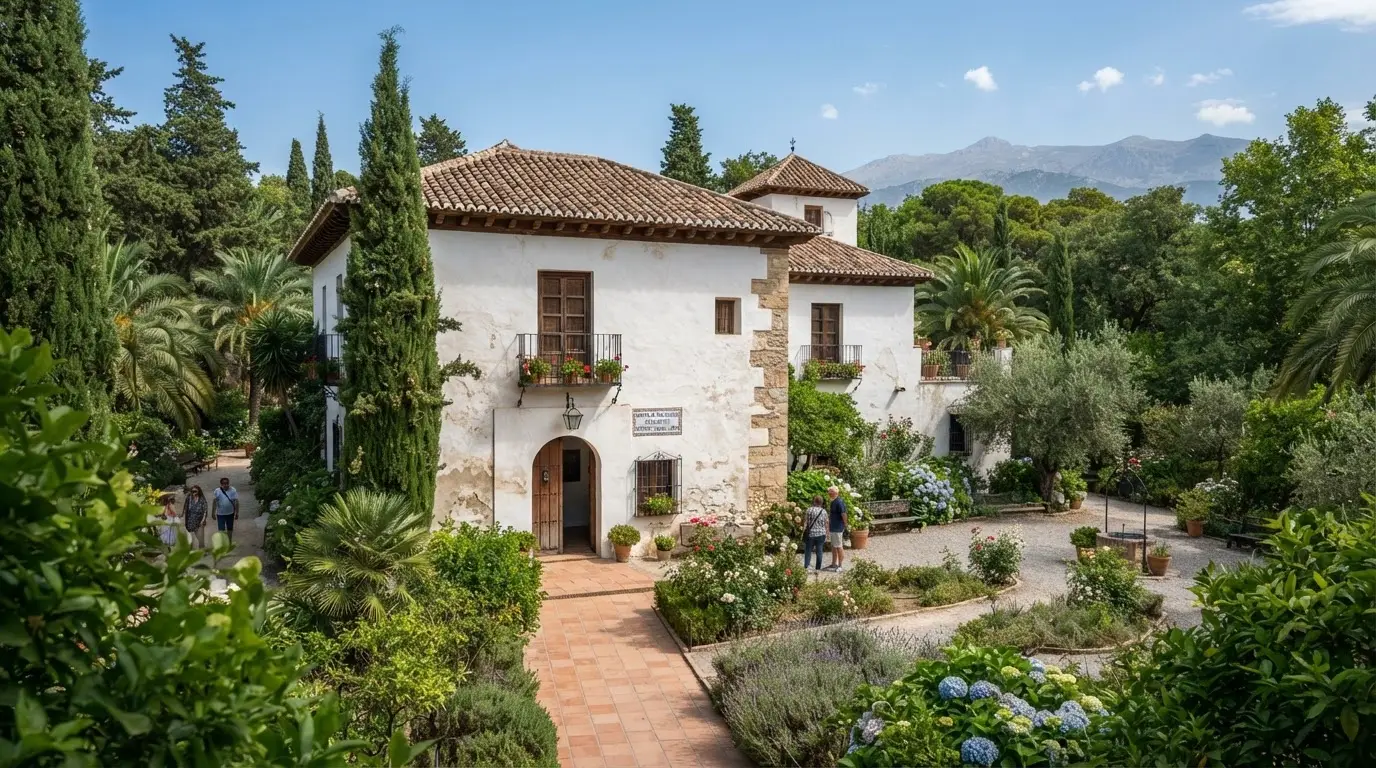
Federico García Lorca and Granada: the city that made him
Lorca wrote his major plays in Granada, was shot nearby in 1936, and his grave has never been found. His house-museum, the grave site, and how to visit.
He died in Madrid on 13 December 2010, sixty-seven years old, having spent five decades making sure flamenco never stayed exactly where he'd found it.[1] For where to hear cante jondo performed in Granada today, the Granada flamenco guide covers the current scene.