From Cádiz to Paris to Granada: how he got here
Manuel de Falla was born in Cádiz on 23 November 1876.[1] His early formation ran through Madrid's Real Conservatorio under Felipe Pedrell, the Catalan nationalist who had convinced a generation of Spanish composers that the country's folk music deserved the same treatment Bartók was giving to Hungarian traditions, alongside the pianist José Tragó. By 1907 he was in Paris, where he stayed seven years and absorbed Ravel, Debussy, and Dukas without losing himself to them.
The Paris years produced La vida breve (an opera set in Granada's gypsy quarter, premiered in Nice in 1913) and the Siete canciones populares españolas (1914), a collection of arrangements that holds up better than almost anything written about Andalusia by someone who didn't yet live there. He returned to Madrid in 1914 when the First World War made Paris untenable.
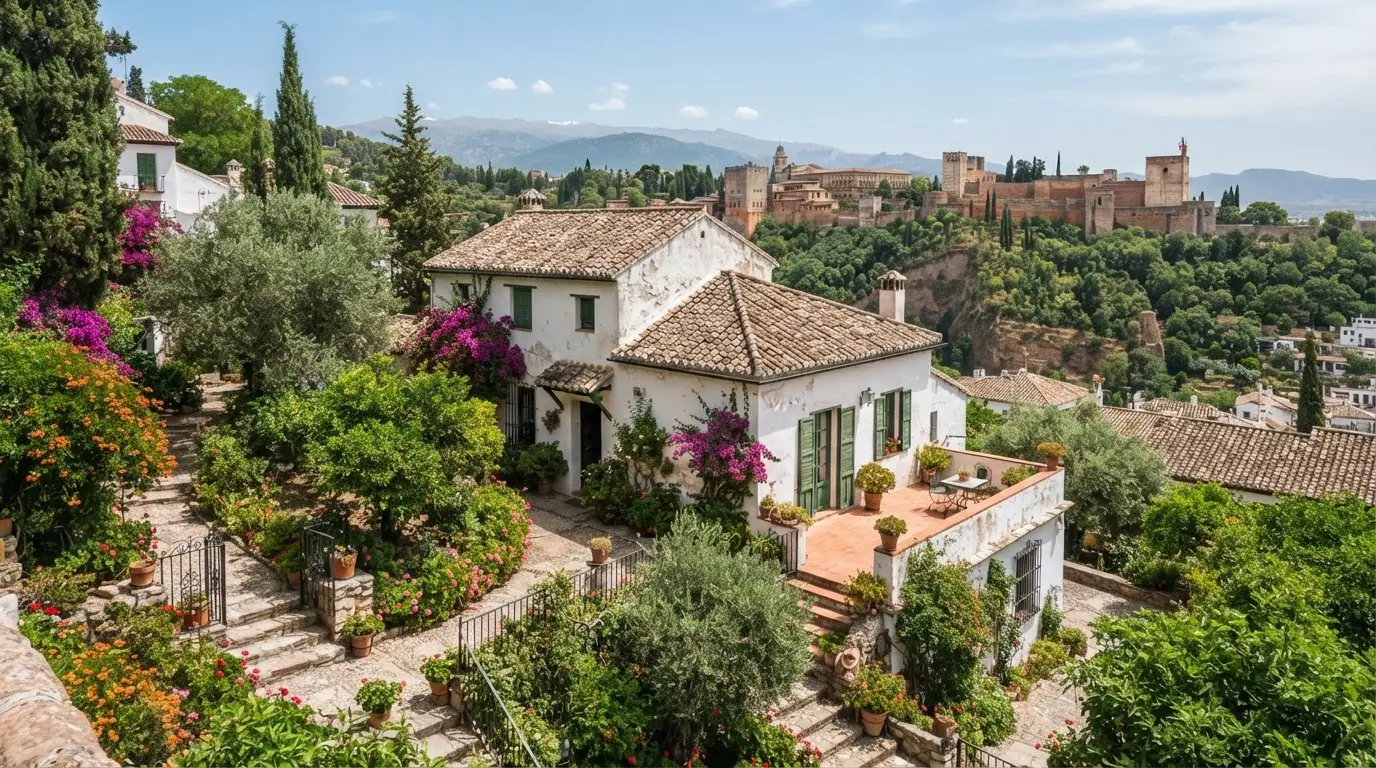
Granada drew him in gradually. He began visiting around 1919–1920, pulled by the city's Moorish heritage and by his growing friendship with the literary circle forming around a young Federico García Lorca. By 1921–22 he had settled permanently into the Carmen de la Antequeruela at Casa-Museo Manuel de Falla, a small white-walled house on the Paseo de los Mártires with a garden that looked south toward the Sierra Nevada. He called the city his pequeño París, his little Paris, for its intellectual vitality.
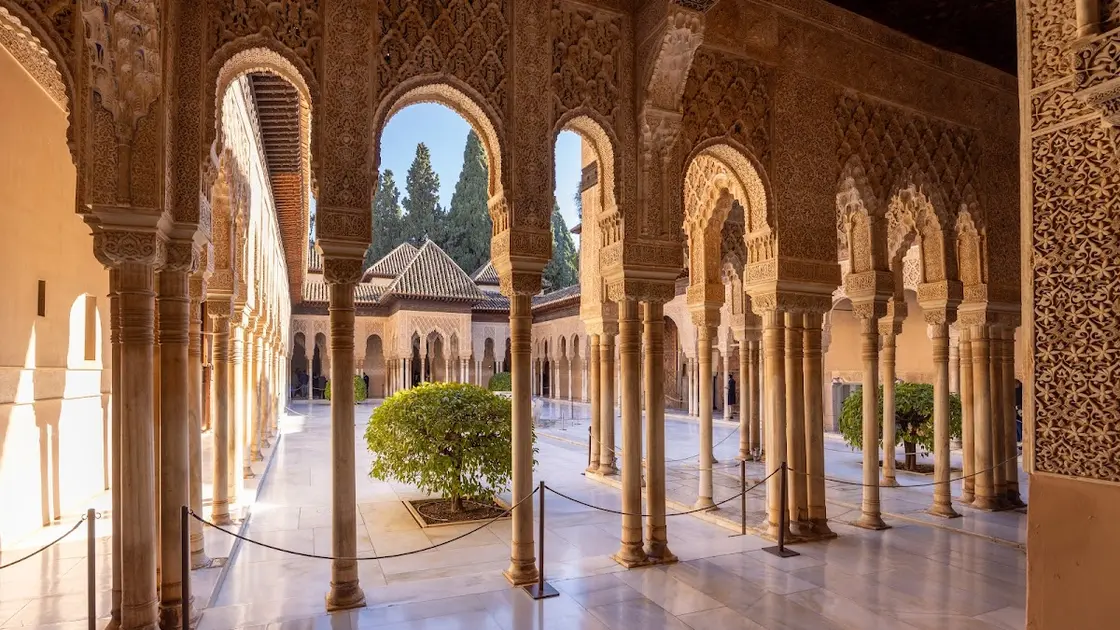
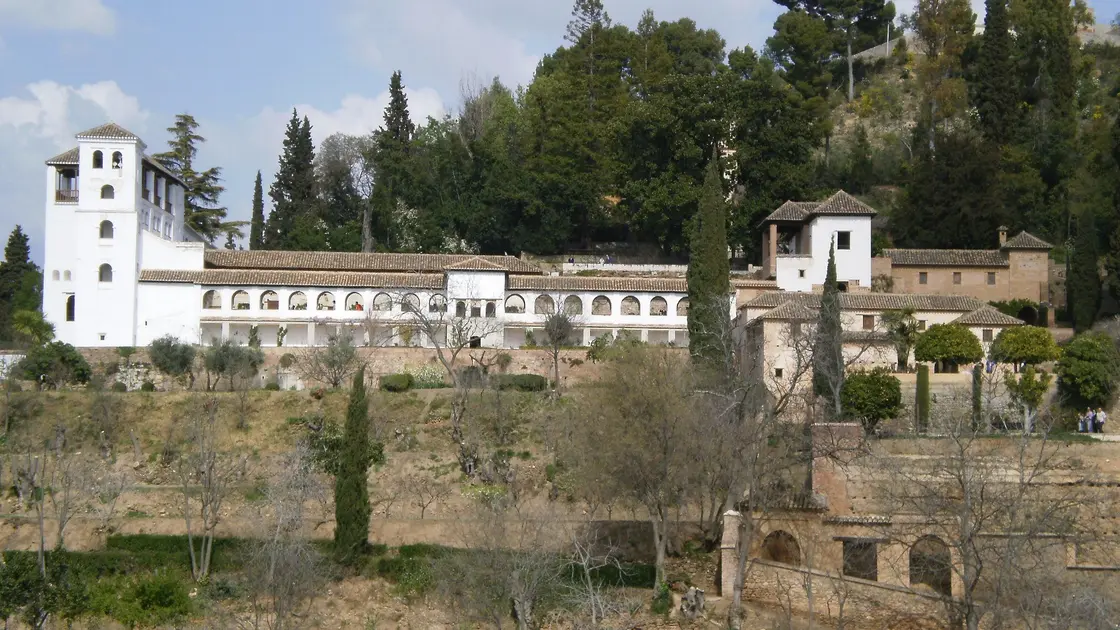
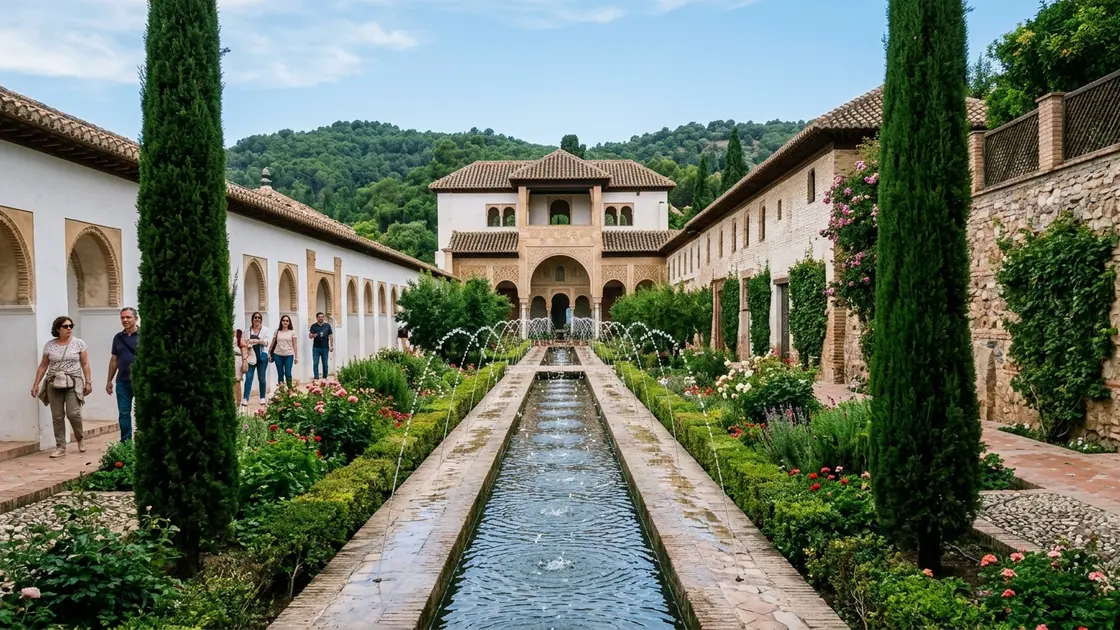
The Alhambra was part of the attraction. Falla had been writing about Moorish musical scales for years, and the palace's Arab-Andalusian atmosphere aligned with ideas he had been developing since his Pedrell training. The Generalife gardens, with their water channels and enclosed sound, would find their way into his music directly.
18 years
The works he wrote in Granada
His major compositions from the Paris and Madrid years, El amor brujo (1915, with its Ritual Fire Dance) and El sombrero de tres picos (the full ballet premiered in London on 22 July 1919 by Diaghilev's Ballets Russes, with sets and costumes by Pablo Picasso), were already finished when he arrived.[2] What Granada produced was different: more austere, more personal.
Noches en los jardines de España (composed 1909–1915, premiered Madrid 1916) technically belongs to the Madrid-Paris period, but its first movement, En el Generalife, is the work that binds him most directly to Granada. The movement traces the sound of fountains, the enclosing walls, the specific quality of the Generalife Gardens garden at dusk. That he wrote much of it before living here is one of those coincidences that turns out not to be one: the Alhambra complex had already lodged itself in his musical imagination years before he moved next to it.
The Granada years proper produced El retablo de maese Pedro (1919–1922, premiered Seville 1923), a puppet opera drawn from a chapter of Don Quixote, and the Concierto para clave y cinco instrumentos (1923–1926), dedicated to the harpsichordist Wanda Landowska and representing his sharpest neoclassical turn. Both are chamber-scale works. He was composing looking out at the Sierra Nevada, in a house barely bigger than two connected rooms, and the scale of the music reflects that.
From 1926 until his death in 1946, he worked on Atlántida, a cantata on a huge scale drawn from the Catalan poet Jacint Verdaguer. He never finished it. The manuscripts are in the archive on the upper floor of the Casa-Museo, the pages he worked on daily for twenty years arranged in the state he left them when he sailed for Argentina.
Explore nearby · Museum
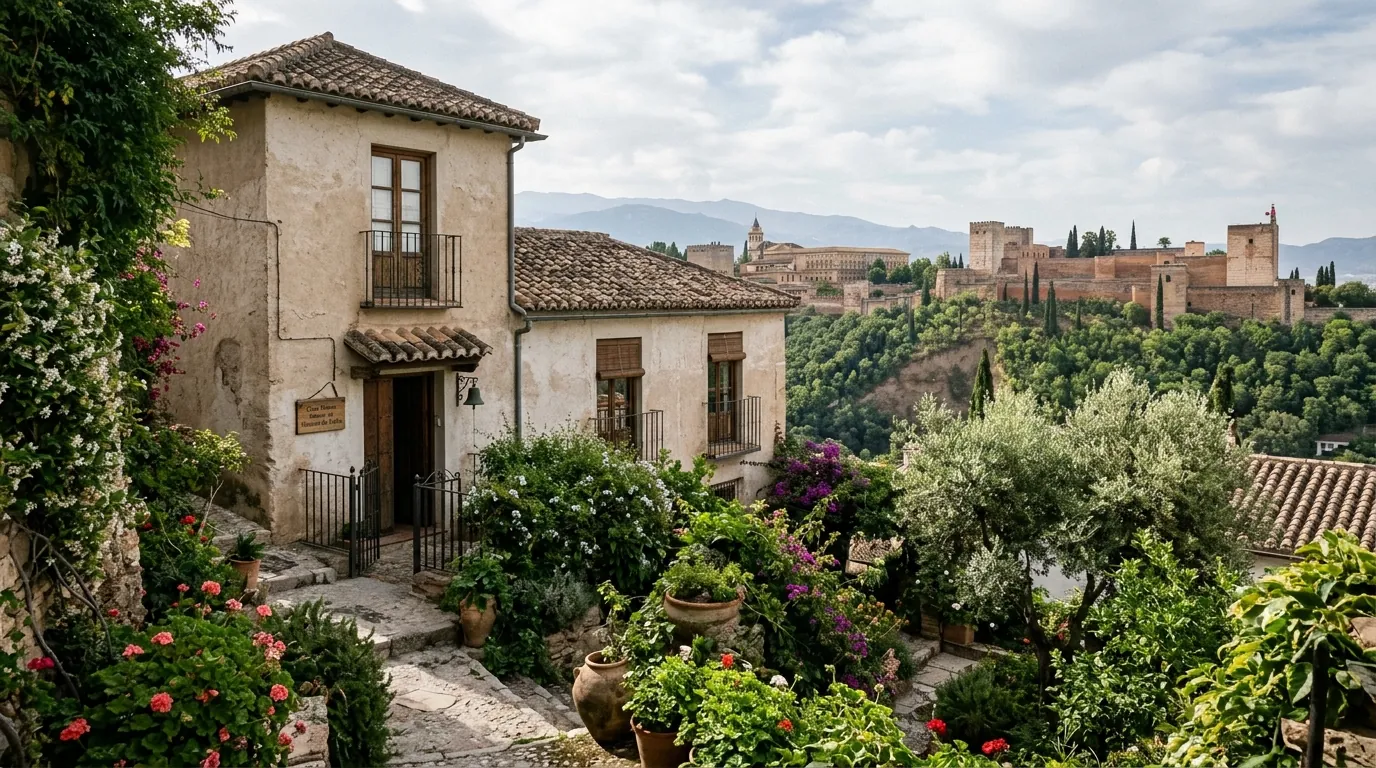
Casa-Museo Manuel de Falla
Manuel de Falla's Granada home from 1921 to 1939, preserved as he left it. His piano, manuscripts, gifts from Picasso, and garden views of the Sierra Nevada.
The 1922 Concurso de Cante Jondo
The event that made Granada a reference point in flamenco history rather than simply a place where flamenco happened was two days in June 1922. Falla and Federico García Lorca, then 23 years old, co-organised the Concurso de Cante Jondo with the Centro Artístico de Granada.[3] The competition took place on 13–14 June 1922 in the Plaza de los Aljibes, the open esplanade at the heart of the Alhambra.
Their purpose was specific and polemical. Cante jondo, deep song, covers the ancient forms of flamenco singing: siguiriyas, soleares, saetas. Falla and Lorca believed these forms were being destroyed by ópera flamenca, the commercialised, theatrical flamenco spreading through café stages across Andalusia. The competition was structured to exclude that world: only amateur singers under 21 were eligible for prizes. Professionals participated as judges, including Pastora Pavón (La Niña de los Peines), Antonio Chacón, Manuel Torre, and Andrés Segovia.
Around 4,000 people attended.[3] The surprise winner was Diego Bermúdez, known as El Tenazas, a retired singer aged 72 who had walked roughly 100 kilometres from Puente Genil to take part. His siguiriya reportedly silenced the crowd. A prize also went to Manolo Ortega, a 12-year-old who would later perform as El Caracol.
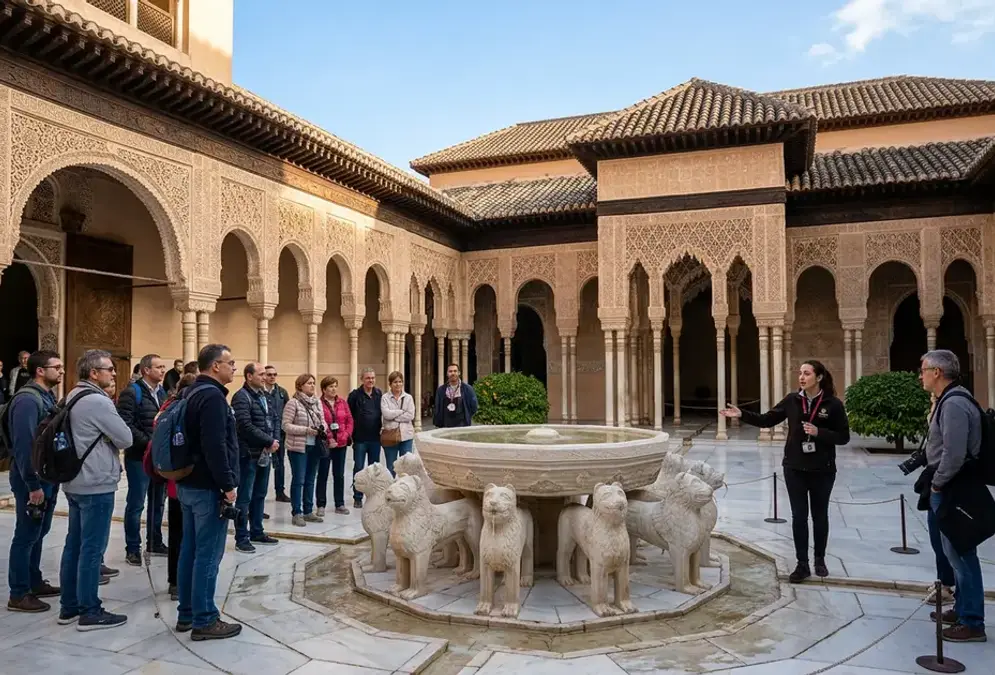
Recommended tours
Tours are selected for quality, not commission. We earn a small fee if you book — at no extra cost to you.
The Rinconcillo, the informal intellectual circle where Lorca, painters, and writers gathered in Granada's cafés, had been the seedbed for the project. Whether the competition achieved what Falla and Lorca wanted is less clear. Falla later said the goal of preserving pure flamenco had not been fully met; the ópera flamenca era was already too entrenched. What it did achieve was legitimacy: the 1922 Concurso treated flamenco as a subject for serious musical and anthropological attention, not entertainment. Similar competitions followed in Seville and Cádiz that year, and the Córdoba National Cante Jondo Contest began in 1956.
Lorca's involvement ran deeper than logistics. His essay cycle Poema del cante jondo grew directly from this period, and his famous lecture El duende: teoría y juego elaborated ideas he and Falla developed together about the mysterious force in music and performance that neither of them could quite name. Falla called it duende — the dark sound that lives in a singer's gut and comes out only in extremity.
The friendship with Federico García Lorca
The Falla-Lorca friendship is the most written-about artistic relationship in Granada's modern history, and the writing tends toward mythologising. What the primary sources actually show is two men who were genuinely useful to each other for eighteen years, who disagreed on almost nothing that mattered, and who shared a specific quality: neither of them could separate music from place.
Falla was 45 when he arrived in Granada; Lorca was barely 22. The age gap meant the friendship ran on unequal footing at the start. Lorca was not yet published, while Falla already had the Ballets Russes premiere behind him. Within a few years the dynamic shifted. Lorca gave poetry readings at the Carmen de la Antequeruela. Falla played accompaniments for Lorca's lecture-recitals. They built puppet theatre shows together in the garden, including productions of the kind of títeres de cachiporra (glove-puppet farce) that Lorca incorporated into his plays.
The Alhambra and the Albaicín were their shared outdoor room. Lorca knew every alley in the Realejo neighbourhood below. Falla's carmen sat at the point where the Realejo climbs toward the Alhambra hill, a neighbourhood Lorca described as the most complete survival of medieval Granada's layered culture.
In August 1936, Nationalist forces shot Lorca in a field outside Granada. He was 38. Falla was in the city when it happened, and by all accounts was devastated. He had already been living in a state of anxiety about the Civil War. He was Catholic and conservative but could not align himself with the political terror the Nationalist side was inflicting on the culture he had lived inside for eighteen years. Lorca's murder was the final weight.
Exile and death: Argentina, 1939–1946
In September 1939, weeks after the Civil War ended with Franco's victory, Falla left Spain for Argentina. He was 62, in poor health, and had been invited to conduct concerts in Buenos Aires. He settled in Alta Gracia, a small city in Córdoba Province, and continued working on Atlántida.
He did not return. He received invitations and letters encouraging him to come back. He declined them all, without making a public statement. His reasons were not political in the narrow sense; he had no affiliation with the Republic. They were moral. He could not legitimise a regime that had destroyed the cultural world he had lived in, shot his closest friend, and replaced it with a state aesthetic built on the thing he most disliked: bombastic nationalism dressed as tradition.
He died in Alta Gracia on 14 November 1946, nine days before what would have been his 70th birthday. His remains were reinterred in the Cádiz Cathedral in January 1947.[4]
He could not legitimise a regime that had destroyed the cultural world he lived in for eighteen years, shot his closest friend, and replaced it with a state aesthetic built on the thing he most disliked: bombastic nationalism dressed as tradition.
Atlántida was eventually completed, partially, by his student Ernesto Halffter, and premiered posthumously in 1961. It is still performed occasionally and still sounds unfinished, which is either its most human quality or its chief problem, depending on who you ask.
Falla's Granada today: the museum, the auditorium, and the festival
The Casa-Museo Manuel de Falla at Paseo de los Mártires 11 is the physical centre of his legacy in Granada.[5] The house is largely unchanged from 1939: his piano, his writing desk, gifts from Pablo Picasso and Miguel de Unamuno, a garden with views toward the Sierra Nevada. He left believing he would return. The museum opened in 1965 and runs guided tours in Spanish, English, and French.
Practical details:
- Open Tuesday–Saturday 10:00–17:00 (October–May); Tuesday–Sunday 09:00–14:30 (June–September); closed Mondays
- Admission: €3 general, €1 students and seniors[1]
- Bus lines C30, C32, C35; or 15 minutes on foot from Granada Cathedral through the Realejo
The Auditorio Manuel de Falla, named in his honour, sits near the Alhambra hill. It is the city's principal concert venue and the main stage for the Festival Internacional de Música y Danza de Granada, which has been running since 1952 and regularly programmes Falla's works in the spaces he knew — the Patio de los Arrayanes, the Generalife theatre, the Alhambra gardens. The festival was not named for him (it predates its naming conventions), but it is the living expression of what he believed: that music and place are inseparable, and that the Alhambra is one of the places where that idea is most provable.
Deep dive · Article
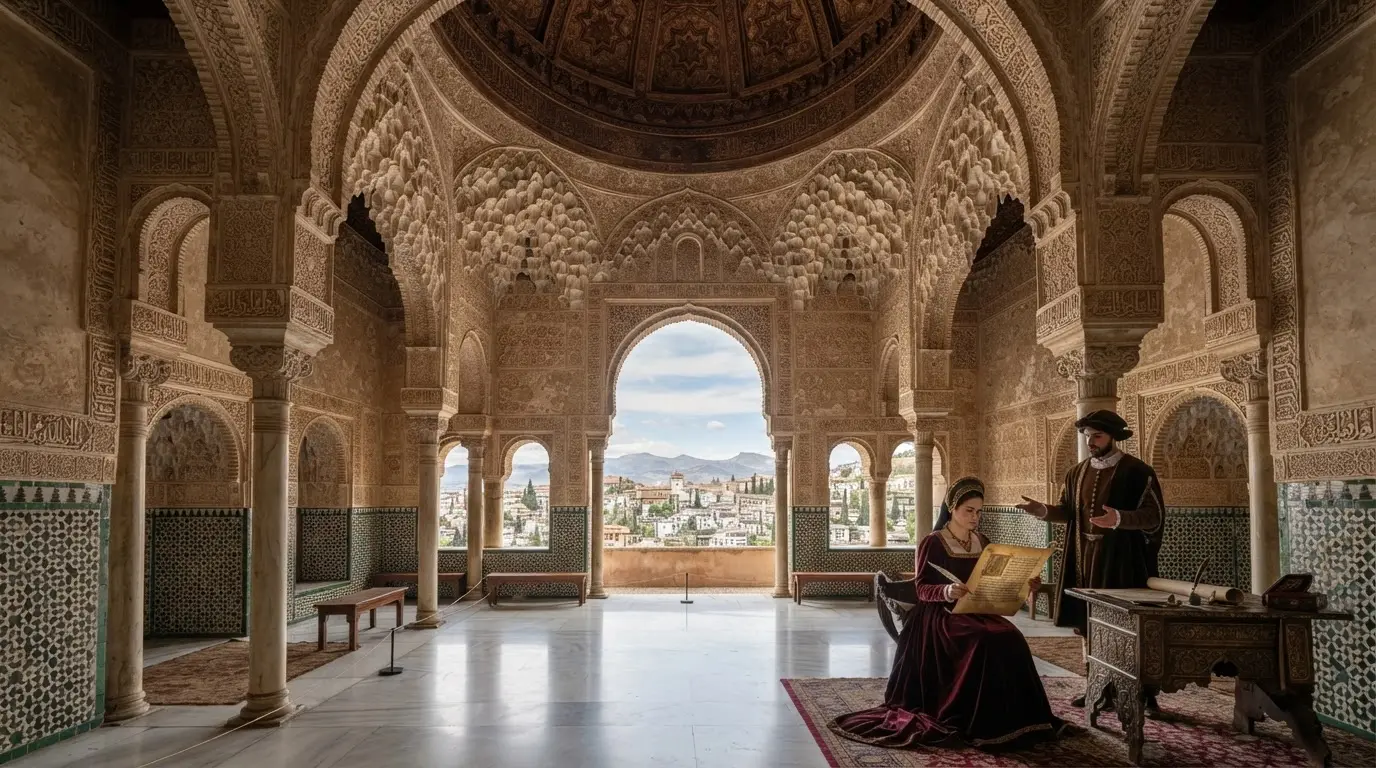
Alhambra Decree 1492: Granada's Jewish Expulsion Explained
The Alhambra Decree (Edicto de Granada) expelled Spain's Jews in 1492. Learn why it happened, what else happened in Spain that year, and where exiles went.
Granada treats Falla as it treats García Lorca: with genuine civic pride, and with a slight excess of reverence that occasionally flattens the actual person. The house on the Paseo de los Mártires is the corrective. Forty minutes there, with the rooms scaled to a working life rather than a monument, is more useful than all the centenary programmes in the Auditorio.