Convent Sweets in Granada: Buying Dulces Through the Torno
Nine convents in Granada sell sweets through the torno, a revolving shelf in the convent wall. Cash only, mornings only, and the greeting ritual is mandatory.
Ten years in food journalism specialising in Spanish and Andalusian cuisine. Four years focused on Granada's food scene.
Updated Published
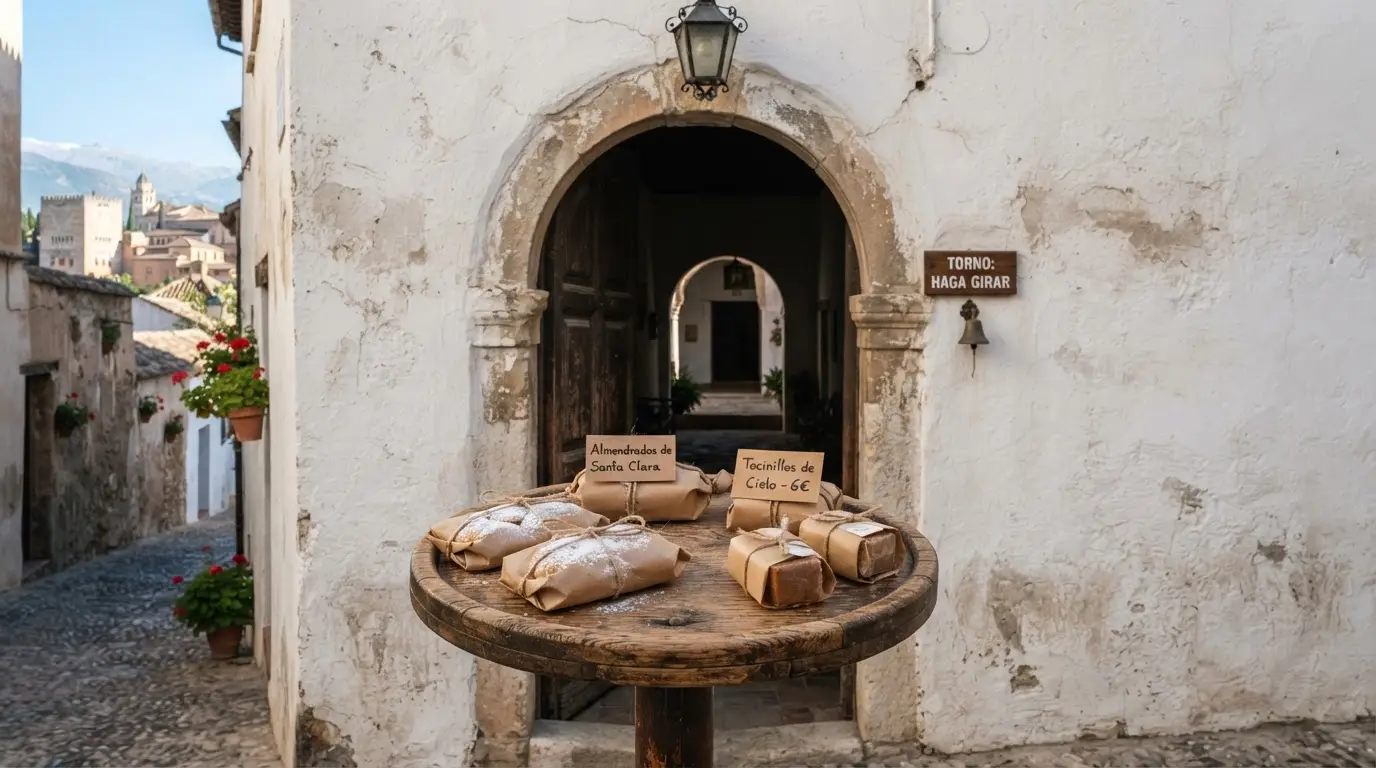
You put your money on a wooden shelf, say three words, and the shelf rotates. A few minutes later it comes back with a paper bag of almond biscuits or candied citrus peel, and you have never seen the hand that placed them. The torno is how Granada's cloistered convents sell their sweets — a centuries-old rotating hatch built into the convent wall to allow commerce without breaking clausura, the strict enclosure that keeps the nuns apart from the outside world. Nine convents across the city still operate this way, and the sweets they make carry recipes shaped by eight centuries of Moorish al-Andalus alongside the Spanish conventual tradition that absorbed them.
In this article
Jump to a section
⌄
What the torno is and how it works
The torno is a revolving wooden shelf, or drum, set into the thickness of a convent wall. It predates the printing press. The mechanism is simple: a cylindrical wooden box, mounted on a vertical axle, turns on a pivot so that one side faces inward to the convent and the other faces outward to a small parlour or entrance passage accessible to the public. Goods and money pass back and forth without either party ever seeing the other.
The interaction follows a fixed protocol that has not changed in centuries[1]. You knock or ring a small bell beside the torno. A nun on the inside responds, though you will not see her. You say "Ave María Purísima" and she replies "Sin Pecado Concebida" — the traditional Catholic greeting meaning "Hail, Most Pure Mary" and "Conceived Without Sin." You name what you want, or ask what is available. You place your money on the shelf and rotate it. The torno turns back with your purchase.
The reason for this arrangement is clausura: the rule of strict enclosure that governs orders like the Clarisas, Dominicans, and Comendadoras de Santiago. These are not merely contemplative nuns who live quietly inside; clausura is a legal and spiritual commitment to a life separated from the secular world. The torno allows the convent to generate income, which historically has been essential to survival, without violating enclosure. No camera, no eye contact, no exchange of more than a few words.
Cash is the only payment accepted. Every convent torno operates this way. No cards, no mobile payments. The typical purchase costs between two and five euros for a small box or bag. If you have no small coins, it is not always possible to make change, so come prepared. Hours are short: almost universally 9am to 12pm on weekdays, with many convents closing on Sundays and feast days. Arrive before 11am if you want a reliable selection.
The Moorish roots of Granada's convent recipes
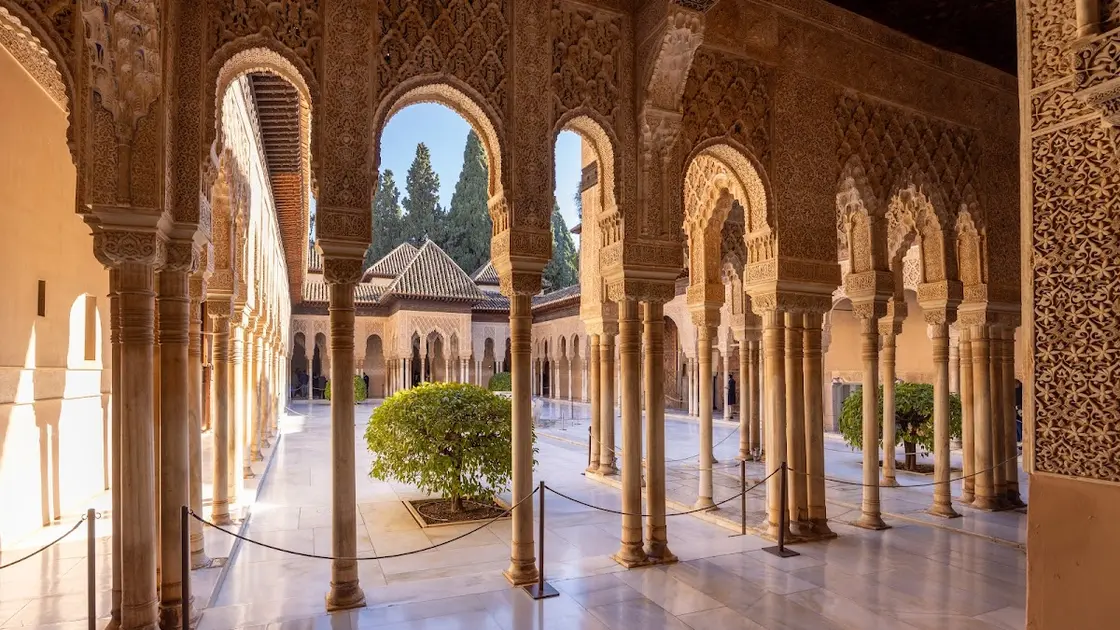
When Fernando and Isabella took Granada in 1492, they inherited a city whose kitchens had been shaped by eight centuries of al-Andalus culinary tradition[2]. The sweets that Moorish Granada produced were built on almonds, honey, cinnamon, rose water, and sesame, with egg yolks providing richness. These were not crude ingredients: the Nasrid court had professional confectioners, and the recipes passed through multiple professional hands before they became household knowledge.
After the Reconquista, that tradition did not disappear. It moved. The convents that Queen Isabella founded in the years immediately following 1492 absorbed local women, and in many cases absorbed their recipes too. The almond and honey base of what became Spanish conventual cooking owes far more to al-Andalus than the Catholic Church's own baking traditions, which were relatively austere by comparison.
Timeline
711–1492
Al-Andalus culinary tradition
Eight centuries of Moorish rule establish almond, honey, cinnamon, and rose water as the base of Granada's sweet-making. Nasrid court confectioners develop professional recipes that circulate through households.
1492
Reconquista and convent foundations
Queen Isabella takes Granada and begins founding convents. Local women entering religious life bring existing recipes with them, embedding Moorish techniques into the conventual baking tradition.
1504–1522
Monasterio de San Jerónimo completed
Founded in 1492 in Santa Fe by the Catholic Monarchs, relocated to Granada in 1504, and completed by 1522[4]. One of the oldest convent bakeries in Granada, its hojaldres, mostachones, and tocinillos follow recipes traceable to the early post-Reconquista period.
16th–18th centuries
Golden age of dulces conventuales
Spanish convents become primary suppliers of quality confectionery. In a world without commercial bakeries, conventual dulces are the only reliable source of refined sweets for most households.
Present
Nine convents still active
Granada has nine convents selling sweets through the torno today. The recipes and the mechanism remain largely unchanged from the 16th century.
The signal recipe is pastela nazarí: a phyllo pastry filled with almonds, cinnamon, and spices, whose name directly references the Nasrid dynasty[3]. It belongs to both traditions at once — Moorish in its spicing and almond base, Spanish in the convent hands that preserved it. The almonds come from trees planted in the Vega during the Nasrid period. The spicing (cinnamon, clove, a faint hint of anise) runs through al-Andalus cookery from Córdoba to Seville. The pastry itself is the thin leaf dough that Moroccan cuisine still calls warka.
Other ingredients point the same way. Cidra, a variety of large citrus sometimes translated as pumpkin in older recipes, appears in the filling of several traditional sweets; it was cultivated extensively under Moorish rule. Sesame seeds coat some biscuits in ways that trace directly to North African baking. When you eat a tocinillo de cielo from a Granada convent, the egg yolk and sugar recipe looks entirely Spanish; but the very high sugar concentration, the use of syrup rather than butter, and the smooth dense texture all reflect technique that entered Spain through al-Andalus.
The Reconquista of Granada in 1492 was the end of Nasrid rule, not the end of Nasrid culinary knowledge. Cooks do not stop cooking when governments change.
The nine convents: where to go and what each sells
Granada's nine convent tornes are spread across the old city. The concentration is highest in the historic neighbourhoods closest to the medieval core — Realejo, Centro, the area around San Jerónimo, and Albaicín.
The Monasterio de San Jerónimo, founded in 1492 by the Catholic Monarchs and relocated to its current Granada site in 1504[4], is the one most visitors find first. It sits near the university barrio, a short walk from the city centre, and the church itself is open to visitors during the day. The convent's torno sells hojaldres (flaky pastry rolls), mostachones (soft anise biscuits), tocinillos de cielo (the egg-yolk-and-syrup custard), roscos (ring-shaped biscuits), preserved fruits in syrup (almíbares), and jams (confituras and mermeladas)[1]. It is a good first stop because the selection is broad.
The Monasterio de Santa Isabel la Real in the Albaicín is the older and more extraordinary building. Queen Isabella founded it in the Albaicín in 1492, the year of the Reconquista, on the site of an existing Nasrid palace[5]. The convent's torno sells hojarascas (crumbly shortcrust biscuits), castañas de Santa Isabel (chestnut-shaped marzipan sweets), and mazapán (marzipan). The building's location in the Albaicín means that getting there involves a walk uphill through narrow medieval streets, which keeps the visitor numbers modest.
The Real Monasterio de la Madre de Dios — run by the Comendadoras de Santiago, a military order with a convent in the Centro neighbourhood — produces frutas escarchadas (candied crystallised fruits), mermeladas, and mantecados (crumbly lard-based shortbreads)[1]. The candied fruits are among the most distinctive products in the city: figs, oranges, and citrus peel with a deep crystalline sugar coating. They keep well and travel better than most convent sweets.
Recommended tours
Tours are selected for quality, not commission. We earn a small fee if you book — at no extra cost to you.
Beyond these three, the full list of Granada's sweet-selling convents includes:
Convento de Santa Catalina de Zafra (near the Alhambra approach): polvorones and mantecados
Convento de Santa Inés (Centro): biscuits and marzipan
Convento de Zafra (Albaicín): almendrados (almond macaroons) and roscos
Convento de las Comendadoras de Santiago: same community as Madre de Dios above
Monasterio de la Concepción (Centro): seasonal selection
Convento del Ángel Custodio: traditional Christmas sweets, sold year-round
Most convents produce a seasonal rotation: Christmas brings polvorones and mantecados; Easter brings roscos de vino and torrijas-adjacent sweets; summer thins the selection as heat affects some confections. The most reliable year-round range is at San Jerónimo.
What to buy: a guide to the individual sweets
The vocabulary of dulces conventuales in Granada is specific enough to be disorienting on first encounter. A brief guide to what you are actually eating:
Tocinillo de cielo is the richest of the egg sweets. The name translates literally as "little piece of sky," and older translations have it as "heavenly bacon" from the word tocino, which is lard. The sweet predates lard as an ingredient; the name is older than the explanation for it. The texture is dense, smooth, and very sweet, made from egg yolks cooked in heavy sugar syrup. Granada's conventual version is typically darker and less uniform than the commercial ones, with a slight caramel edge.
Hojarascas are crumbly shortcrust biscuits with a texture between pastry and biscuit. The word literally means "fallen leaves," referring to how they break and scatter when you bite them. They contain lard, flour, sugar, and cinnamon, and the best ones are thin enough to be translucent at the edge.
Almendrados are almond macaroons: egg white, ground almonds, sugar, and sometimes lemon zest, baked until the outside crisps and the inside stays slightly chewy. They are one of the clearest direct inheritors of Moorish almond confectionery.
Pastela nazarí is the most complex: a small parcel of thin pastry filled with ground almonds, cinnamon, and mixed spices, sometimes dusted with icing sugar. The phyllo-like pastry is the warka tradition from North Africa; the filling is Nasrid in character. Not every convent makes this one, but it appears most reliably at Santa Isabel la Real[3].
Castañas de Santa Isabel are Santa Isabel la Real's own product: marzipan shaped to look like chestnuts, with a chocolate or cocoa coating on the outside. They are a good thing to buy specifically from that convent because the name is local and the product is not made elsewhere in the same form.
Glorias and bizcochada de Gloria are variations on an egg-enriched sponge biscuit, often dusted with sugar. The bizcochada is softer and more cake-like; the gloria is typically a rolled or shaped biscuit version. Nevaditas are small round pastries dusted heavily in icing sugar; the name means "little snow-covered ones."
Roscos de vino are ring-shaped biscuits made with dry sherry or white wine, lard, and sesame seeds. They are the most overtly Spanish-traditional of the range, and they keep for weeks, which makes them good for buying in quantity.
Practical information: hours, etiquette, and logistics
The working hours of convent tornes are unforgiving by modern standards[1]. Most open at 9am and close at noon. Several close for the entire month of August. A few remain open on Saturday mornings but almost none on Sundays. If you arrive at 12:05pm, the torno will already be closed for the day.
The etiquette matters. Convents are places of work and prayer, not tourist attractions. The torno parlour, where it exists, is usually a bare whitewashed room with a wooden bench, a small grille or hatch, and a handwritten list of what is available and at what price. Some convents post no list at all; you ask and the nun tells you. In either case, speak quietly. The convent is not a shop. There is no browsing, no sampling, no request to "see what you have." You ask for what you want, you pay, you say thank you.
9 convents
Nine convents across Granada still sell sweets through the torno. Open 9am to 12pm on weekdays, cash only. The mechanism and hours have not changed since the 16th century.
What to say: if you have no Spanish at all, the greeting is less essential than it would have been twenty years ago, but it remains the correct way to begin. "Ave María Purísima" is three words; the response is four. Beyond that, the names of individual sweets are mostly self-explanatory cognates (tocinillo, mazapán, almendrado), and pointing to a handwritten list requires no language at all.
Navigation: the tornes are not on standard tourist maps and rarely appear on Google Maps with accurate hours. The most reliable way to find current opening times is to walk to the convent door and read the notice posted beside it, usually a small laminated card. Several convents moved or temporarily closed during the 2020–2021 period and not all online listings have been updated.
What to bring: small coins and low denomination notes: 2 and 5 euros. A small bag or basket is useful if you plan to visit more than one convent, because the paper bags the sweets come in are not always sturdy. Most sweets keep for several days at room temperature; the candied fruits from Madre de Dios keep considerably longer.
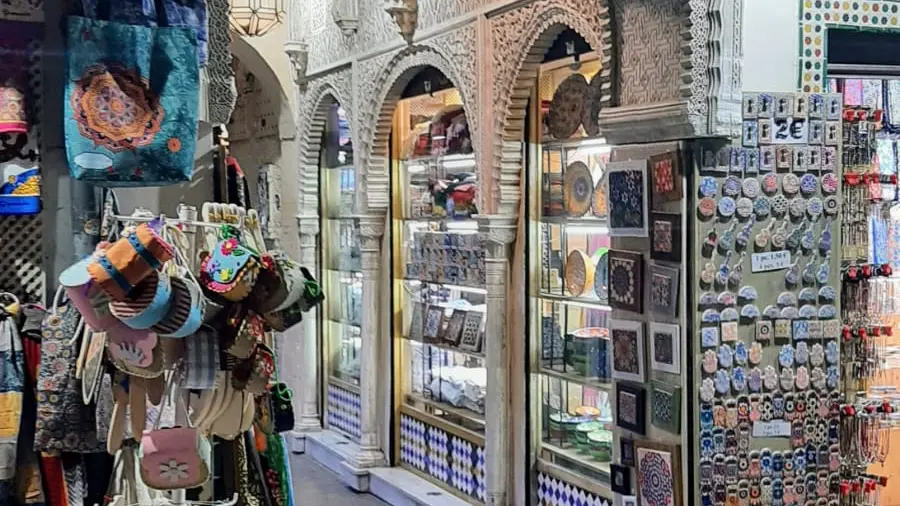
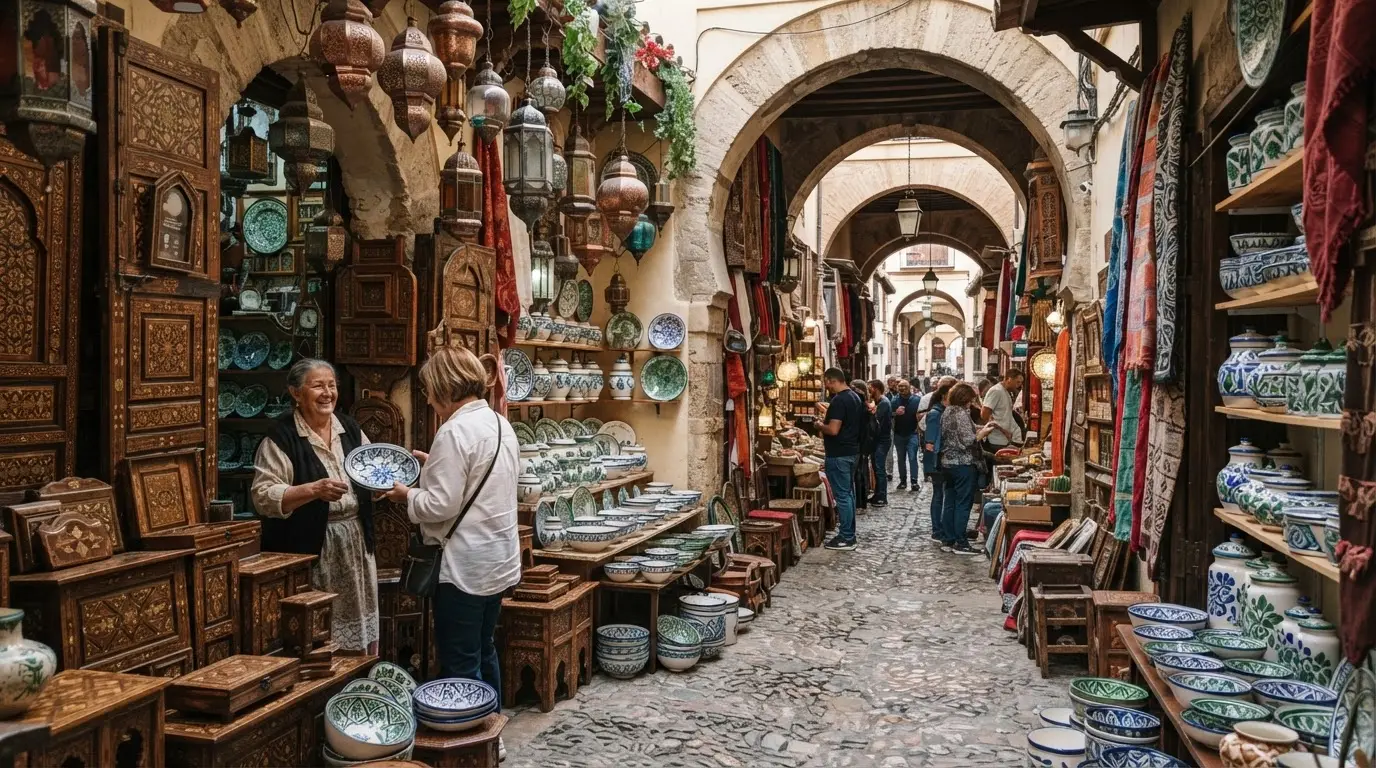
The Alcaicería market near the Cathedral sells commercial versions of most of these sweets, but there is no comparison between the commercial products and what you buy through a torno. The price difference is minimal; the quality difference is significant.
The wider context: why convent baking survived in Granada
The dulces conventuales tradition survived in Andalusia longer and more completely than in most of Europe for reasons that are partly historical and partly structural.
Historically, Andalusian convents had a head start. The post-Reconquista absorption of Moorish culinary knowledge gave them access to a technical repertoire (the almond work, the syrup cookery, the phyllo-style pastry) that northern European conventual baking simply did not have. The quality of what Granada's convents produced from the 16th century onwards was genuinely exceptional, not merely serviceable. This created a self-sustaining market: the sweets were worth paying for, the income sustained the convents, the convent kitchens maintained the tradition.
Structurally, clausura worked as a quality control mechanism. The same rule that prevented the nuns from working outside the convent concentrated their labour inside it. A cloistered community with time for prayer and manual work produces different results from a commercial operation running to a profit schedule. The almond biscuits that take two days to make properly at San Jerónimo take two days because there is no incentive to shorten the process.
The artisan crafts tradition of Granada[6] (the taracea woodwork, the Fajalauza ceramics, the silversmithing that survived in similar preservation conditions) follows the same pattern. Workshop traditions persist where closure from the market protects the process. Convents closed from the outside world maintained technique the way workshops closed from industrial competition maintained technique.
This does not mean the tradition is static. Several Granada convents have stopped producing sweets in the last twenty years as the communities that supported them aged and shrank. The nine that remain active are not guaranteed to continue indefinitely. Buying from the torno today is partly just buying very good biscuits; it is also participating in something that is maintained by specific people in specific places, and that will not automatically replace itself when those people are gone.
The most useful thing a visitor can do, other than turning up before noon with cash, is to buy more than they think they need.
Frequently asked questions
What is the torno at a Granada convent?
The torno is a revolving wooden shelf built into the thickness of the convent wall. One side faces inward to the nuns; the other faces the public entrance. Money is placed on the torno, it rotates, and the sweets come back on the same shelf. The mechanism allows commerce without the nuns ever being seen, preserving the clausura (strict enclosure) that cloistered orders observe.
What are the opening hours for Granada's convent tornes?
Almost all convent tornes open at 9am and close at noon, on weekdays only. Several close on Saturdays and almost none open on Sundays. Some close in August entirely. The hours are posted on a notice beside the convent door. Arriving before 11am gives the best selection; arriving after noon means the torno will be closed.
What sweets can you buy through the torno in Granada?
The range varies by convent. Common purchases include tocinillos de cielo (egg yolk and syrup custard), almendrados (almond macaroons), hojarascas (crumbly shortcrust biscuits), roscos de vino (wine and sesame ring biscuits), mazapán (marzipan), polvorones, mantecados, and pastela nazarí (phyllo pastry with almond and cinnamon filling). The Monasterio de San Jerónimo has the broadest selection; the Monasterio de Santa Isabel la Real sells the castañas de Santa Isabel (chestnut-shaped marzipan) that are unique to that convent.
Do I need to speak Spanish to buy from a convent torno?
Basic phrases help but are not strictly necessary. The traditional greeting is 'Ave María Purísima' (the nun replies 'Sin Pecado Concebida'). Many convents post a handwritten price list beside the torno so you can point to what you want. The names of most sweets (tocinillo, mazapán, almendrado) are recognisable. Cash payment in small denominations (two and five euro notes) avoids any need for conversation about change.
Which convent in Granada sells the best sweets?
That depends on what you are buying. The Monasterio de San Jerónimo has the widest selection of year-round products. The Monasterio de Santa Isabel la Real in the Albaicín makes the castañas de Santa Isabel (chestnut marzipan) found nowhere else and is the most reliable source of pastela nazarí. The Real Monasterio de la Madre de Dios produces the best candied fruits (frutas escarchadas) in the city. Visiting all three in one morning is a reasonable plan.
Is buying convent sweets through the torno still possible today?
Yes. As of 2026, nine convents across Granada sell sweets through the torno. The practice has not changed significantly from the 16th century: cash only, morning hours, and the traditional Ave María greeting. Several convents have closed their tornes over the past two decades as communities shrank, so the nine that remain active are worth using while they do.