From the vega to El Rinconcillo: Lorca's Granada formation
Federico del Sagrado Corazón de Jesús García Lorca was born on 5 June 1898 in Fuente Vaqueros, a village 17 kilometres west of Granada city on the flat agricultural plain known as the Vega.[1] His father grew sugar beet. The family moved to Granada when Federico was ten, and the city became the landscape he spent his life both loving and escaping.
He enrolled at the University of Granada around 1915. He took nine years to complete his degree, studying law and literature in parallel while developing his piano playing to a professional level under composer Manuel de Falla. The degree interested him less than the conversations.
38 years old
Those conversations happened mostly at the Café Alameda, where a loose circle of writers, painters, and musicians gathered under the name El Rinconcillo (the Little Corner). Among the regulars were the painter Manuel Ángeles Ortiz, the composer Manuel de Falla, and the writer Melchor Fernández Almagro. Lorca read his early poems there before anyone in Madrid knew his name.
His first published work, Impresiones y paisajes (1918), came from travel notebooks made on a teacher-organised tour of Castile and Andalusia. His first poetry collection, Libro de poemas, appeared in 1921. Neither set the world on fire. Between those two came his first produced play: Mariana Pineda (written 1923–1925, staged 1927 with sets by Salvador Dalí), a drama built around Granada's own 19th-century liberal martyr, whom Lorca called one of the greatest emotions of his childhood. His real breakthrough came with the Romancero gitano in 1928.
Lorca always resisted the city as an identifier. He once said his allegiance was not to Spain, or even to Granada, but to the Vega itself: the flat plain west of the city where his father farmed and where he had spent his earliest childhood. That said, everything that shaped his imagination came from Granada: the flamenco he heard in the lower quarters, the Albaicín architecture above the Darro, the café conversations at El Rinconcillo, and the summer house where he would write his major plays.
The cante jondo festival and the Alhambra in 1922
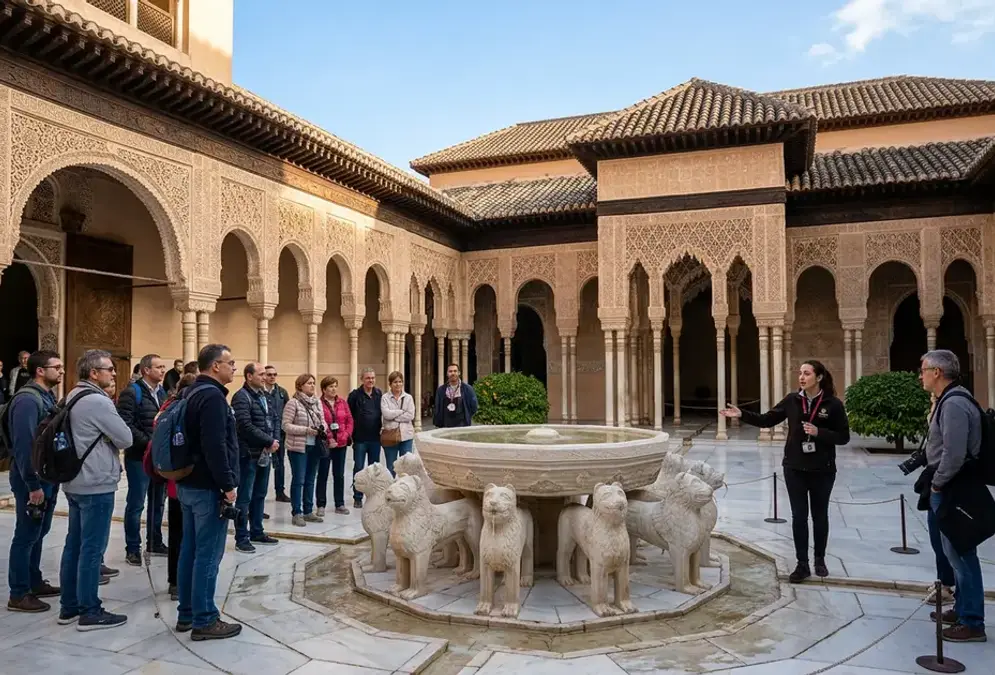
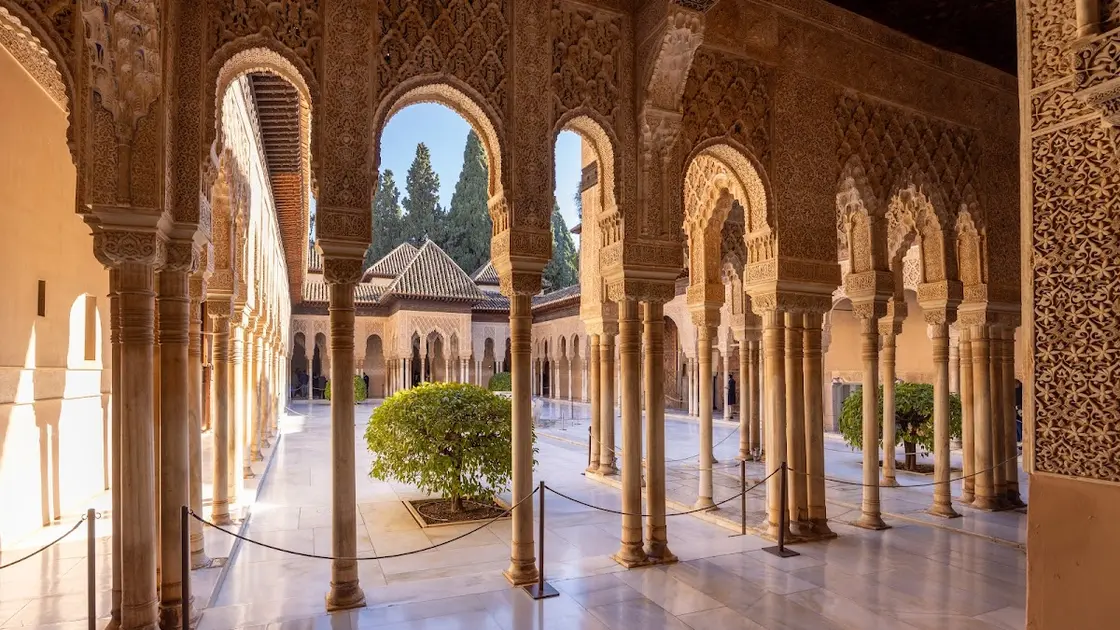
In June 1922, Lorca and Manuel de Falla did something unusual for two young artists: they organised a public competition.[2] The Primer Concurso de Cante Jondo — the First Competition of Deep Song — was held in the grounds of the Alhambra, timed to coincide with Corpus Christi. The event was designed to attract performers of the oldest and most emotionally raw forms of flamenco singing, and to declare those forms worth saving.
Cante jondo (deep song) is the name for the most ancient and intense vein of flamenco: the siguiriya, the soleá, the saeta. These forms deal, without sentimentality, with death, desire, and loneliness. By the 1920s, both Lorca and de Falla believed they were being diluted by café entertainment and popular operetta. The 1922 competition was a public argument for their seriousness.
Lorca was 23 at the time. The project shaped his next decade of writing. He was already working on Poema del cante jondo, a collection of poems that takes the emotional grammar of the siguiriya and petenera as its formal model. It was written in the early 1920s but not published until 1931.
From this collaboration grew Lorca's theory of duende — the concept he developed across essays and lectures and delivered most completely in a 1933 talk in Buenos Aires: Juego y teoría del duende (Theory and Play of the Duende). Duende is not skill. It is not inspiration. The flamenco singer Manuel Torre, watching a performance that moved him, reportedly said: "All that has dark sounds has duende." Lorca took that phrase and built a philosophy around it: the duende is the confrontation with death that gives great art its irrational power. It lives in the voice, not the technique.
Explore nearby · Museum
Casa-Museo Manuel de Falla
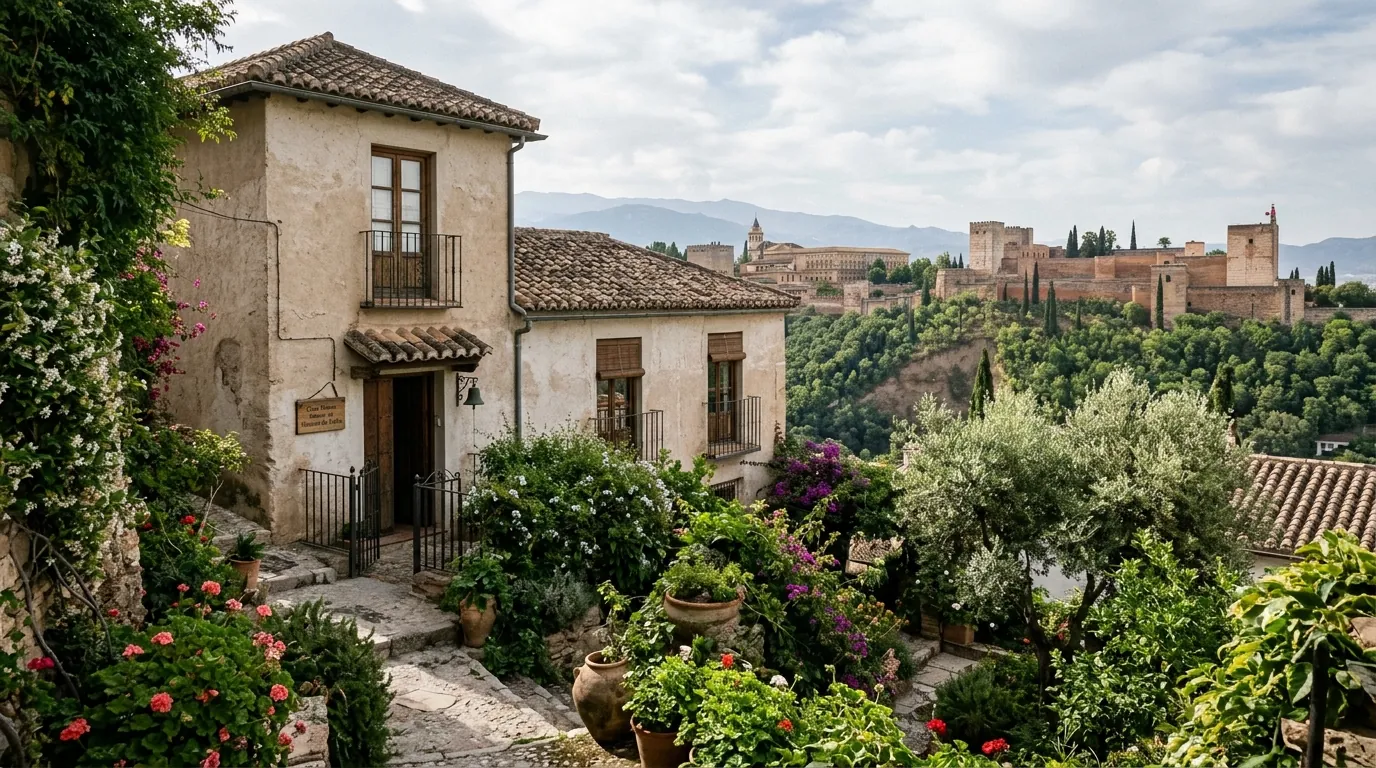
Manuel de Falla's Granada home from 1921 to 1939, preserved as he left it. His piano, manuscripts, gifts from Picasso, and garden views of the Sierra Nevada.
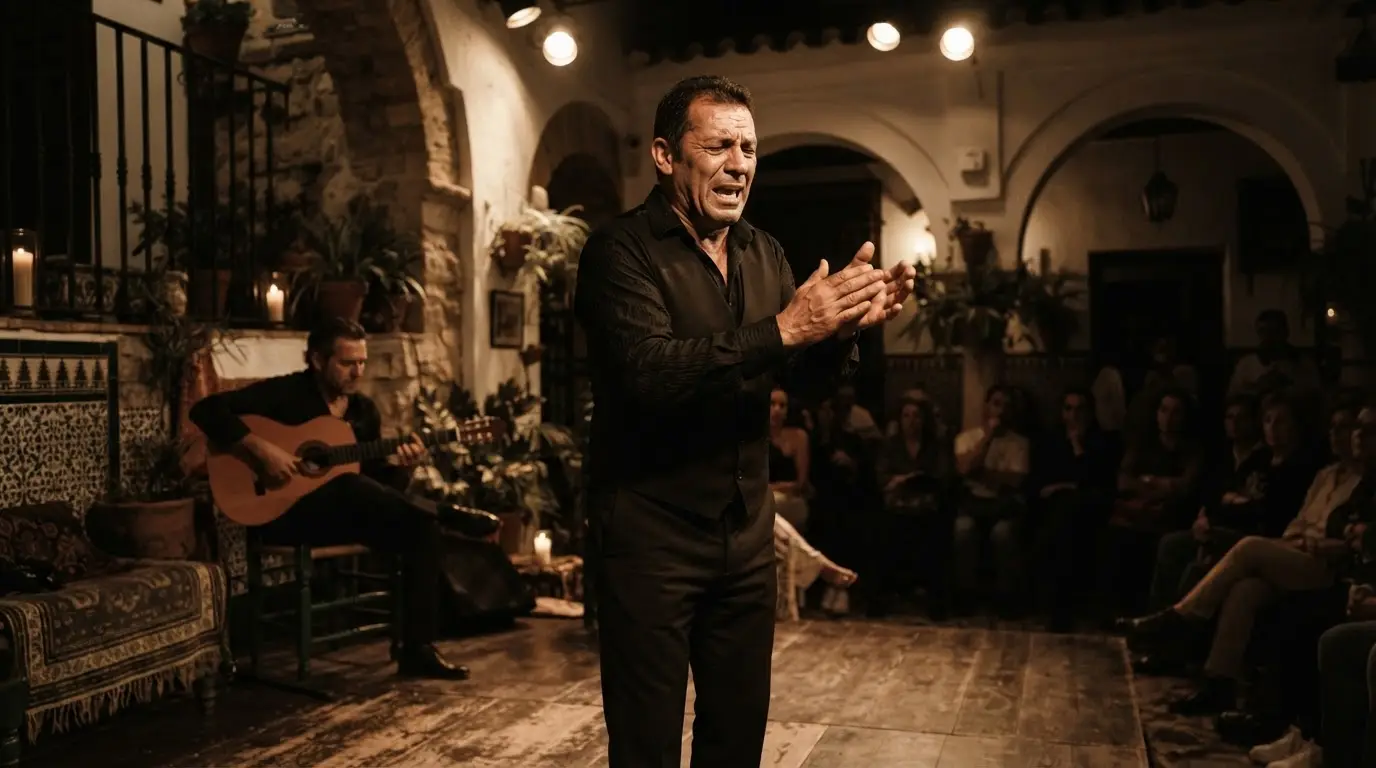
For visitors today, the cave-dwelling quarter is where Lorca heard the cave flamenco that fed this thinking. The cave dwellings cut into the hillside above the Darro housed Granada's gitano community, and the flamenco performed there in the 1910s and 1920s was exactly the tradition he was trying to document and defend.
Gypsy Ballads, the rural trilogy, and what he wrote in Granada
Romancero gitano (Gypsy Ballads), published in July 1928, is a collection of 18 ballads drawing on the mythology and daily reality of Andalusia's Roma community.[3] The romancero is a medieval Spanish verse form: ballads built around compressed narrative and strong rhythm. Lorca took that traditional structure and filled it with the imagery of the Granada landscape: the Vega, the moon over the sierra, Civil Guard officers as figures of menace, gitano women with carnations in their hair.
The collection made him famous overnight in Spain. Readers wrote to him believing he was a Gypsy himself. He found this both flattering and reductive. He was drawing on the Gypsy tradition as a cultural lens for universal themes: desire, violence, the conflict between individual life and institutional power. The book remains his most widely translated and read work.
The rural trilogy came later, written primarily at Huerta de San Vicente:
- Blood Wedding (Bodas de sangre, written 1932, premiered 1933): a bride runs from her wedding with her former lover; the groom and the lover kill each other. Set in Andalusian farm country. His most celebrated play.
- Yerma (1934): a woman who cannot have children, destroyed less by her barrenness than by her society's contempt for it.
- The House of Bernarda Alba (La casa de Bernarda Alba, 1936): five daughters locked inside after their father's death, watched by a mother whose authority is a weapon. Completed weeks before his arrest. Never staged in his lifetime.
Recommended tours
Tours are selected for quality, not commission. We earn a small fee if you book — at no extra cost to you.
All three deal with desire meeting social prohibition, and all three end badly. They are set in no named village but the Andalusian countryside is everywhere in them: the heat, the enclosed house, the neighbours watching.
Doña Rosita la Soltera (Doña Rosita the Spinster, 1935) is different in register: a bittersweet comedy about a Granada bourgeois woman whose fiancé emigrates to South America and never sends for her. She waits decades. Lorca called it a love letter to Granada's particular social world, the middle-class parlours and flower-filled gardens of the Vega.
La Barraca: taking theatre to the countryside
In 1932, with the Spanish Republic providing funding, Lorca and Eduardo Ugarte co-founded La Barraca — a travelling theatre company made up of university students that took classical Spanish drama to rural towns and villages with no professional theatre.[4] The name means the shack or the hut: it referred to the portable stage they erected in public squares.
La Barraca performed the plays of Lope de Vega, Calderón de la Barca, and Cervantes in village squares across Spain from 1932 to 1936. Lorca directed. He also designed the sets himself and, in some productions, acted minor roles. He was 34 and at the height of his career; he could have stayed in Madrid writing. He chose to spend summers driving a van across the meseta.
The Barraca project sits oddly in his biography. He is remembered as a poet and playwright; La Barraca shows him as a democratic activist, someone who believed classical literature belonged to farm workers in Extremadura and not just to theatre audiences in Madrid. The Republic agreed: the funding came directly from the Ministry of Public Instruction.
Deep dive · Article
Enrique Morente: Granada's Flamenco Revolutionary
Enrique Morente went from Albaicín choirboy to flamenco's most radical voice, reviving cante, setting Lorca to song, and fusing it with rock on Omega (1996).
The project ended when the Civil War began in July 1936. Lorca had returned to Granada. He did not know that returning would be fatal.
The Universidad neighbourhood is where La Barraca recruited most of its student performers. The university at that time was concentrated around the original Hospital Real building — the same institution Lorca had studied at between 1915 and the mid-1920s.
The arrest, the execution, and the missing grave
On or around 16–17 August 1936 (sources disagree on the precise date), Nationalist (Falangist) forces arrested Lorca at the Huerta de San Vicente.[5] The Spanish Civil War had begun a month earlier. Granada had fallen to the Nationalists within days of the uprising. Lorca, a known leftist, a known homosexual, and a friend of prominent Republican officials, was a natural target.
He was taken to the Civil Government building in central Granada and held there. The charges were described as actividades subversivas (subversive activities). His homosexuality, his public association with the Republic, and his friendship with the Socialist politician Fernando de los Ríos were all used against him. The biographer Ian Gibson, who spent decades interviewing surviving witnesses and collaborators, reconstructed the sequence in exhaustive detail in his 1979 book The Assassination of Federico García Lorca.
On the night of 18–19 August 1936 (sources place it differently by a day), he was driven out of Granada northward, toward the village of Víznar. A Falangist firing squad shot him alongside at least three other prisoners: a bullfighter named Francisco Galadí and two anarchist schoolteachers, according to the most reliable accounts. The bodies were buried in an unmarked grave.
Where exactly? That question has driven historians, archaeologists, and Lorca's family for 90 years. The most authoritative answer comes from Ian Gibson: the probable site is Fuente Grande, near the village of Alfacar, 10 kilometres north of Granada. The Spanish government opened an official investigation in 2009, following the passage of the 2007 Historical Memory Law (Ley de Memoria Histórica). Archaeological excavations were conducted in 2009, 2014, and 2016.[6] Remains were found at the site, but Lorca's body has never been conclusively identified.
The mystery persists for two reasons. Lorca's own family was divided for decades about whether to exhume: his nephew Manuel Fernández-Montesinos García opposed any search for years, later relenting. And the perpetrators, operating under the Franco dictatorship for nearly 40 years, had every interest in keeping the location secret. By the time it became politically possible to look, the witnesses were dead and the landscape had changed.
The grave's absence has become part of Lorca's meaning. He is the most prominent of the memoria histórica cases: the writer whose disappearance forced Spain to confront what the Civil War had buried, literally and figuratively. Every excavation at Alfacar generates international press coverage. The body is still there, somewhere.
Visiting Lorca's Granada: Huerta de San Vicente and beyond
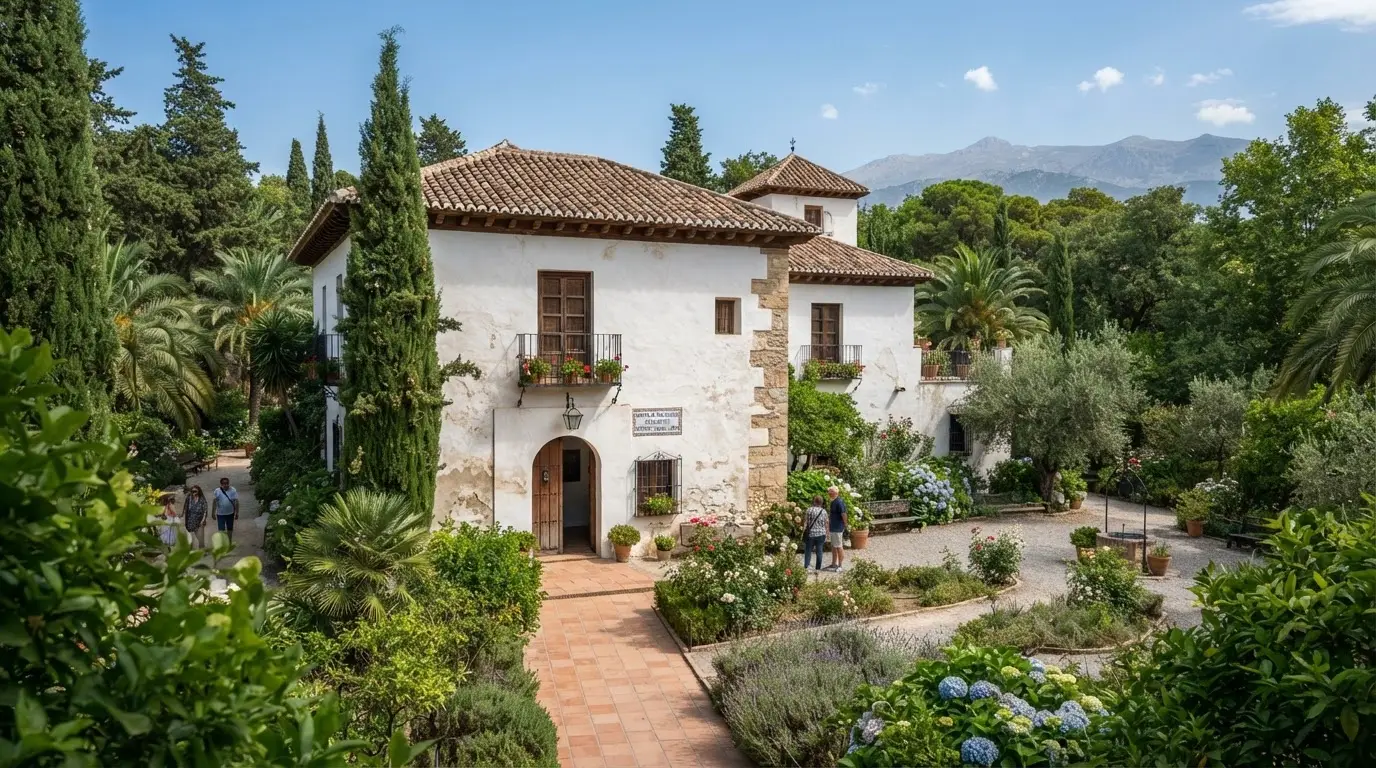
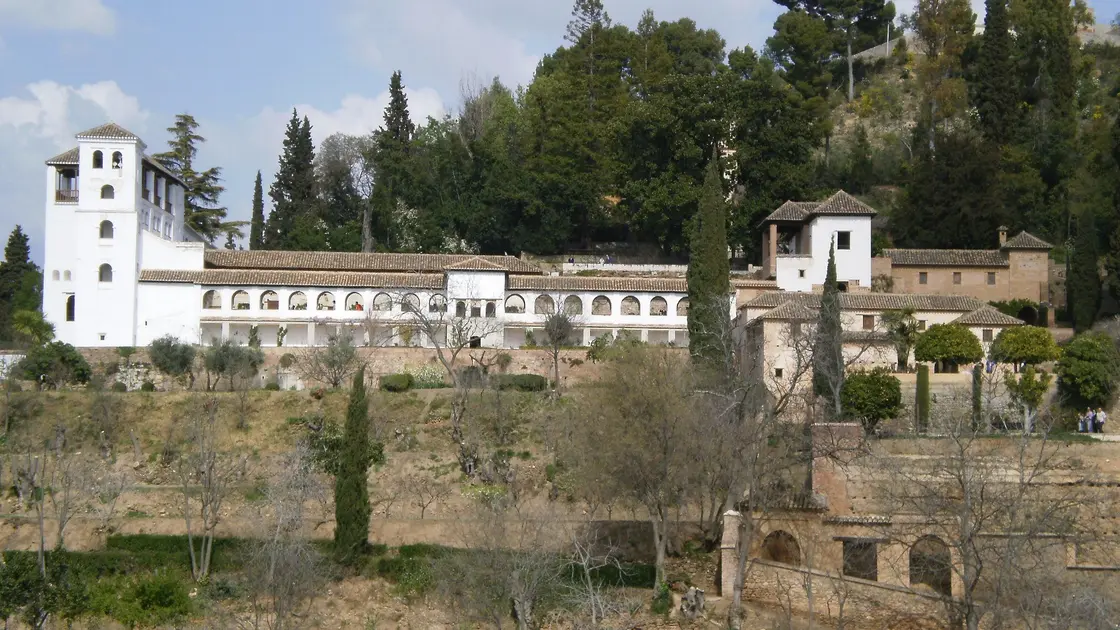
The best starting point is the Huerta de San Vicente, the family's rented summer house on what was then the edge of the city.[7] Today it sits inside the Parque Federico García Lorca, a public green space in the Arabial district. The address is Calle Virgen Blanca s/n (sin número, at the centre of the park).
Opening hours split by season:
- October to May: Tuesday to Sunday, 10:00 to 17:00 (last entry 16:30)
- June to 15 September: Tuesday to Sunday, 09:00 to 15:00
- Closed Monday year-round
All visits are guided only, in set time slots. Ticket prices are not published on the official website; contact the museum directly at +34 958 849 112 or check huertadesanvicente.com for current pricing. Transport: bus lines 5, 9, 21, U1, or U3.
1926–1936
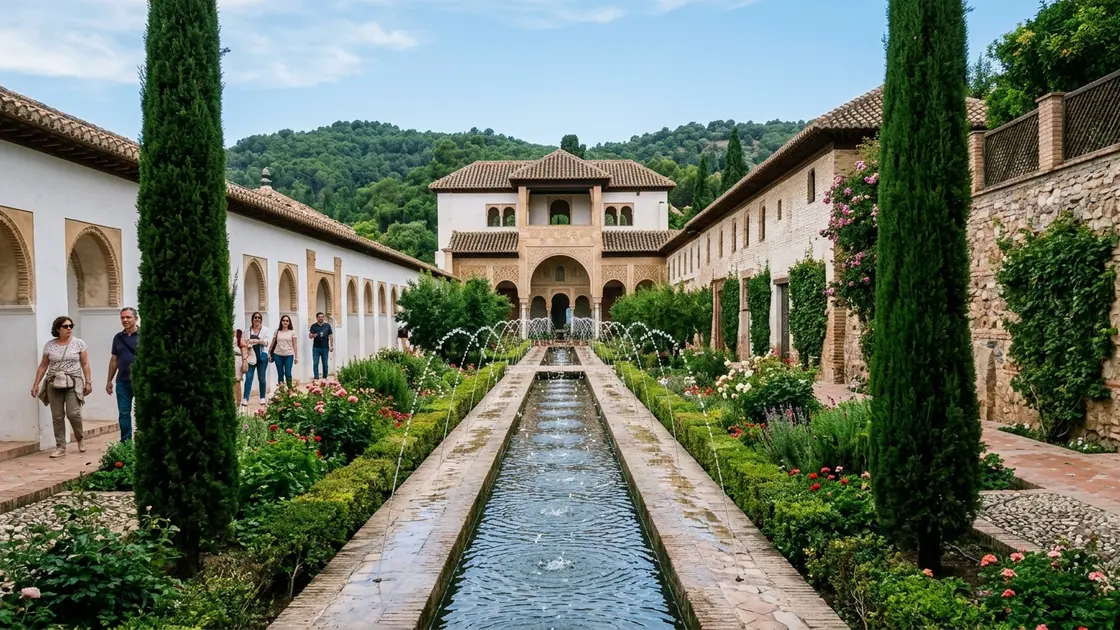
Inside, the house has been kept as close as possible to its condition during Lorca's summers there. The furnishings, photographs, drawings (Lorca was a competent visual artist), manuscripts, and personal objects are all original. The piano is still there. The nearly two hectares of garden around the house are part of the visit: the family's orange trees, the irrigation channels, the view toward the Vega that he described in his letters.
A second Lorca site opened in the city centre in 2015: the Centro Federico García Lorca, Plaza de la Romanilla, near the cathedral. It holds manuscripts, correspondence, and the family archive. Entry is free.
For the grave site: the Parque de la Memoria near Alfacar, 10 kilometres north of Granada, marks the area where Lorca and his fellow prisoners were shot. A symbolic monument stands at Fuente Grande, though no confirmed remains have been recovered. It is a quiet, bleak, clearly-marked spot accessible by car.
His birthplace, Fuente Vaqueros (17 kilometres west of the city), has a separate house-museum at the family's original home. If you have a full day, combining Fuente Vaqueros in the morning with the Huerta de San Vicente in the afternoon covers the two ends of his Granada life.