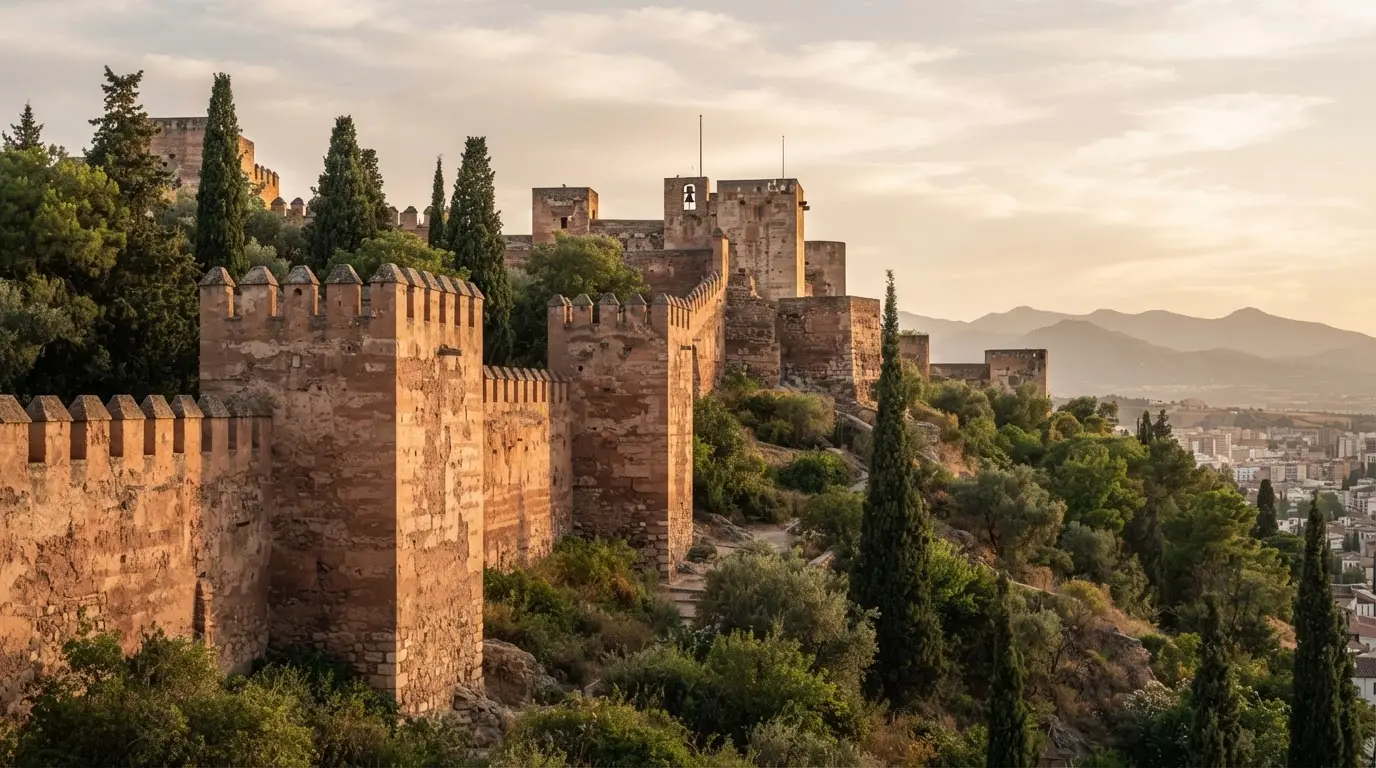

What Alhambra means in Arabic
Start with the shortest useful answer. Al-Hamra, more precisely transliterated al-Ḥamrāʼ, means "the red one" and is feminine in Arabic[4]. The familiar monument name is a description, not a ruler's title or a dynasty's name.
That grammatical detail matters because English often flattens the phrase into "red fortress" immediately. The shorter name says less: colour and gender, while the object being described only becomes explicit in the fuller Arabic form.
Keep both translations in mind on a first visit. The short one explains the word that became Alhambra; the fuller one explains why histories call the complex the Red Fortress. The Alhambra monument page covers the physical complex; this article stays with the name.
The distinction also prevents a common mistake. Alhambra names the hilltop complex. It does not supply a separate translation for every palace, tower or garden built inside its walls.
How the red one became the red fortress
The longer Arabic form is al-Qal'ah al-Hamra, meaning "the red fortress"[4]. Qal'ah supplies the fortification; al-Hamra supplies the colour. Together the phrase identifies a defensive place by its red appearance.
The expanded form is useful, but it shouldn't erase the shorter etymology. Saying Alhambra simply "means red fortress" gives the right general idea while skipping the word the name actually derives from: al-Hamra, "the red one". The longer expression states what the red thing is.
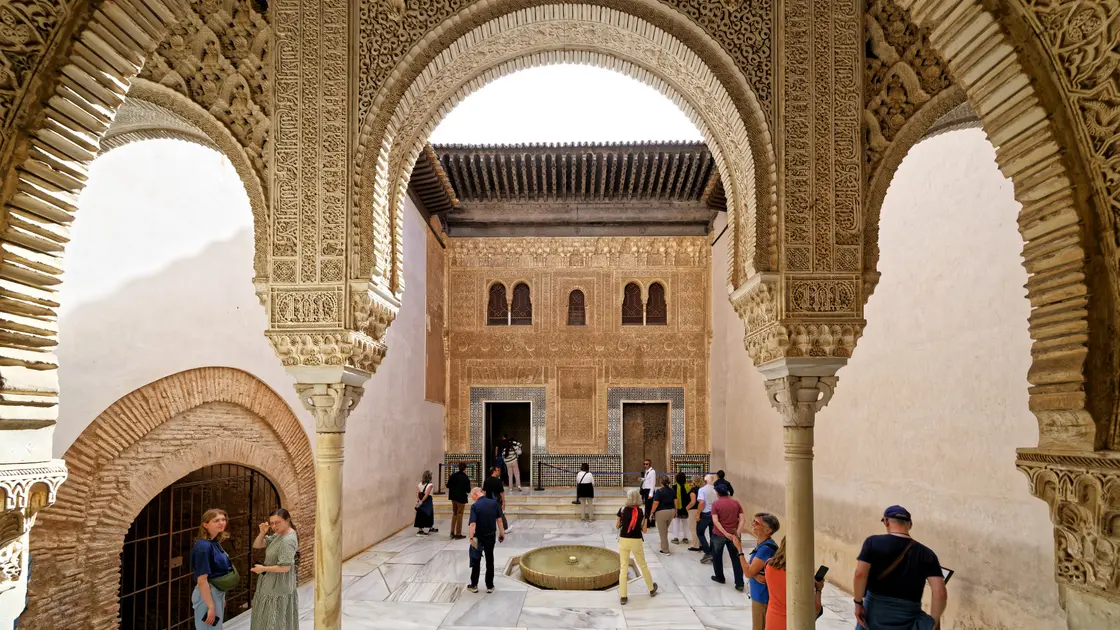
Explore nearby · Monument
Alhambra
The Alhambra is Granada's UNESCO fortress-palace: Nasrid Palaces, Alcazaba and Generalife gardens. Tickets sell out weeks ahead; book via the Patronato site.
Translation offers two valid levels of answer, then. Someone asking for the literal Alhambra name meaning should hear "the red one" first. Someone asking why it's called the Red Fortress should hear the expanded phrase and the architecture behind it.
That's a small distinction with a practical payoff: it keeps the monument's Arabic wording visible instead of treating "Red Fortress" as though it were the original form.
Three explanations for the color red
Ask why the Alhambra is red, and three different answers turn up. They don't carry equal weight.
| Explanation | What it claims | How solid it is |
|---|---|---|
| Rammed-earth walls | Reddish clay and iron oxide colour the fortress's earthen ramparts | Backed by the historical and architectural record |
| Torchlight legend | The walls were once whitewashed and looked red only when lit by torches at night | A recurring story some authors tell, not an established fact |
| Founder's name | Ibn al-Ahmar, "Son of the Red," founded the complex, and his name may echo in it | A proposed link, not a documented cause |
The first is the one this article treats as history: the reddish colour is embedded in the material itself, not painted on. Iron oxide inside the local clay tints the rammed-earth ramparts long before any plasterer or later stonemason touches them[5][6].
The second explanation is folklore more than fact. It holds that the walls were originally whitewashed, and that torches lit inside the fortress at night threw enough of a glow across them to give the name a nocturnal origin instead of a daylight one[7]. It's a vivid image, and it survives in guidebooks precisely because it is vivid. The rammed-earth and iron-oxide account is the one stated plainly as the reason for the colour, while the torchlight version rests on the story itself, with nothing beyond it offered as evidence.
The third explanation ties the name to a person rather than a material. Ibn al-Ahmar's epithet is said to nod to his own red hair, not to the fortress walls[8]. That makes for a tempting coincidence: a red-named founder building a red-named fortress. But nothing beyond that coincidence links his name to the fortress's colour, and the walls themselves remain the more direct explanation. The safest reading treats it as a resonance, not a cause.
From 9th-century fortress to 13th-century palace
The fortress name predates the palace by centuries. The earliest surviving reference to Qal'at al-Hamra comes from fighting between Arab forces and the Muladies under 'Abdallah ibn Muhammad, Emir of Córdoba from 888 to 912[1]. That places a red-named stronghold on the hill roughly four centuries before Nasrid Granada existed.
For most of that time it stayed a fortress, not a residence. The history of the Alcazaba fortress covers that earlier defensive role in more depth, long before any sultan lived inside these walls.
That changed in 1238. Muhammad I, known as Ibn al-Ahmar, first settled in the old Zirid citadel on the Albaicín hill, then turned to the ruined fortress on Sabika Hill and began building a new residence and citadel there the same year[2]. The Nasrid dynasty of Granada he founded ruled from the site, reaching its fullest splendor under the sultans Yusuf I and Muhammad V in the following century[3].
So the "red fortress" the name describes existed for centuries as a purely military structure before it became a royal address. Reading the name as fortress-first, rather than palace-first, keeps that sequence straight: the walls earned the description long before the courtyards did.
Other red fortresses across the Islamic world
Granada's red-named fortress is not unique. Islamic architecture across two continents produced other strongholds whose names describe the same colour, for similar material reasons, and the pattern is worth pointing out: it shows al-Hamra is a description, not a name invented only for this hill.
- Marrakesh, Morocco: called al-Madīnat al-Ḥamrāʼ, "the Red City," a nickname tied to its red clay walls[9]
- Delhi, India: the Mughal Red Fort complex takes its English name from its massive red sandstone walls[10]
- Granada, Spain: the Alhambra, al-Qal'ah al-Hamra, named for its reddish rammed-earth ramparts
The Delhi comparison works differently from the Marrakesh one, and the difference is worth naming. Marrakesh's nickname is Arabic, built from the same root, ḥamrāʼ, as the Alhambra's own name. Delhi's fort earned its English name, Red Fort, as a translation of the Hindustani Lāl Qila, a different language entirely. The two forts aren't linguistic relatives; they arrived at the same naming logic independently, because red-toned building material and a fortress worth naming after its colour turn up on more than one continent.
Why the Alhambra and Granada names are separate questions
The first syllable can create a second small puzzle. The inherited al- already means "the" in Arabic, yet both English and Spanish normally add their own definite article when using the monument's name[11]. In English, "the Alhambra" is standard, even though the Arabic article is already built into the word.
That overlap is ordinary usage, not a new translation. It also has nothing to do with the origin of the name Granada. The monument's Arabic colour-name has a clear linguistic route; the city's name has several competing explanations, with no consensus.
Treating the two questions separately produces cleaner history. The Alhambra is explained through al-Hamra, the expanded fortress form, and the earthen walls behind it. Granada needs a different set of sources and a more cautious conclusion.
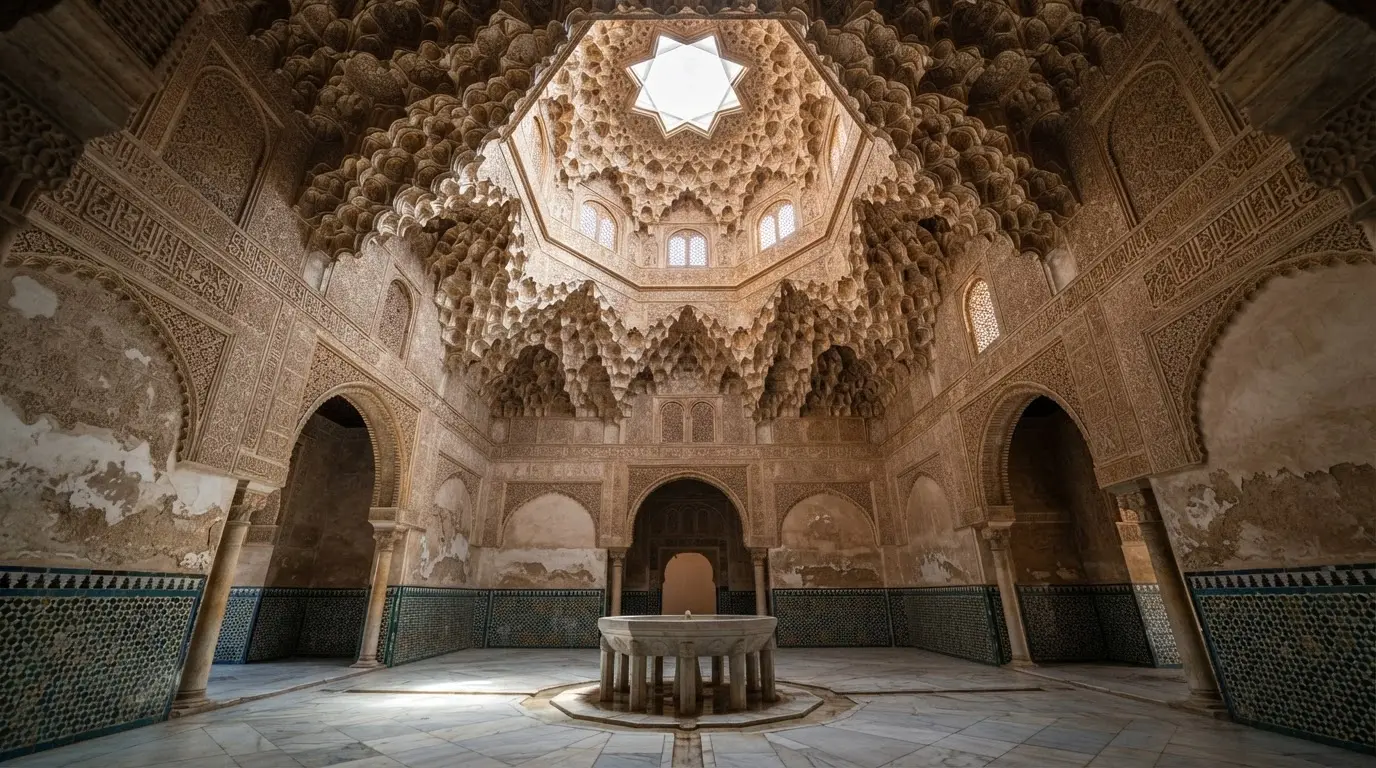
Deep dive · Article
Abencerrajes of Granada: the noble clan behind the legend
Abencerrajes of Granada: the noble clan who shaped Nasrid court politics for a century and became legend through a massacre story set in the Alhambra.
For that broader debate, read where Granada got its name. It examines the city-name theories without borrowing certainty from the monument's etymology. A shared hillside doesn't make two names linguistic relatives.
The short answer stands: Alhambra means "the red one"; "red fortress" comes from the fuller Arabic form. The walls make that colour reading tangible, and the separate name Granada belongs to another argument entirely.