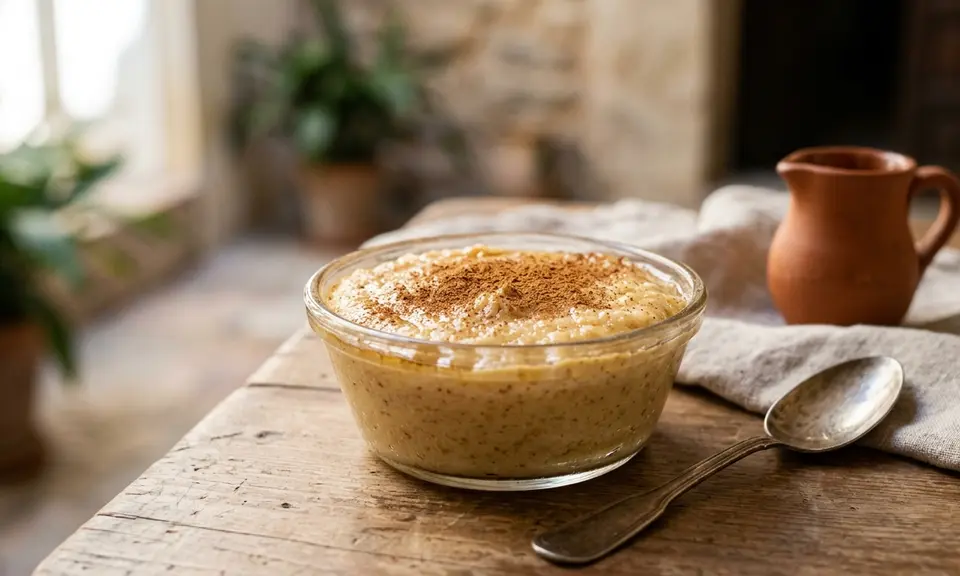
The name means tastes good to me, which is accurate but understated. Bienmesabe granadino is a thick, smooth almond cream — somewhere between marzipan and custard in texture — chilled and served in a small bowl or glass with a spoon. One taste and you understand why Andalusian convents have been making it for centuries.
This is not to be confused with the Canarian bienmesabe, a coconut-and-almond sauce served warm over fish. Granada's version is a cold dessert, eaten slowly with a spoon, built from a short list of ingredients: ground blanched almonds, egg yolks, sugar or honey, a strip of lemon zest, and cinnamon. The method is patient — almonds ground fine, combined with the yolks and sugar over gentle heat until the mixture thickens, then left to cool. The result is dense and sweet, pale gold in colour, with the faint graininess of real almond rather than the smoothness of extract.
What to expect
A proper bienmesabe arrives in a small glass or ceramic bowl, cold from the refrigerator or at cool room temperature. The surface is often dusted with ground cinnamon. The texture should hold its shape when you push the spoon through — not runny like pastry cream, not solid like marzipan. Somewhere between the two.
Order it as a dessert after lunch, or mid-afternoon with a coffee. In some Albaicín teterías, it appears on the menu alongside honey-soaked pastries and mint tea — an implicit acknowledgment of the Moorish almond tradition that feeds directly into Granada's convent cooking.
Modern versions vary. Some pastelerías add orange-blossom water or cardamom. A handful use honey instead of sugar, which gives a darker colour and more complex sweetness. The original, as made in the convents, uses plain white sugar and lemon zest only. Both are worth trying.
Where to find it in Granada
The most reliable places are the pastelerías in the city centre, particularly around Calle Reyes Católicos and the streets behind the Cathedral. López-Mezquita is a known address, but smaller family bakeries — the ones with handwritten labels in the window — often have the more authentic versions.
For something closer to the source, visit a convent torno. Several of Granada's enclosed convents sell sweets through a rotating wooden window built into the convent wall, the torno, so transactions happen without the nuns being seen. The old Moorish quarter and the street behind Santa Isabel la Real are worth exploring on foot. You ring the bell, state what you want, leave money in the wheel, and a wrapped package comes back. No eye contact, no receipt — it has been working this way for five centuries.
Bienmesabe also appears at Albaicín café-teterías that serve traditional Andalusian sweets alongside Moroccan mint tea. The pairing is not accidental: the almond-and-honey confectionery tradition crossed the Strait of Gibraltar in both directions for seven hundred years, and the flavours still rhyme.
Practical details
Price: €2–4 per serving in a café or restaurant; around €8–12 per 200g jar from a pastelería or convent torno. It keeps well refrigerated for several days, and travels if you buy it sealed.
Allergens: contains tree nuts (almonds) and eggs. The cream itself contains no dairy or gluten — though if served on toast or with a pastry base, those will introduce both. Ask before you order if you have a nut allergy, as almonds are non-negotiable in the recipe.
Bienmesabe pairs well with Pedro Ximénez sherry: the thick, raisin-dark sweetness of the wine sits next to the almond cream without competing. A cold Moscatel de Málaga works similarly. For a non-alcoholic pairing, strong black coffee cuts through the richness better than mint tea, though both are traditional.
For a fuller picture of Granada's convent sweet tradition — the almendrados, polvorones, and marzipan figures that share the same heritage — see dulces de convento. And for the broader sweep of Moorish-influenced Andalusian cold food, ajoblanco shows the same almond base applied in a completely different direction.
For a savoury contrast on the same table, Granada's other everyday tapas run in the opposite direction from bienmesabe's sweetness: the Costa Tropical's boquerones and the fried-bread tostón are both salty, cheap, and built for a drink rather than a spoon.