Written by James Walker
Modern Granada · 1808–today
  • 5 min
  • 34 sources

How Contraviesa-Alpujarra Wine Came Back From Phylloxera

How Contraviesa-Alpujarra wine went from phylloxera and almond country to a 2018 PDO: slate soils, 1,400 m claims, and why the vineyard figures disagree.
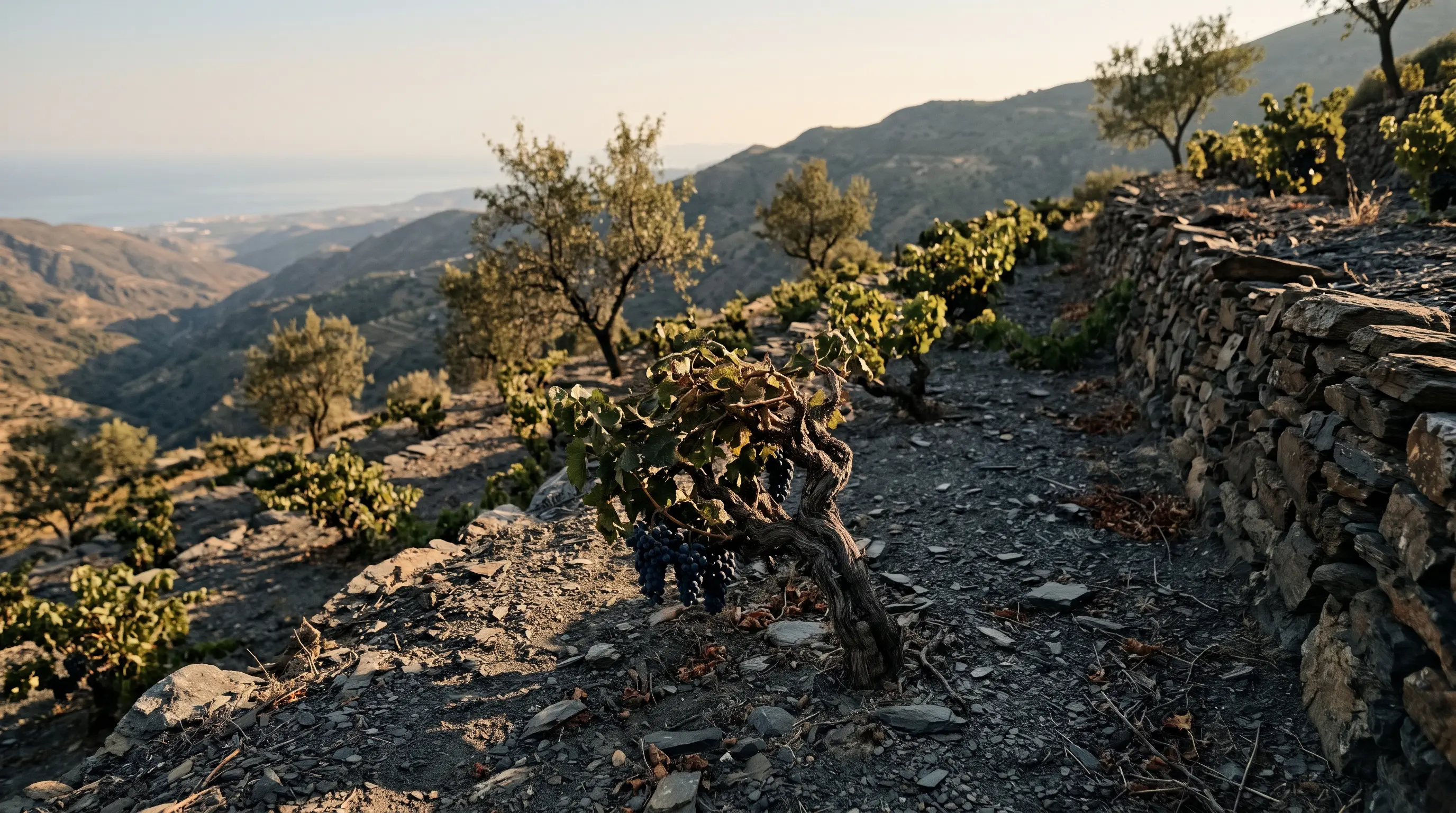
Contraviesa Alpujarra wine history: old bush vines on dark slate terraces high in the Sierra de la Contraviesa at golden hour, almond trees between the rows and the Mediterranean haze far below

Old Contraviesa vineyards are field blends, planted as a mix rather than variety by variety.

Half of Granada's vineyards sit above 1,000 m,[1] but the Contraviesa-Alpujarra story is less about height than about repair, and on a bottle you will meet it as a PDO Granada sub-zone or as the older Vino de la Tierra Cumbres del Guadalfeo. The oldest parcels near Cástaras average 101 years,[2] on a rootstock that only became popular after phylloxera swept Spain's vineyards.[3] The PDO is dated 2018,[4] and the hectare figures quoted for the region differ wildly.
Altitude of half the vines
1,000 m
The PDO regulator's figure for Granada's vineyards[1]
Average age at Cástaras
101 years
Old parcels near 1,400 m in the Cumbres del Guadalfeo area[2]
PDO Granada established
2018
Contraviesa-Alpujarra is one of its sub-zones[4]

Where the vines grow: slate, slope and altitude
The Sierra de la Contraviesa lies about 70 km south-east of Granada,[5] on the southern edge of the Alpujarra, the district whose Morisco-era villages are strung along the flanks of Sierra Nevada. Its vines spread across the sierra's slopes, above all the south face looking toward the Mediterranean.[6]
Across the province the average vineyard altitude is about 1,200 m, on soils that mix slate and clay in varying proportions.[7] The Contraviesa climbs well above that. Wine writer Thomas Götz places slate-soil vineyards as high as 1,400 m, the highest on the Iberian Peninsula,[8] while the winery Barranco Oscuro claims to work the highest viticultural region in Europe.[9]
Treat that superlative with care. It is a producer's claim, and published altitudes do not agree on it: the highest Barranco Oscuro vines are reported at over 1,350 m on schist,[10] against Götz's 1,400 m. Either way, slate or schist is what these vines are rooted in.
Higher up the district, in the Alpujarra Alta, vineyards reach over 1,400 m and still keep old bush vines on slate soils.[33] Barranco Oscuro itself works 12 ha in the sierra,[34] which gives a sense of scale: the winery behind the region's loudest superlative works a modest area.
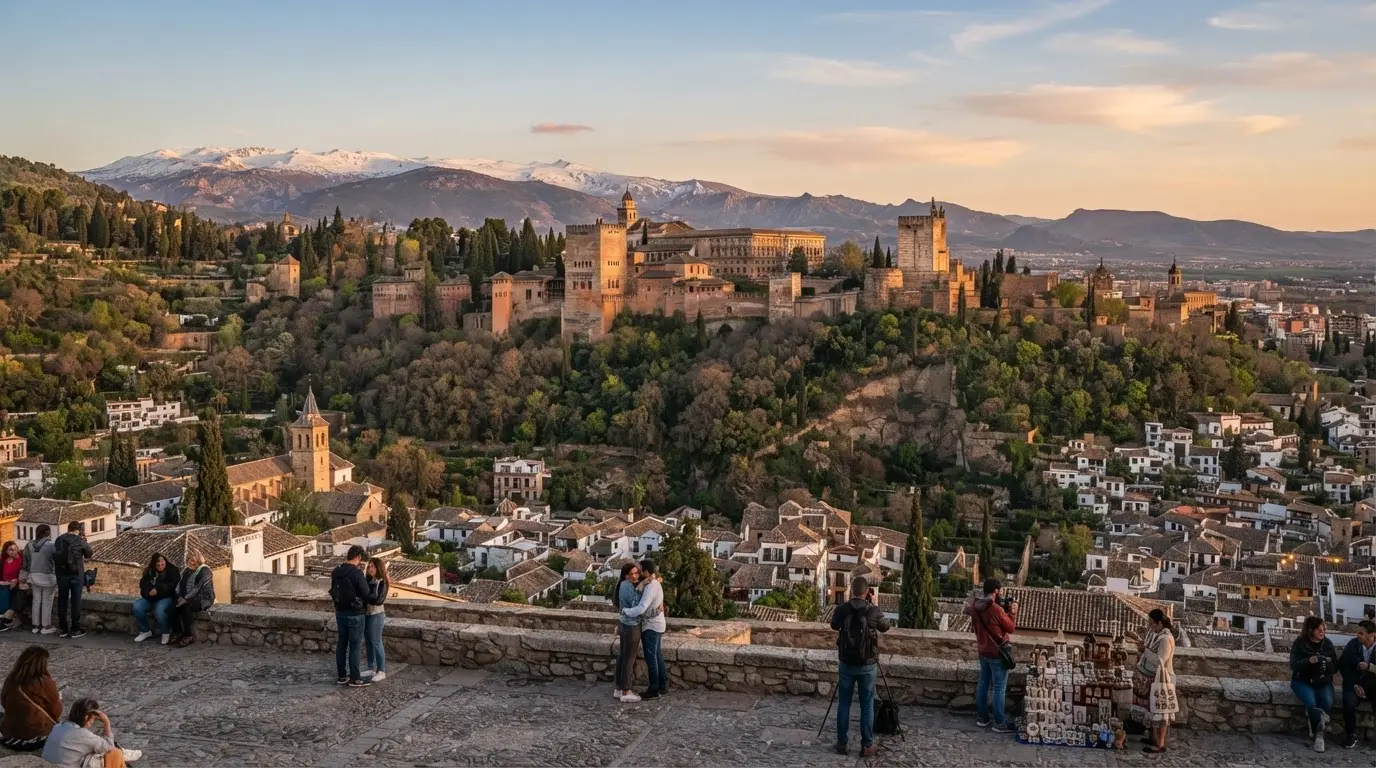
Wide-angle panoramic view of Granada Spain from Mirador de San Nicolás showing the Alhambra palace complex and Generalife gardens against the snow-capped Sierra Nevada mountains at golden hour, illustrating the interesting facts about Granada Spain

Deep dive · Article

20 Interesting Facts About Granada, Spain

Interesting facts about Granada Spain that guidebooks skip: disputed etymologies, the soldier who saved the Alhambra, and a river buried under Plaza Nueva.

Three features on the ground carry the history, and each is something you can recognise:
  • The old parcels at Cástaras, averaging 101 years and rooted on Rupestris du Lot[3]
  • The south-facing Contraviesa slopes toward the Mediterranean[6]
  • Barranco Oscuro's highest vines, reported at over 1,350 m on schist[10]

Roman presses, Hamm and the phylloxera break
Wine in the province is old. The PDO's own single document cites vine growing since time immemorial and the Roman villa with a wine press at Molvízar.[11] For the Contraviesa the paper trail is thinner but real, with documents recording white Vigiriega grapes as early as 1807[12] and Dr Wilhelm Hamm naming the sierra in his Book of Wines in 1865.[5]
Then came phylloxera, which reached Spain in 1878 through three foci: Girona, Málaga and the Portuguese border on the Duero.[13] The Málaga front hit Antequera in 1884 and pushed east through the vegas of Loja and Granada.[14] The aftermath on the Contraviesa is easier to trace than the arrival. It shows in the vines.
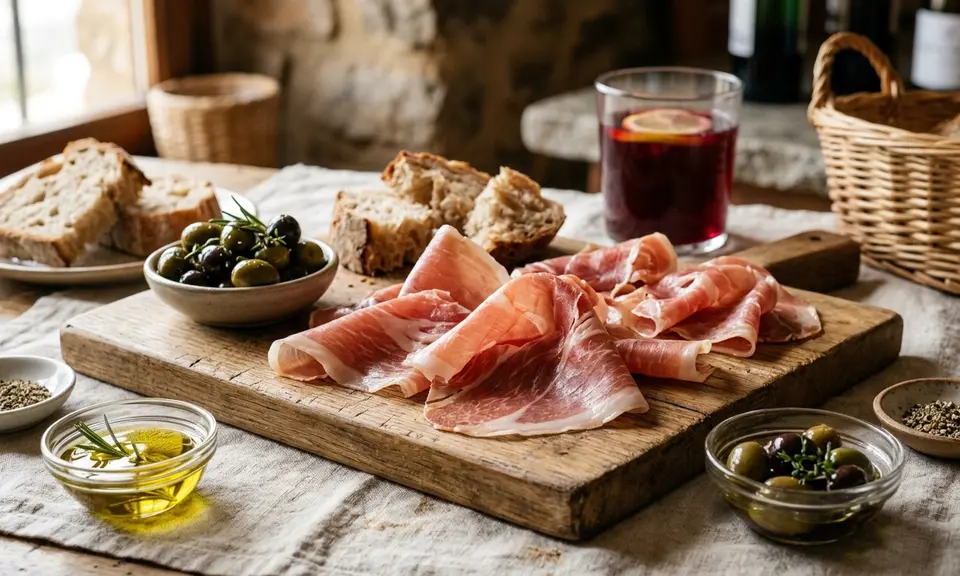
Jamón de Trevélez sliced thin on a wooden board, Granada's PGI mountain ham

Taste of Granada · Dish

Jamón de Trevélez

Cured 17–23 months at 1,200m in the Alpujarras, jamón de Trevélez PGI is lightly salted, silky, and unlike any lowland ham. Granada's finest cured meat.

After the plague, growers favoured vines that grew quickly and needed little care,[15] and the old costa wine became the region's traditional style.[16] The surviving old parcels reflect that break: at Cástaras the vines stand on Rupestris du Lot, a rootstock that became popular after the plague.[3]
Two cautions apply to the early record. The Roman evidence comes from Molvízar, not from the Contraviesa, so it shows the province's long wine habit rather than a continuous local tradition. The 1807 and 1865 references show that vines were grown and noticed in the sierra before the plague, but not how much was planted or how it tasted.

Almonds, field blends and a 1979 arrival

Götz estimates that vineyards once covered more than 90,000 ha, fell to 7,000 by the late 1970s and now barely reach 500;[17] that is one writer's estimate rather than an official count. Almonds won. They offered a more profitable, less labour-intensive crop.[18]
The turn came with Manuel Valenzuela, who arrived in the Sierra de la Contraviesa in 1979[19] and is said to have kickstarted the revival of Alpujarra winemaking.[20] He is credited with introducing French varieties,[21] at a time when red and white styles were only beginning to appear next to the older costa, mostly from the 1980s.[16] The PDO describes the same shift: a few committed growers rediscovered the area's potential for great reds.[22]
Old Contraviesa vineyards are field blends, planted as a mix rather than variety by variety. A typical one is about 50% Jaén Blanco and 30% Jaén Negro, with the rest made up of other local varieties:[23]
  • Perruno
  • Vijiriega
  • Pedro Ximénez
  • Montúa
  • Tinta Requena
  • Tinto Varetuo
Set Götz's two later figures side by side and the scale of the loss is plain: from 7,000 ha in the late 1970s to barely 500 now is a fall of more than nine-tenths.[17] The revival started from that low base in the 1980s, which is why the Contraviesa's modern reds and whites are young next to the old costa, and why the vines that carry the older story are so few.

From Vino de la Tierra to PDO: how the labels arrived

Granada's current system is a province-wide PDO whose regulator counts 174 municipalities,[29] with a Contraviesa-Alpujarra sub-zone and three PGIs: Altiplano de Sierra Nevada, Cumbres del Guadalfeo and Laderas del Genil.[28] The sub-zone is formed by 13 municipalities, among them Cádiar and Cástaras.[30] For the wider province, from the Altiplano to the Genil slopes, Granada's wine guide maps where the bottles come from.
The 2009 rename is the step that confuses readers. It was administrative. The Vino de la Tierra became Cumbres del Guadalfeo at the request of the Asociación Vitivinícola de la Alpujarra,[31] so the Contraviesa-Alpujarra name now survives mainly as the PDO sub-zone.[28] The new name describes high ground: most of the vineyards in Cumbres del Guadalfeo stand at 1,000 m or higher.[26] The PDO itself is the latest layer, dated 2018.[4]
Timeline
  1. 1992

    First Vino de la Tierra mention

    A Ministry of Agriculture order of 6 October names Contraviesa-Alpujarra.[32]

  2. 2004

    Andalusian rules set

    An order of 22 November, published in the BOE in 2005.[32]

  3. 2009

    Renamed Cumbres del Guadalfeo

    An order replaces the Contraviesa-Alpujarra name throughout.[31]

  4. 2018

    PDO Granada

    The province-wide denomination, with Contraviesa-Alpujarra as a sub-zone.[4]

The Contraviesa-Alpujarra name was therefore in official use from a 1992 ministry order and was written into Andalusian rules in 2004 before the 2009 swap.[32] The name on a Contraviesa label therefore says as much about paperwork and timing as about the vineyard.

What survives in the vineyards today

The clearest survivors are the old parcels at Cástaras, in the Cumbres del Guadalfeo area, which average 101 years and sit at about 1,400 m.[2] They belong to the Ángel de Viñas project of González Byass and hold Jaén Blanco, Jaén Negro, Vigiriego and Tempranillo.[2]
Like Trevélez ham and its DOP, the Contraviesa's protected names are a late layer over a much older local habit. Its superlatives are best read as claims from the vineyards, not as records.
The Cástaras parcels answer the phylloxera question better than any date. Do the vines predate the plague? No. An average age of 101 years places the planting long after phylloxera reached Spain in 1878,[13] and the rootstock under the vines fits that timing.[3] What stands there is a replanted vineyard rather than a survivor of the plague, old by the standards of the replanting and not by those of the Romans.

Frequently asked questions

What is the Contraviesa Alpujarra wine history in brief?

Vines go back at least to the Roman villa with a wine press at Molvízar,[11] and documents record Vigiriega grapes in 1807.[12] Phylloxera, almonds and a 1979 revival led by Manuel Valenzuela[19] came before the PDO, dated 2018.[4]

Where is the Sierra de la Contraviesa wine region?

About 70 km south-east of Granada,[5] with vineyards spread across the slopes, above all the south face toward the Mediterranean.[6]

Did phylloxera destroy the vineyards of the Alpujarra?

It changed what was planted. Phylloxera reached Spain in 1878, and after hitting Antequera in 1884 it moved east through Loja and the Granada vega.[13][14] Growers then favoured fast-growing, low-care vines,[15] and the old Cástaras parcels stand on a rootstock popularised after the plague.[3]

What is costa wine?

Costa is the old local style of the Contraviesa, and the reds and whites now sold under its labels date mostly from the 1980s onward.[16]

Are Granada's vineyards the highest in Europe?

That is Barranco Oscuro's own claim.[9] Götz calls the slate vineyards the highest on the Iberian Peninsula at 1,400 m,[8] and the highest Barranco Oscuro vines are reported above 1,350 m.[10]

Why was Contraviesa-Alpujarra renamed Cumbres del Guadalfeo?

A 2009 order made the change at the request of the Asociación Vitivinícola de la Alpujarra,[31] and the old name lives on as the PDO sub-zone.[28]

When did Granada get its PDO?

Granada's PDO is dated 2018,[4] with Contraviesa-Alpujarra as one of its sub-zones.[28]

Sources

34 references Show
  1. dopvinosdegranada.es — Vinos (opens in a new tab)

    “Half of Granada's vineyards are located at an altitude of over 1,000 metres.”

  2. vinetur.com (opens in a new tab)

    “Las parcelas, con una edad promedio de 101 años, albergan variedades de uvas como Jaén blanco, Jaén negro, Vigiriego, Tempranillo”

  3. vinetur.com (opens in a new tab)

    “Es importante destacar que las viñas de esta zona están arraigadas sobre un pie rupestre, conocido como Rupestris du Lot, que se popularizó tras la plaga de la filoxera.”

  4. Wikipedia (opens in a new tab)

    “Year established | 2018”

  5. dopvinosdegranada.es — Los barrancos (opens in a new tab)

    “The Sierra de la Contraviesa, located about 70 kilometers southeast of Granada, was already mentioned in 1865 by Dr. Wilhelm Hamm in his famous "Book of Wines".”

  6. Junta de Andalucía — Guadalfeo.pdf (opens in a new tab)

    “El viñedo se extiende por las laderas de la sierra de la Contraviesa, sobre todo por su vertiente sur, frente al Mediterráneo.”

  7. foodswinesfromspain.com — D o granada (opens in a new tab)

    “The average altitude of the vineyards of Granada is about 1.200 meters. The soils present variable compositions of slate and clay.”

  8. spanishwinelover.com (opens in a new tab)

    “slate soil vineyards climbing to 1,400 metres, the highest on the Iberian Peninsula.”

  9. wideworldofwine.co (opens in a new tab)

    “Manuel Valenzuela arrived in the Sierra de la Contraviesa, in the Alpujarras range, in 1979. It claims to be the highest viticultural regional in Europe.”

  10. wideworldofwine.co (opens in a new tab)

    “He may be high in the Sierra de la Contraviesa (over 1,350 metres for the highest vines)”

  11. Junta de Andalucía — DU Granada modificado 4.pdf (opens in a new tab)

    “Cultivo de vid desde tiempo inmemorial, restos arqueológicos de Molvízar, villa romana con lagar.”

  12. Junta de Andalucía — Guadalfeo.pdf (opens in a new tab)

    “del que existen documentos que señalan su cultivo en 1807”

  13. uv.es (opens in a new tab)

    “La plaga llegó a España en 1878 por tres focos: Girona, Málaga y la frontera portuguesa del Duero”

  14. uv.es (opens in a new tab)

    “uno hacia el Este por las vegas de Loja y Granada”

  15. dopvinosdegranada.es — Los barrancos (opens in a new tab)

    “After the great phylloxera plague that affected vineyards at the end of the 19th century, there was a tendency to plant vines that grew quickly and did not require special care.”

  16. spanishwinelover.com (opens in a new tab)

    “costa has long been the region’s traditional wine, with red and white styles only becoming common in the 1980s.”

  17. spanishwinelover.com (opens in a new tab)

    “Before phylloxera, vineyards covered more than 90,000 hectares. By the late 1970s, the figure had fallen to 7,000; today, barely 500 remain”

  18. spanishwinelover.com (opens in a new tab)

    “Almond trees have gradually replaced vines, offering growers a more profitable and less labour-intensive crop.”

  19. wideworldofwine.co (opens in a new tab)

    “Manuel Valenzuela arrived in the Sierra de la Contraviesa, in the Alpujarras range, in 1979. It claims to be the highest viticultural regional in Europe.”

  20. wideworldofwine.co (opens in a new tab)

    “It’s said that Manuel Valenzuela kickstarted the revival of Alpujarras winemaking”

  21. spanishwinelover.com (opens in a new tab)

    “who also introduced French grape varieties to the area.”

  22. dopvinosdegranada.es — Los barrancos (opens in a new tab)

    “a few viticulturists committed to the region and full of enthusiasm have rediscovered the potential of the area to produce great reds.”

  23. spanishwinelover.com (opens in a new tab)

    “The typical old vineyard is planted with about 50% Jaén Blanco and 30% Jaén Negro”

  24. spanishwinelover.com (opens in a new tab)

    “DO Granada, which covers the entire province, accounts for just 260 hectares of vineyards.”

  25. spanishwinelover.com (opens in a new tab)

    “a Vino de la Tierra region with just 43 hectares registered.”

  26. foodswinesfromspain.com — Cumbres de guadalfeo vdt (opens in a new tab)

    “It covers 79 ha with most of the vineyards with an altitude of 1,000 m or higher.”

  27. foodswinesfromspain.com — D o granada (opens in a new tab)

    “Granada cultivates 5.500 hectares of vineyards that produce between 30 and 40 million kilograms of grape per year.”

  28. dopvinosdegranada.es — Vinos (opens in a new tab)

    “Granada has, within the Protected Designation of Origin (PDO), a sub-zone; Contraviesa-Alpujarra and three Protected Geographical Indications (PGI): Altiplano de Sierra Nevada, Cumbres del Guadalfeo and Laderas del Genil.”

  29. dopvinosdegranada.es — Vinos (opens in a new tab)

    “includes the 174 municipalities of the province of Granada in its entirety, coinciding with the provincial demarcation, recognizing the specific sub-area Contraviesa-Alpujarra”

  30. foodswinesfromspain.com — D o granada (opens in a new tab)

    “recognizing a specific protection in the subregion named Contraviesa-Alpujarra, formed by the municipalities of Albondon, Albuñol, Almegijar, Cadiar, Castaras, Lobras, Murtas, Polopos, Rubite, Sorvilan, Torvizcon, Turon and Ugijar.”

  31. boe.es — BOE A 2009 11654.pdf (opens in a new tab)

    “Se sustituye la mención «Vino de la Tierra Contraviesa-Alpujarra» por la mención «Vino de la Tierra Cumbres del Guadalfeo», en todo su articulado.”

  32. boe.es — A05100 05100.pdf (opens in a new tab)

    “Mediante Orden del Ministerio de Agricultura, Pesca y Alimentación de 6 de octubre de 1992”

  33. spanishwinelover.com (opens in a new tab)

    “Here, vineyards reach over 1,400 metres and still preserve old bush vines on slate soils”

  34. wineanorak.com (opens in a new tab)

    “Barranco Oscuro have 12 hectares in the Sierra de Contraviesa near Granada in the south of Spain.”