Ron Montero Rum Outlived the Sugar Mills of Motril
Ron Montero still distils rum in Motril, long after its sugar mills closed. Learn what shut in 1984 and 2006, and what you can visit on the Costa Tropical.
Ten years in food journalism specialising in Spanish and Andalusian cuisine. Four years focused on Granada's food scene.
Published
Ron Montero is a rum bodega in Motril, founded in 1963,[1] and one of the last cane-rum makers on a coast where cane farming ended after more than 1,000 years.[4] "One of the last" is the safe wording, because a second rum bodega works at Lobres, between Salobreña and Motril.[17] The sugar mills are gone, the bodega is not, and published visiting details differ, so phone ahead before you drive down.
Founded by Francisco Montero Martín, per Motril's tourist office[1]
Last Costa Tropical crushing
2006
Salobreña's Rosario factory ceased; Motril's Pilar stopped in 1984[2]
Listed distillery visit
Tue–Sat, 12
Andalucía tourism listing gives the time; confirm before going[3]
In this article
Jump to a section
⌄
How cane came to Motril
Cane reached the Granada coast long before anyone drew the borders of a Granada province. Records of its cultivation in al-Andalus, in the territory that later became the Kingdom of Granada, go back to the 10th century.[6] A local history of Motril reckons the industry then ran, more or less without interruption, for almost a thousand years, from Muslim al-Andalus into the last third of the 20th century.[7] Chroniclers of the 19th and early 20th centuries, writing about the late 15th and early 16th centuries, speak of fourteen sugar factories in Motril and one in the hamlet of Pataura, a count that documents have not confirmed.[21]
Inland, that same medieval Granada left the very different landscape described in the Morisco villages of the Alpujarras. Down on the coast the money was in the Guadalfeo valley, where cane was the crop that mattered.
By the time the last fields went out of production, cane had been grown in the area for more than 1,000 years.[4] Hold that number in mind, because it is the reason a small rum bodega in Motril is worth a detour. Ron Montero is not a heritage gimmick. It is a survivor of an industry that shaped the town.
Seven factories and one tall chimney
By 1860 Motril had up to seven sugar factories running on industrial technology.[5] Family names from that boom still turn up in the local histories. Martín Larios built Nuestra Señora de la Cabeza in 1862, and the partnership Burgos, Domínguez y García raised Nuestra Señora del Pilar, which one local history dates to 1883;[9] other municipal material puts it a year or two earlier.
The Pilar is the one to remember because it lasted. After a modernisation in 1929-30 it was grinding about a third of the cane of the Vega del Guadalfeo,[10] so a third of the valley's harvest passed through a single factory. If you learn only one name from this list, make it the Pilar: it has the standing chimney, the steam-engine history and a museum project attached.
Two words help when you read about these buildings. An ingenio is the older kind of mill and a fábrica the steam-era factory; the museum behind the Casa de la Palma stands on the remains of the first, the Pilar is the second. Cane was not the coast's only crop either, and the chirimoya of the Costa Tropical has a history of its own.
Two closures, twenty-two years apart
The date people mix up is the ending. Motril's Pilar stopped in 1984, having kept a steam engine as its main source of power to the very last.[12] Salobreña's Nuestra Señora del Rosario, built by Joaquín Agrela in 1861 and later billed as the only cane factory left in Europe,[8] was the last on the Costa Tropical to cease, in 2006.[2]
A closing date quoted on a leaflet or a label usually belongs to one factory or the other, so check which. A visitor who expects a working mill in either town will be disappointed; what survives is museums, a chimney and a rum bodega.
Timeline
10th century
Cane recorded in al-Andalus
Records from the territory that became the Kingdom of Granada.[6]
Motril's factory closes after keeping steam power to the end.[12]
2006
Rosario stops
Salobreña's factory is the last on the Costa Tropical to cease.[2]
Montero sits inside that timeline, not after it. The bodega predates both closures, which makes the rum a product of the sugar era rather than a rescue project launched once the mills had gone.[1] It simply carried on when cane farming stopped.[4]
Francisco Montero's bodega
Ron Montero was founded in 1963 by Francisco Montero Martín, from a family that owned important sugar factories and distilleries, among them the Guadalfeo and Montero sugar factories.[1][14] A 2015 study by Andalusia's heritage institute describes the family-run Azucarera Montero distillery as still producing at the time.[22] Sugar was a hard trade: in the 1970s Azucarera Montero bought cane harvesters from Australia, machines that struggled on the valley's small plots.[13]
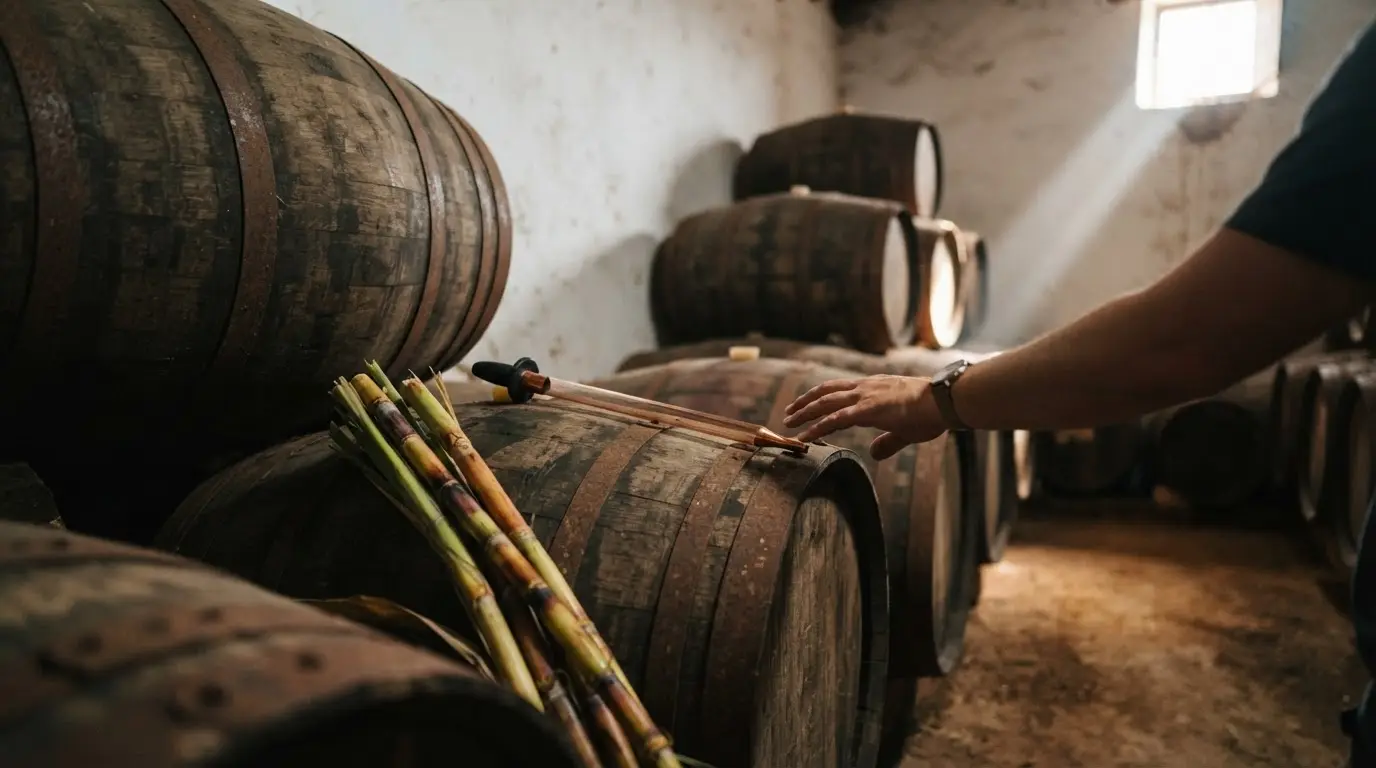
In the cellar the rum ages slowly in virgin American oak by the solera and criaderas system,[15][23] in which younger rum is blended into older barrels in stages. Motril's tourist board lists four bottlings:[24]
Ron Pálido, the traditional bottling
Ron Plata
Ron Montero Reserva
Ron Francisco Montero, a rum for special occasions
According to Difford's Guide, Joaquín Martín Montero, the founder's nephew, bought the distillery in 2007, and his daughter Andrea Martín Targa manages it.[16] The same entry calls him director of the last sugar cane cultivator in Europe and of the only molasses distillery in Spain, which is directory wording rather than an official ranking: a second rum bodega works at Lobres, ageing in American oak.[17] A dated enthusiast's review adds that Montero still cuts its own cane and makes its molasses from it,[25] so what goes into the still today is reported two ways and worth asking about on the tour. The defensible claim is one of the last.
What to visit in Motril today
Start with the Museo Preindustrial de la Caña de Azúcar, which sits behind the Casa de la Palma, on the remains of a 16th-century ingenio.[18] Over more than 1,000 square metres it lays out how sugar was made and sold between the 13th and 18th centuries,[19] the pre-industrial story that came before the Pilar's steam era.
For the industrial chapter, head for the Pilar. Its 45-metre chimney, built in 1929-30, still stands,[11] and the factory is being restored as the Museo Industrial del Azúcar.[20] Check with the town hall for its opening status before you plan around it.
Recommended tours
Tours are selected for quality, not commission. We earn a small fee if you book — at no extra cost to you.
The sugar museum behind the Casa de la Palma, for the pre-industrial process
The Pilar factory, for the chimney and the future industrial museum
The Ron Montero bodega, for the rum itself
Motril's tourism guide lists free guided tours Tuesday to Saturday at 12, with other languages on a week's request,[26] and the Andalucía listing gives the same noon slot.[3] Listings differ on whether you can simply turn up, so phone the bodega before you go.
Check before you drive down
Visit days, times and prices for the bodega, the sugar museum and the Pilar site can change. The tourism listing's Tuesday-to-Saturday noon visit is a starting point, so confirm with the bodega and Motril's tourist office before leaving Granada.[3]
Use the coast for the rest of the day. Sea kayaking on the Costa Tropical starts from La Herradura, and the boquerones of the Costa Tropical are the obvious seafood order afterwards. Go in the morning if you can, so the museum, the chimney and a long coastal lunch all fit around a noon bodega visit.
Frequently asked questions
Where can you visit Ron Montero rum in Motril?
Ron Montero is a rum bodega in Motril, on the Costa Tropical of Granada province. Motril's tourism guide lists free guided tours Tuesday to Saturday at 12, with other languages on a week's request, but listings differ on whether you can turn up unannounced, so phone the bodega before you go.
Is Ron Montero the last sugar cane rum in Europe?
The claim is not safe to repeat. A trade directory calls the owner director of the last sugar cane cultivator in Europe, but another rum bodega works at Lobres, between Salobreña and Motril. "One of the last" is the accurate wording.
When did Motril's sugar factories close?
Motril's Nuestra Señora del Pilar factory ceased production in 1984, when its shareholders agreed to close the sugar installations. The last crushing on the Costa Tropical was at Salobreña's Rosario factory in 2006.
Which was the last sugar factory on the Costa Tropical?
Salobreña's Nuestra Señora del Rosario, built by Joaquín Agrela in 1861, was the last on the Costa Tropical to cease activity, in 2006. Motril's Pilar factory had already stopped in 1984.
How is Ron Montero rum aged?
Montero's rums are aged with the traditional solera and criaderas method, in which younger rum is blended into older barrels in stages. The distillery was founded in 1963.
Who founded Ron Montero?
Francisco Montero Martín founded it in 1963. He came from a family that owned important sugar factories and distilleries, including the Guadalfeo and Montero sugar factories. According to Difford's Guide, his nephew Joaquín Martín Montero bought the distillery in 2007.
What is the Museo Preindustrial de la Caña de Azúcar?
It is Motril's sugar museum, standing behind the Casa de la Palma, on the remains of a 16th-century ingenio. Over more than 1,000 square metres it shows how sugar was made and sold between the 13th and 18th centuries. Check opening hours and ticket prices locally before visiting.
“se remonta a la época del al-Ándalus musulmán y que durante casi mil años continuó, más o menos ininterrumpidamente, hasta el último tercio del siglo XX”
“Joaquín Martín Montero, nephew of the founder and director of the last sugar cane cultivator in Europe and the only molasses distillery in Spain, purchased the Ron Montero distillery.”
“Ubicada entre estas dos localidades se encuentra Lobres, una pedanía perteneciente a Salobreña en donde podemos encontrar esta singular bodega de Ron que añeja sus caldos en barricas de roble americano.”
“En un espacio de más de 1.000 metros cuadrados es posible reconocer el proceso de fabricación y comercialización del azúcar, entre los siglos XIII y XVIII.”