Muslim travel guide
Muslim traveller's guide to Granada
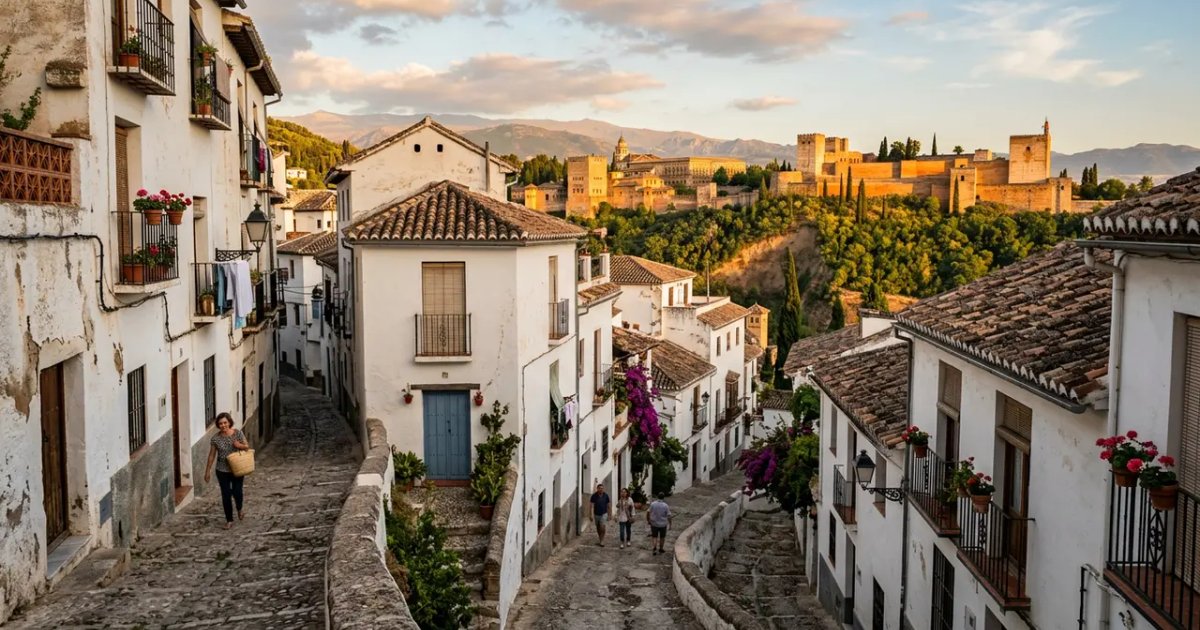
Granada holds more Islamic heritage than almost anywhere else in Europe. The Alhambra, the Albaicín's Moorish streets, an active Muslim community, and the Mezquita Mayor (the first mosque built in Granada since 1492). This guide covers what you need to know before you arrive.
Written by
James Walker Seven years resident in Granada. Specialist in Nasrid architecture, Al-Andalus history, and Andalusian walking routes.
Published
No other city in Western Europe offers Muslim visitors what Granada does. The Alhambra is the last surviving royal Islamic palace complex on the continent, built between 1238 and 1358 by the Nasrid dynasty. Its walls still carry the carved inscription Wa la ghalib illa Allah (There is no conqueror but God) in plaster and tile throughout every room. The Albaicín preserves the street pattern of a medieval Moorish city, with Arabic-speaking residents, halal butchers, and Moroccan tea houses on Calderería Nueva. And in 2003, the Mezquita Mayor opened on the hillside overlooking the Alhambra: the first mosque built in Granada since 1492.
This guide is practical. It covers where to eat halal food, how to find the mosque and when you can visit, where wudu facilities are, what to do without alcohol, and how to approach the city during Ramadan. Written from seven years on the ground in Granada, it is built on direct knowledge of the city, not a tourist board summary.
The Alhambra: why it matters for Muslim visitors
Many people visit the Alhambra as a tourist attraction. For Muslim visitors, it tends to be something different. The Nasrid Palaces are full of Qur'anic calligraphy: not decoration but architecture, the verses integrated into muqarnas vaulting, tile dados, and carved plaster friezes at every height. The phrase Wa la ghalib illa Allah appears so often it becomes a kind of rhythm you walk through. This was a functioning royal Islamic court until Ferdinand and Isabella rode in on 2 January 1492.
The adjacent Generalife gardens were designed around the Islamic concept of paradise: water channels, cypress shade, roses, and the sound of fountains through every space. The Alhambra complex sits above the city at 740 metres; the Sierra Nevada fills the skyline to the south, and on clear days you can see the plains of the Vega stretching west.
One site often missed: the Palacio de la Madraza, a short walk downhill from the main entrance on Calle Oficios. Yusuf I founded it in 1349 as a Qur'anic school. The original prayer hall survives, its walls carrying Arabic calligraphy in the mosaic tilework. Entry is free; hours are 10:30–13:00. It tends to be quiet even when the Alhambra is packed.
Booking the Alhambra
Tickets sell out 6–8 weeks ahead for the timed Nasrid Palaces entry. Book only at alhambra-patronato.es, never through resellers. If the Nasrid Palaces slots are gone when you check, the Alcazaba fortress and Generalife gardens are often available separately and remain a meaningful visit.
Allow at least 4 hours for the full complex. Your Nasrid Palaces entry is timed to the half-hour; missing your slot means no re-entry. See the Alhambra tickets guide for the full booking process.
The Mezquita Mayor de Granada
The Great Mosque of Granada sits on the hillside of the Albaicín at Plaza San Nicolás s/n, the same square where tourists gather for the Alhambra view. It opened in 2003, the first mosque built in Granada since the Castilian conquest ended Islamic worship in the city in 1492. That gap of 511 years makes its presence here feel like something more than a building.
The mosque is open daily 11:00–14:00 and from Asr to Isha (afternoon and evening prayer windows). Friday Jummah is at 14:30, the one time that holds steady year-round. Wudu facilities for both men and women are on site. The mosque follows an open-door policy: all visitors are welcome in the courtyard and garden; the prayer hall is generally reserved for Muslims during prayer times.
One practical point worth knowing: the gates lock firmly outside the visiting windows. If you arrive at 14:05, after the morning session closes, and before Asr, you cannot get in. Check the mosque website (mezquitadegranada.com) or call ahead (+34 958 202 526). The Teteria Marrakech (Calle Espalda de San Nicolás 7, a five-minute walk away) is the best place to wait if you arrive between windows.
Daily prayer times shift seasonally — don't rely on cached times
In summer, Isha can fall past midnight and Fajr before 5:00 in Granada. In winter, all five prayers compress into a much shorter day. The only stable time is Jummah at 14:30. Use Muslim Pro or PraySalat for accurate times on your actual visit dates; times can shift by up to two hours across the year.
The garden overlooks the Alhambra from the same hillside, which means you're looking at the palace from roughly the angle its builders would have seen it from the Albaicín. The Centre for Islamic Studies on site offers Arabic language classes and periodic exhibitions. If you want Arabic-speaking assistance during your visit, the mosque staff can help.
Halal restaurants and food
The concentration point is Calderería Nueva and Calderería Vieja: two streets that run uphill from Plaza Nueva into the Albaicín. Within this stretch you'll find Moroccan restaurants, Palestinian-owned kebab places, Syrian food, and Moroccan tea houses, most of them halal by Muslim ownership. It's compact enough to walk the full length in 15 minutes and covers most of your halal eating options in one area.
Certified halal
- Restaurante Arrayanes
Cuesta Marañas 4, Albaicín. Moroccan. One of the most-cited halal-certified restaurants in Granada. - Pad Thai Wok
Calle Pavaneras, Realejo. Asian/Thai. Halal certified; takeaway and delivery available. - Restaurante Muglia
Calle Casillas de Prats 6. Halal Indian. Two locations; delivery available.
Halal-oriented (Muslim-owned)
- El Taj Halal
Arabian/Moroccan/Indian fusion. Over 24 years in Granada; one of the oldest halal establishments in the city. - Puerta de Syria
Syrian. Small, good value, near the city centre. Frequently recommended in traveller guides. - As Sirat
Calderería Nueva 4. Moroccan tea house on the main halal street. - Teteria Marrakech
Calle Espalda de San Nicolás 7 (near the mosque). Closed Tuesdays.
A note on halal certification in Granada
Most halal restaurants in Granada are Muslim-owned (Moroccan, Palestinian, Syrian) and halal by the owner's religious practice. That's widely accepted by most travellers, but it's not the same as a formal Instituto Halal certificate. If you require certified halal, ask explicitly. Restaurante Arrayanes and Pad Thai Wok are the two most reliably cited as formally certified. When in doubt, vegetarian options are available everywhere and sidestep the question entirely.
For self-catering, Carnicería Albaicin (Calle Calderería Vieja 16) is a halal butcher on Calderería Vieja itself. Combined with the Mercadona on Calle Recogidas (open 24 hours), an apartment with a kitchen gives you reliable access to halal meat throughout your stay.
Naturally halal options in standard Spanish bars: gazpacho (cold tomato soup), patatas bravas, tortilla española, pimientos de padrón. Note that many Spanish pastries contain lard (manteca), so it's worth asking before ordering.
Alcohol-free activities
Granada's Islamic heritage means the city is unusually well-suited for non-drinking visitors. Most of the best experiences here have nothing to do with alcohol.
Hammam Al Ándalus
Calle Santa Ana 16, next to Plaza Nueva. The first Arab baths to reopen in Europe since the 16th century, recreating the traditional hammam with warm, hot, and cold pools, steam room, and optional massage. No alcohol anywhere in the experience. Andalusian music, mint tea in the relaxation room.
For Muslim visitors, the hammam culture is directly rooted in Islamic practice. This is a restoration of something that existed in Granada before 1492. Book ahead at granada.hammamalandalus.com; evening sessions fill quickly.
Albaicín walking tour
The UNESCO-listed Moorish quarter is entirely self-guided and free. The logical circuit: Plaza Nueva → Calderería Nueva → uphill through the narrow lanes → Mirador de San Nicolás for the Alhambra view → back down past the Bañuelo (11th-century Arab bath ruins, oldest in Spain) and the Dar al-Horra palace.
The Mirador de San Nicolás is at its best before 09:00 (before tour groups) or at dusk. The Alhambra lit at night from the square is a different experience from seeing it in daylight.
Palacio de la Madraza
Calle Oficios, below Gran Vía. The 1349 Qur'anic school founded by Yusuf I, now part of the University of Granada. The original prayer hall survives with Arabic calligraphy in the mosaic tilework. Free entry; hours 10:30–13:00. Quiet even when the Alhambra is at capacity.
Calderería Nueva teterias
An afternoon in one of the Moroccan-style tea houses on Calderería Nueva: mint tea, baklava, pasteles de Marrakech, and a hookah if you want one. No alcohol by default. A pot of tea and pastries runs €5–8. As Sirat (no. 4) and Baraka (no. 1) are both on the main strip; Teteria Marrakech on Calle Espalda de San Nicolás 7 is closer to the mosque.
Generalife gardens
The Generalife is accessible with an Alhambra general ticket even when Nasrid Palaces slots are sold out. The garden's water channels, cypress alleys, and rose beds embody the Islamic garden concept of paradise. Spring (April–May) is the best time: the roses are in bloom and the water is cool.
Visiting during Ramadan
Granada is one of the few cities in Spain where observing Ramadan as a visitor is actually manageable. The active Muslim community in the Albaicín means infrastructure exists that simply isn't present in most Spanish cities.
The Mezquita Mayor holds Tarawih prayers each evening during Ramadan and may organise a communal iftar. Contact the mosque in advance to find out the schedule for your dates (+34 958 202 526 or info@mezquitadegranada.com). Moroccan restaurants on Calderería Nueva cater to the local fasting community and often make iftar food available.
Suhoor is the main practical challenge. Few restaurants open before Fajr anywhere in Spain. The 24-hour Mercadona on Calle Recogidas is the most reliable option for early-morning provisions. An apartment with a kitchen makes a real difference for Ramadan travel: you can prepare suhoor reliably, stock halal meat from Carnicería Albaicin, and avoid depending on restaurants for every meal.
Visiting the Alhambra during Ramadan is described by many Muslim visitors as a particularly powerful experience: walking the Nasrid Palaces while fasting, reading the Qur'anic inscriptions on the walls, in the last royal palace of Al-Andalus. If your Ramadan dates align with your visit, it's worth considering.
One practical note on fasting hours: Spain is in Western European time but sits geographically well south. If Ramadan falls in June or July, fasting hours in Granada are long — Fajr before 05:00, Isha past midnight. Spring and autumn Ramadan years are considerably more comfortable. Always use a live prayer-time app (Muslim Pro, PraySalat) rather than cached times, as Granada's hours shift substantially across the year.
Practical details
Dress at the mosque
Modest dress required: shoulders and knees covered, headscarf for women. The mosque may have scarves available to borrow. Granada's city centre is relaxed. No social pressure applies beyond the mosque itself.
Arabic-speaking areas
Calderería Nueva and Calderería Vieja have significant Moroccan and Palestinian communities; many shop owners speak Arabic. The Mezquita Mayor staff also speak Arabic. Staying in the Albaicín gives the most comfortable access to this network.
Hotels with prayer spaces
Hotel Casa 1800 Granada (Carrera del Darro) and Palacio de los Patos (Calle Recogidas) both have prayer spaces. Hotel Alhambra Palace offers halal breakfast by prior arrangement. Confirm details directly when booking, as policies vary by season.
Getting to the mosque
The red minibus from Plaza Nueva navigates the narrow Albaicín streets to near Plaza San Nicolás. It's the easiest option. Walking from the city centre takes 10–15 minutes uphill. Taxis work but cannot always reach the square directly depending on the access restrictions in force.
Halal butchers
Carnicería Albaicin (Calle Calderería Vieja 16) in the Albaicín is the most convenient for visitors. Carnicería Zaidín (Avenida Don Bosco 27) is in the southern Zaidín neighbourhood, less central but useful if you're based outside the historic centre.
Best base for Muslim visitors
The Albaicín puts you closest to the mosque, halal food, and the Arabic-speaking community. Be prepared for steep cobbled streets and no car access. Arrive by taxi and pack a soft bag rather than hard-shell luggage. Centro is more practical logistically but further from everything Muslim-specific.
The logical half-day loop: minibus from Plaza Nueva to Plaza San Nicolás → visit the mosque and its garden → walk 10 minutes downhill through the Albaicín lanes to Calderería Nueva → lunch at Arrayanes or El Taj → afternoon tea at As Sirat. This covers the halal food strip, the mosque, and the best views of the Alhambra in a single outing.
Frequently asked questions
Is the Alhambra significant for Muslim visitors?
Yes, deeply. The Alhambra is the world's best-preserved Islamic palace complex, built by the Nasrid dynasty between 1238 and 1358. Throughout the Nasrid Palaces, the walls carry the inscription Wa la ghalib illa Allah ("There is no conqueror but God"), the dynasty's motto repeated in carved plaster and tilework throughout every room. Many Muslim visitors describe the visit as profoundly moving: a direct encounter with what Islamic civilisation built at its peak in Western Europe, and what was lost when Granada fell in 1492.
The adjacent Generalife gardens embody the Islamic concept of paradise: water, shade, and fragrant plants as a foretaste of heaven. Book tickets 6–8 weeks ahead at alhambra-patronato.es.
Where is the main mosque in Granada and when can I visit?
The Mezquita Mayor de Granada is at Plaza San Nicolás s/n in the Albaicín, open daily 11:00–14:00 and from Asr to Isha. Friday Jummah prayer is at 14:30, the one time that is stable year-round. The mosque has an open-door policy and welcomes all visitors to its courtyard and garden.
The gates lock outside opening hours. If you arrive after the 14:00 morning window closes and before Asr, you cannot enter. Check live prayer times at praysalat.com or the mosque's website (mezquitadegranada.com), as daily times shift seasonally. Contact: +34 958 202 526.
Are there halal restaurants in Granada?
Yes. The highest concentration is on Calderería Nueva and Calderería Vieja in the Albaicín, where Moroccan restaurants and tea houses cluster. Key spots: Restaurante Arrayanes (Moroccan, Cuesta Marañas 4), El Taj Halal (Arabian/Moroccan/Indian, over 24 years in Granada), Puerta de Syria (Syrian), Restaurante Muglia (halal Indian), and As Sirat teteria (Calderería Nueva 4).
Halal butcher Carnicería Albaicin is at Calle Calderería Vieja 16 for self-catering. The area around Calderería Nueva is compact enough to walk in 20 minutes and covers most of your halal food needs in one go.
What does 'halal certified' mean in Spain?
In Spain, formal halal certification is issued by the Instituto Halal de la Junta Islámica, a Córdoba-based body recognised internationally by Malaysia, Indonesia, UAE, and Morocco. Certified restaurants have been audited for compliance with Islamic dietary law: no pork, no alcohol in cooking, animals slaughtered according to Islamic rites.
However, many Granada restaurants label themselves halal based on Muslim ownership alone. That is the owner's assurance, not a formal audit. Restaurante Arrayanes and Pad Thai Wok (Calle Pavaneras, Realejo) are specifically listed as certified. If you require Instituto Halal certification, ask explicitly when you arrive.
Where can I find wudu (ablution) facilities in Granada?
The Mezquita Mayor de Granada has dedicated wudu facilities for both men and women on site. This is the most reliable option in the city. Confirm details directly with the mosque if needed (+34 958 202 526).
Some hotels listed as Muslim-friendly, including Hotel Casa 1800 Granada (Carrera del Darro) and Palacio de los Patos (Calle Recogidas), have prayer spaces that may include ablution facilities. Confirm directly when booking.
Can I observe Ramadan in Granada?
Yes, and many Muslim travellers specifically choose Granada for Ramadan. The Mezquita Mayor holds Tarawih prayers and may organise communal iftar; contact the mosque in advance for the Ramadan schedule. Moroccan restaurants on Calderería Nueva cater to the fasting community.
Suhoor is the main practical challenge; few restaurants open before Fajr in Spain. Self-catering with an apartment or kitchenette is the most reliable solution. The 24-hour Mercadona on Calle Recogidas covers early-morning provisions. Visiting the Alhambra while fasting is described by many Muslim visitors as a particularly powerful experience.
What are the best alcohol-free activities in Granada?
Granada is unusually well-suited for non-drinking visitors. The Alhambra and Generalife gardens are the obvious centrepiece; book weeks ahead. The Hammam Al Ándalus Arab baths (Calle Santa Ana 16) are a culturally resonant, alcohol-free experience rooted in Islamic bath culture; book in advance at granada.hammamalandalus.com.
Other options: an Albaicín walking tour with a stop at the Mirador de San Nicolás, the Palacio de la Madraza with its original 14th-century prayer hall (free, 10:30–13:00), and an afternoon in a Calderería Nueva teteria with mint tea and pastries.
Are there Arabic-speaking areas of Granada?
Yes. The Albaicín, particularly Calderería Nueva and Calderería Vieja, has a significant Moroccan and Palestinian community. Many shop owners, restaurant staff, and tea house workers speak Arabic. The Mezquita Mayor staff also speak Arabic and can assist visitors.
Staying in the Albaicín gives the easiest access to this community, halal food, and the Muslim heritage sites. The area's Arabic-language street signage and Moroccan-style architecture make it feel quite different from the rest of the city.
Do I need to dress modestly at the Alhambra or mosque?
At the Mezquita Mayor, modest dress is required: shoulders and knees covered for both men and women, and women should bring a headscarf (the mosque may have scarves to borrow if needed). The Alhambra has no official dress code, but modest clothing is culturally respectful given the site's history.
Granada's city centre is a relaxed university town. No social pressure applies in public spaces beyond the mosque itself. The Albaicín has the highest density of practising Muslim residents; respectful dress is appreciated but not enforced.
Planning the rest of your trip?
Alhambra tickets sell out weeks ahead of peak season. Lock those in as soon as you have dates. The tickets guide covers the full booking process and what to do if the Nasrid Palaces slots are already gone.
Further reading
Sources and references
6 references Show Hide
- Mezquita Mayor de Granada — Official Site (opens in a new tab)
Official website of the Great Mosque of Granada — hours, contact, visiting information
- Patronato de la Alhambra y Generalife (opens in a new tab)
Official Alhambra authority — tickets, hours, heritage information
- Instituto Halal de la Junta Islámica (opens in a new tab)
Spain's official halal certification body, based in Córdoba
- Hammam Al Ándalus Granada
Arab baths booking and information
- PraySalat — Mezquita Mayor prayer times (opens in a new tab)
Live prayer times for the Mezquita Mayor de Granada
- Granada Tourism — Official City Guide (opens in a new tab)
Official tourism information for Granada city