Poniente de Granada Olive Oil or Montes? How the PDOs Differ
Granada has two olive-oil PDOs. See which towns sit in Poniente de Granada and Montes de Granada, how each oil tastes and what the label really guarantees.
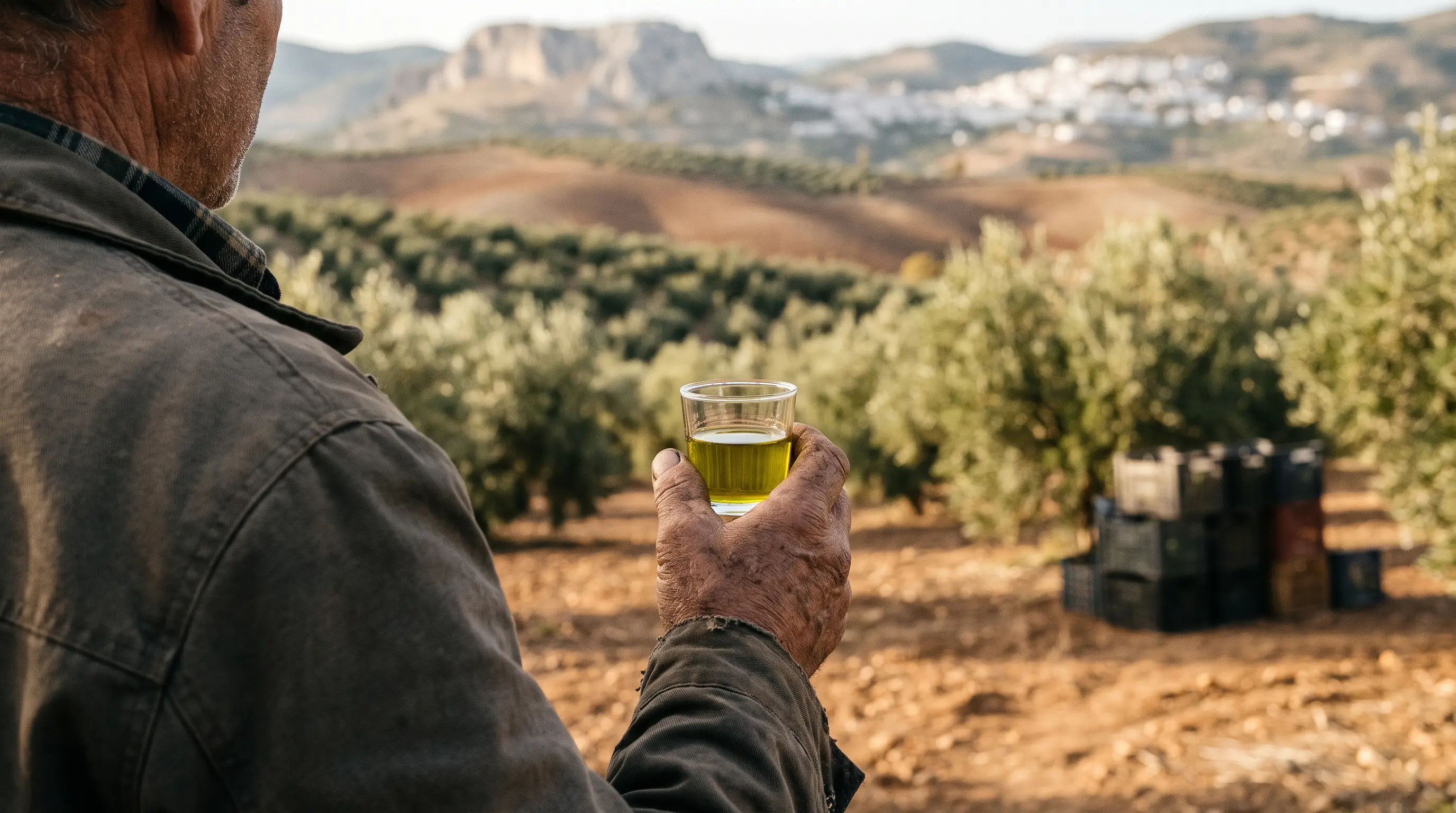
Poniente de Granada covers Loja, Montefrío and 13 other named municipalities in the west of the province.
In this article
Jump to a section
Where the two zones sit on the map
- Algarinejo
- Alhama de Granada
- Arenas del Rey
- Cacín
- Huétor Tájar
- Íllora
- Jayena
- Loja
- Montefrío
- Moraleda de Zafayona
- Salar
- Santa Cruz del Comercio
- Villanueva de Mesía
- Zafarraya
- Zagra
How each name reached the EU register
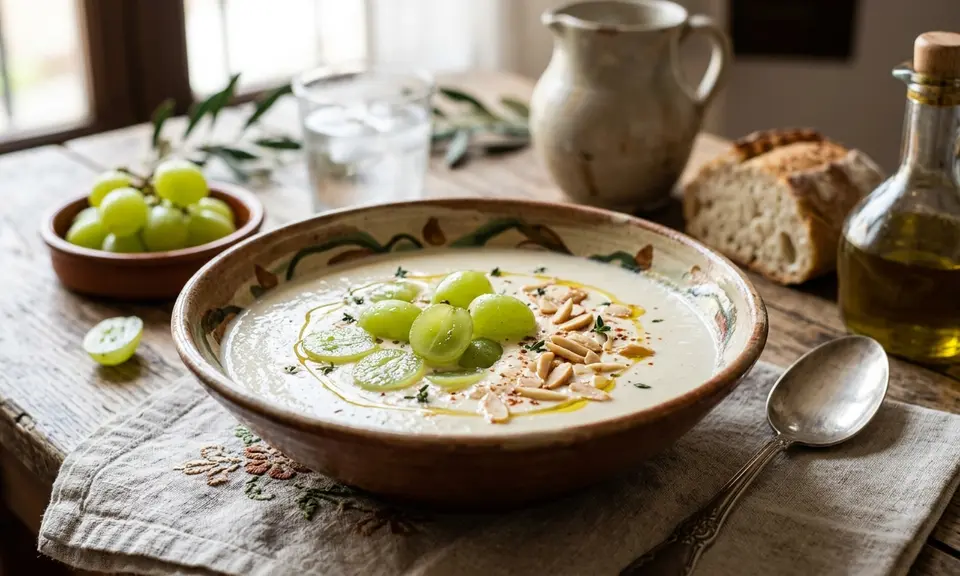
Taste of Granada · Dish
Ajoblanco
Ancient cold soup of blanched almonds, garlic, bread, and olive oil, blended to a creamy white liquid. Granada's version comes with a baked potato on the side.
Why they taste different: land and olive varieties
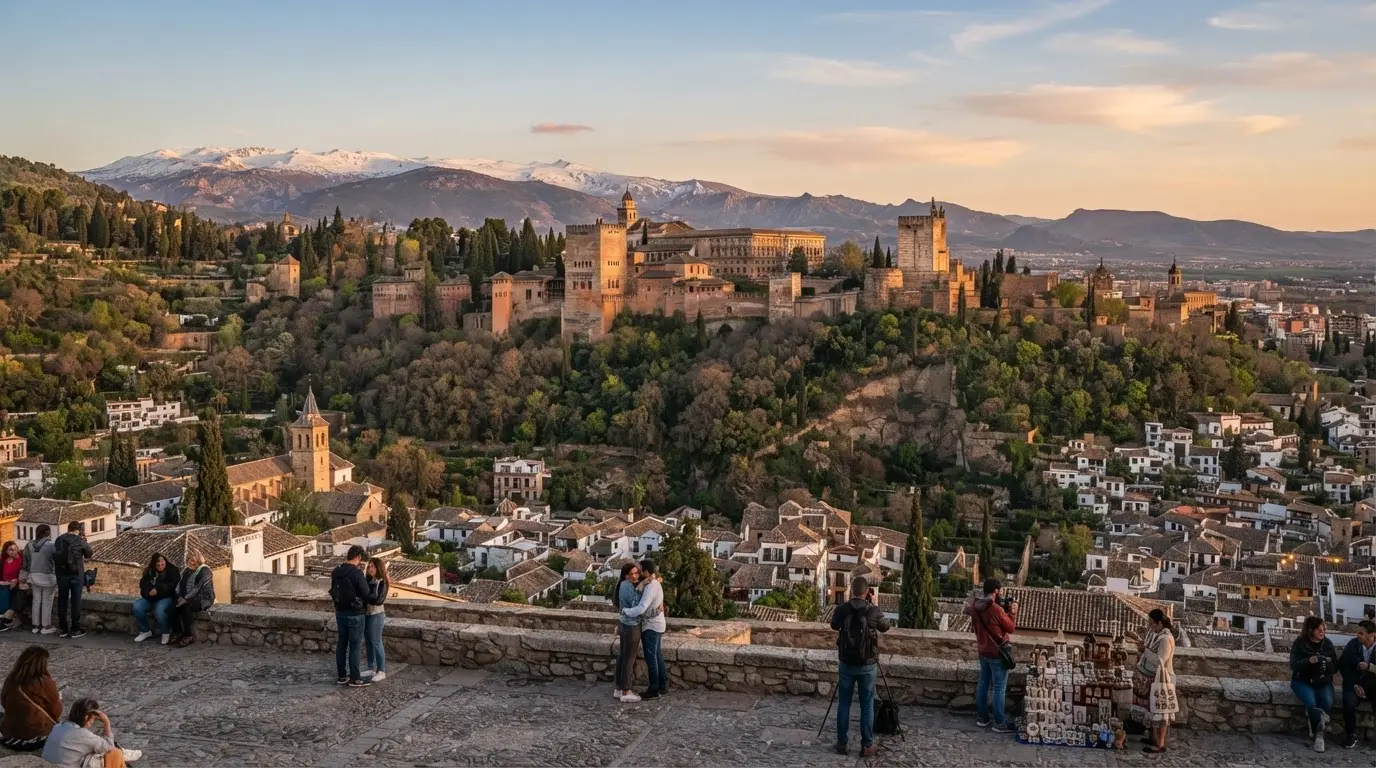
Deep dive · Article
20 Interesting Facts About Granada, Spain
Interesting facts about Granada Spain that guidebooks skip: disputed etymologies, the soldier who saved the Alhambra, and a river buried under Plaza Nueva.
How the two oils taste side by side
| Feature | Poniente de Granada | Montes de Granada |
|---|---|---|
| Zone | West: 15 named municipalities plus west Moclín | North and east, including Iznalloz, Guadix and Huéscar; east Moclín |
| EU registration | Reg. (EC) 148/2007, 15 Feb 2007 | Reg. (EC) 417/2006, 10 Mar 2006 |
| Varieties | Six: Picudo, Picual, Hojiblanca, Lucio, Nevadillo de Alhama, Loaime | Main: Picual, Lucio, Loaime; four secondary varieties |
| Colour | Greenish yellow to golden | Deep green to greenish yellow |
| Palate | Light, rounded, bitterness softened by sweetness | Slightly bitter, full-bodied |
| Panel-test minimum | 6.5 | Not given in the published summaries; fruitiness median of at least 3 |
| Harvest-to-mill limit | 48 hours | Not given in the published summaries |
| Back label | Numbered, issued by the council | Alphanumeric traceability key |
| Unirrigated groves | Over 85% | 95% |
What the label guarantees and how to buy
Recommended tours
Tours are selected for quality, not commission. We earn a small fee if you book — at no extra cost to you.




Frequently asked questions
What is Poniente de Granada olive oil?
Where is the Poniente de Granada olive oil zone and which towns does it include?
Is Montes de Granada the same as Poniente de Granada?
Which olive varieties are used in Poniente de Granada oil?
How can I tell real Poniente de Granada PDO oil in a shop?
Can I visit an olive mill near Granada?
Is Alpujarras olive oil part of a PDO?
Sources
47 references Show Hide
- Junta de Andalucía — Ficha Poniente Granada.pdf (opens in a new tab)
“Alhama de Granada, Arenas del Rey, Cacín, Huétor Tájar, Íllora, Jayena, Loja, Montefrío”
- Junta de Andalucía — SolModMontes.pdf (opens in a new tab)
“Gorafe, Guadahortuna, Guadix, Güevéjar, Huélago, Huéscar, Iznalloz, el Norte del término de La Peza (hasta el río Fardes)”
- Junta de Andalucía — Ficha Poniente Granada.pdf (opens in a new tab)
“y del término de Moclín la zona Occidental comprendida hasta el límite natural definido por el río Velillos”
- foodswinesfromspain.com — Poniente de granada pdo (opens in a new tab)
“Grinding must be done in registered mills, within at most 48 hours of harvesting.”
- foodswinesfromspain.com — Montes de granada pdo (opens in a new tab)
“This area’s olive groves are 95% unirrigated.”
- boe.es (opens in a new tab)
“por el que se aprueba una modificación que no es de menor importancia del pliego de condiciones de una denominación inscrita en el Registro de Denominaciones de Origen Protegidas”
- Junta de Andalucía — SolModMontes.pdf (opens in a new tab)
“Por un lado, hacia los municipios de Peligros y Víznar del entorno de Sierra Arana”
- Junta de Andalucía — SolModMontes.pdf (opens in a new tab)
“Benamaurel, Cortes de Baza, Cúllar, Cuevas del Campo, Freila, Zújar, Castilléjar, Castril, Galera y Huéscar.”
- Junta de Andalucía — SolModMontes.pdf (opens in a new tab)
“y los términos municipales de Baza, Caniles y Gor (se excluyen en estos tres últimos los territorios pertenecientes al Parque Natural «Sierra de Baza»).”
- domontesdegranada.com (opens in a new tab)
“reflejando la identidad olivarera de 54 municipios de la provincia de Granada.”
- Junta de Andalucía — SolModMontes.pdf (opens in a new tab)
“del término de Moclín (la zona Oriental comprendida hasta el límite natural definido por el río Velillos)”
- Junta de Andalucía — Ficha Poniente Granada.pdf (opens in a new tab)
“«PONIENTE DE GRANADA» No CE: ES/00273/23.01.2003”
- eu.vlex.com (opens in a new tab)
“Commission Regulation (EC) No 148/2007 of 15 February 2007 registering certain names in the Register of protected designation of origin and protected geographical indications”
- lawplayer.com (opens in a new tab)
“Commission Regulation (EC) No 417/2006 of 10 March 2006 supplementing the Annex to Regulation (EC) No 2400/96 as regards the entry of certain names in the Register”
- domontesdegranada.com (opens in a new tab)
“es reconocido por Orden de 5 de abril de 2001, de la Consejería de Agricultura y Pesca de la Junta de Andalucía”
- Junta de Andalucía — Ficha Poniente Granada.pdf (opens in a new tab)
“Dentro de la comarca aparecen las primeras referencias históricas en relación al aceite hacia los s. XVI y XVII, en los términos municipales de mayor tradición olivarera, que son: Loja, Montefrío e Illora.”
- Junta de Andalucía — Ficha Poniente Granada.pdf (opens in a new tab)
“«Ordenanzas Municipales de Molinos de aceites de la Ciudad de Loja»”
- Junta de Andalucía — Ficha Poniente Granada.pdf (opens in a new tab)
“el afamado «Molino del Rey» construido en 1800”
- Junta de Andalucía — Ficha Poniente Granada.pdf (opens in a new tab)
“describe dentro de las variedades de olivo españolas a dos variedades autóctonas de Montefrío: Manzanilla de Montefrío y Chorreao de Montefrío”
- Junta de Andalucía — SolModMontes.pdf (opens in a new tab)
“introducida en la zona a mediados del siglo XIX”
- ec.europa.eu (opens in a new tab)
“Estos árboles, que todavía se encuentran en la actualidad (con edad de más de 500 años), corresponden a la variedad conocida como Loaime”
- foodswinesfromspain.com — Poniente de granada pdo (opens in a new tab)
“This is characterized by typically Continental extreme temperatures, with long, cold winters and long, hot summers, and big temperature shifts between winter and summer, night and day.”
- foodswinesfromspain.com — Poniente de granada pdo (opens in a new tab)
“Over 85% of the olive groves are unirrigated and farmed by traditional local methods, which tend to be environmentally friendly.”
- foodswinesfromspain.com — Poniente de granada pdo (opens in a new tab)
“Mixing olive varieties within the same grove is an ancient local practice, motivated by two factors.”
- Junta de Andalucía — SolModMontes.pdf (opens in a new tab)
“La zona presenta un paisaje en el que alternan depresiones de unos 750 a 900 m de altitud con alineaciones montañosas dispuestas en dirección Este-Oeste”
- foodswinesfromspain.com — Montes de granada pdo (opens in a new tab)
“Winters are long and cold, with frequent frosts and snow, and summers are long and hot, with temperatures sometimes passing the 40° C (104º F) mark.”
- Junta de Andalucía — SolModMontes.pdf (opens in a new tab)
“por su adaptación a las extremas condiciones agrólogicas, destacando su resistencia a heladas”
- Junta de Andalucía — Ficha Poniente Granada.pdf (opens in a new tab)
“Picudo, Picual ó Marteño, Hojiblanca, Lucio, Nevadillo de Alhama de Granada y Loaime”
- Junta de Andalucía — SolModMontes.pdf (opens in a new tab)
“de las variedades principales (Picual, Lucio y Loaime) y secundarias (Escarabajuelo, Negrillo de Iznalloz, Hojiblanca y Gordal de Granada)”
- domontesdegranada.com (opens in a new tab)
“Los aceites obtenidos en la zona delimitada proceden de la molturación conjunta de variedades principales y secundarias; por tanto, son aceites multivarietales”
- foodswinesfromspain.com — Poniente de granada pdo (opens in a new tab)
“These oils offer a wide variety of aromas - fresh fruit, ripe fruit, grass, fig, etc.”
- foodswinesfromspain.com — Poniente de granada pdo (opens in a new tab)
“They are light, well balanced and rounded on the palate, with hints of bitterness and piquancy that harmonize nicely with others of sweetness.”
- foodswinesfromspain.com — Poniente de granada pdo (opens in a new tab)
“In color, they range from greenish yellow to golden yellow, depending on when the olives were harvested, the weather, olive variety and geographical location within the area.”
- Junta de Andalucía — SolModMontes.pdf (opens in a new tab)
“destaca el carácter fuerte que proporciona la variedad predominante Picual (color verde, amargo medio a intenso y aromas frutados)”
- foodswinesfromspain.com — Montes de granada pdo (opens in a new tab)
“They are slightly bitter and full-bodied in the mouth, varying in intensity according to the degree of ripeness of the olives from which they derive.”
- foodswinesfromspain.com — Montes de granada pdo (opens in a new tab)
“They are low in acidity, and range in color from deep green to greenish yellow.”
- foodswinesfromspain.com — Montes de granada pdo (opens in a new tab)
“The lipid profile of these oils exhibits high oleic acid content, generally over 80% and sometimes as high as 83%.”
- Junta de Andalucía — SolModMontes.pdf (opens in a new tab)
“Aroma y sabor frutado, de fruta fresca y madura, en intensidades medias a altas (Mediana del frutado ≥ 3).”
- Junta de Andalucía — SolModMontes.pdf (opens in a new tab)
“Sabor ligeramente amargo y picante, intensidad variable en función del grado de maduración de la aceituna, relacionado con el nivel de polifenoles de los aceites.”
- Junta de Andalucía — Ficha Poniente Granada.pdf (opens in a new tab)
“La puntación organoléptica (Panel Test): Mínimo 6.5.”
- Junta de Andalucía — Ficha Poniente Granada.pdf (opens in a new tab)
“Los aceites obtenidos por la segunda centrifugación de las pastas (aceites de repaso) no podrán ser certificados bajo la Denominación de Origen «Poniente de Granada».”
- Junta de Andalucía — Ficha Poniente Granada.pdf (opens in a new tab)
“Figurará obligatoriamente la mención: Denominación de Origen «Poniente de Granada».”
- Junta de Andalucía — Ficha Poniente Granada.pdf (opens in a new tab)
“Las Contraetiquetas irán numeradas y serán expedida por el Consejo Regulador.”
- Junta de Andalucía — BOJA12 228 00001 18784 01 00017071.pdf (opens in a new tab)
“denominada contraetiqueta, identificada mediante una clave alfanumérica”
- foodswinesfromspain.com — Montes de granada pdo (opens in a new tab)
“Olives gathered from the ground are transported separately and processed in a different production line since they are not suitable for producing DO protected oil.”
- domontesdegranada.com (opens in a new tab)
“El Consejo Regulador Denominación de Origen Protegida Montes de Granada dispone de su propio Panel de Cata para realizar el análisis sensorial de sus aceites.”
- foodswinesfromspain.com — Poniente de granada pdo (opens in a new tab)
“C/ Cantaor Manuel Ávila, s/n - Centro Etnológico de Montefrío”