Written by Sarah Mills
  • 5 min
  • 33 sources

Riofrío Caviar Began With Trout and a Spring Near Loja

Riofrío caviar began as a trout farm near Loja and bills itself as the first certified organic caviar. The dates, the 16-year sturgeon wait and how to visit.
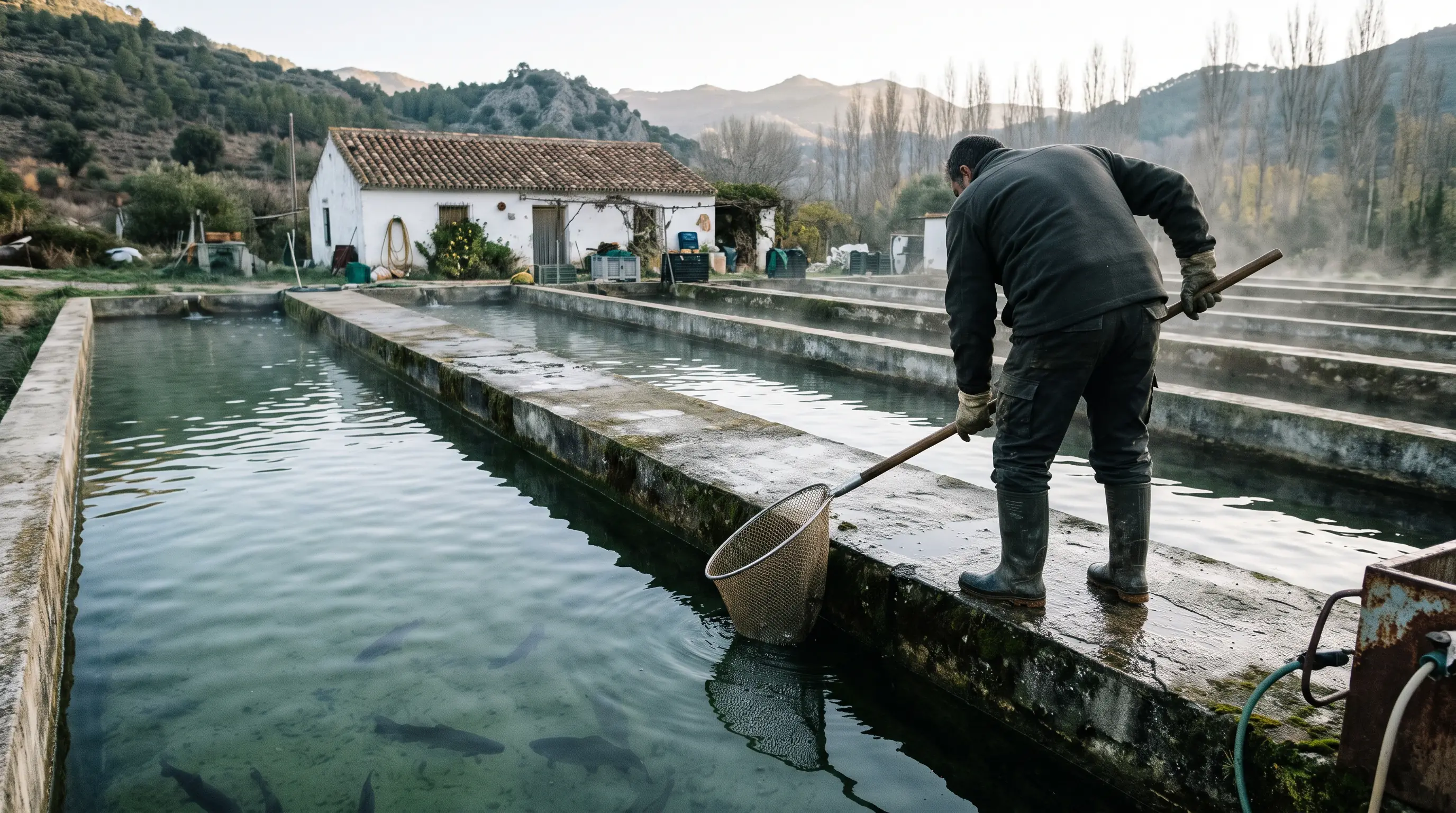
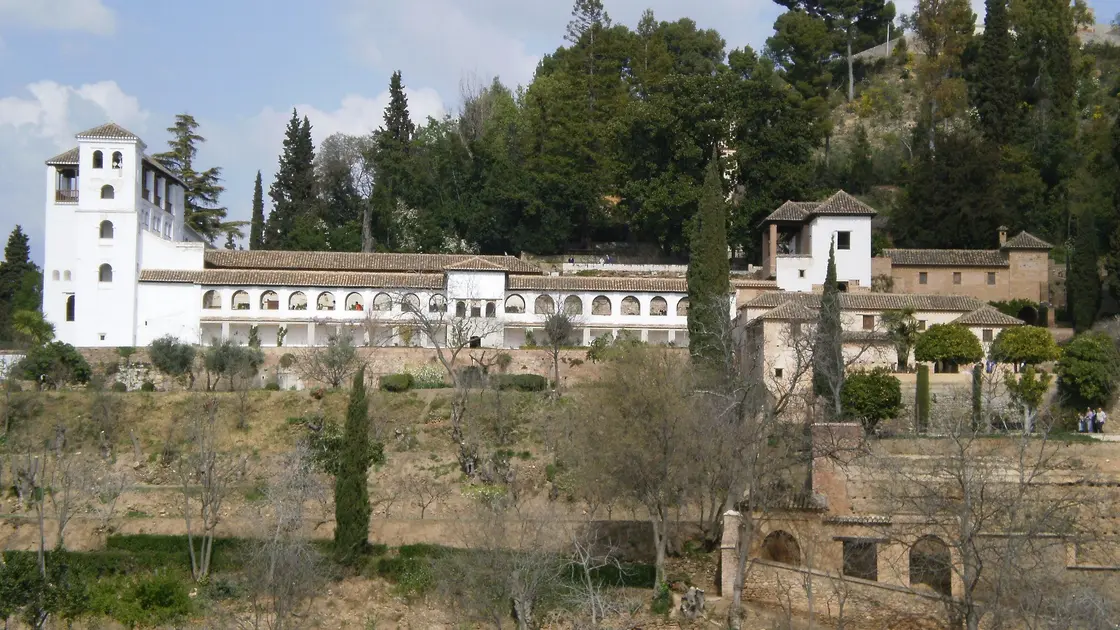
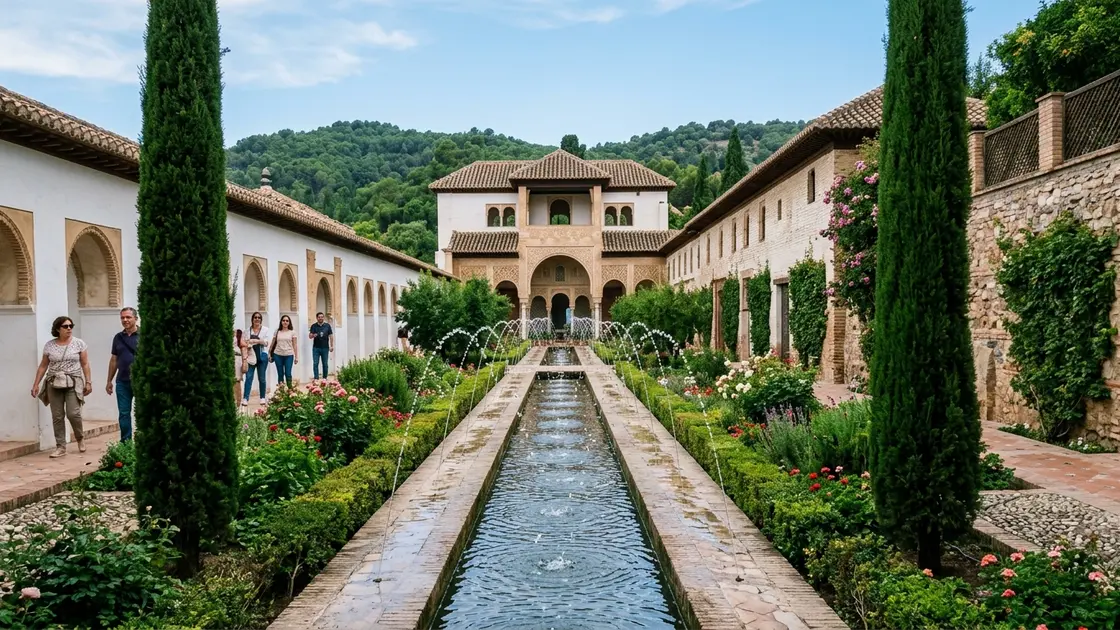
Spring-fed sturgeon pools at the riofrio caviar farm near Loja, Granada, calm green water in early morning light, wooded hills of the Sierra de Loja behind

The spring that feeds the pools rises 300 metres upstream and holds a steady 14–15 °C.

Water wells up at Riofrío at a steady 14–15 °C, 300 metres upstream of the fish pools,[1][2] and that spring is why a trout farm in the Sierra de Loja now sells caviar. Riofrío Caviar bills itself as the first producer of certified organic caviar in the world, a billing that starts with the company and has been repeated since. Visits are by reservation and published prices differ, so confirm before you drive out from Granada.
Spring water temperature
14–15 °C
Constant temperature the sturgeon live in[1]
Wait for harvestable roe
16 years
Time a Riofrío sturgeon takes to reach harvestable eggs[17]
Visit price per person
€30–690
Published range; varies by experience, so check first[27]

A trout farm at a spring above Loja

Riofrío began in 1963, when a Navarrese doctor named Domezain and two partners founded the brand at the source of the río Frío, where a waterfall had earlier driven mills, fulling mills and forges. They filled the piscifactoría's pools with trout, and Trucha de Riofrío became a recognised brand. The riverside restaurants and the setting then drew thousands of visitors to a small corner of the Sierra de Loja.[3]
Fernando Domezain says his father found the site through a public tender, saw that Riofrío had the right conditions and moved the business from Navarre to the Granada village in 1963. He also calls his father the first fish farmer in Spain, in 1955, which is the family's own claim.[4] A public tender is an unglamorous origin for a luxury product, and that is part of the appeal: nothing about the place began as caviar.
Granada province has another food business with a 1963 start: Ron Montero's rum bodega in Motril, which kept distilling after the sugar mills around it closed. Riofrío's reinvention took a different route, away from the coast and into a spring-fed valley, and it took decades.

Why a Granada farm bet on Adriatic sturgeon
Sturgeon arrived at Riofrío in the 1980s, when the Domezain family first worked with captive sturgeon as a source of caviar.[5] The opening that made it a business came in the 1990s, when bans on fishing the endangered fish began to shape a farming model.[6] The species they chose was Acipenser naccarii, the Adriatic sturgeon, which Domezain says research showed to be one of the three commonest sturgeon in the Guadalquivir.[7]
The Guadalquivir link is what the farm leans on. A Riofrío ambassador says the Naccarii lived in that river until the late 1960s and died out because dams left it unable to breed,[8] so the company presents its fish as the return of a lost local species rather than an import. Treat it as the farm's own account: persuasive, and told by the people selling the caviar.
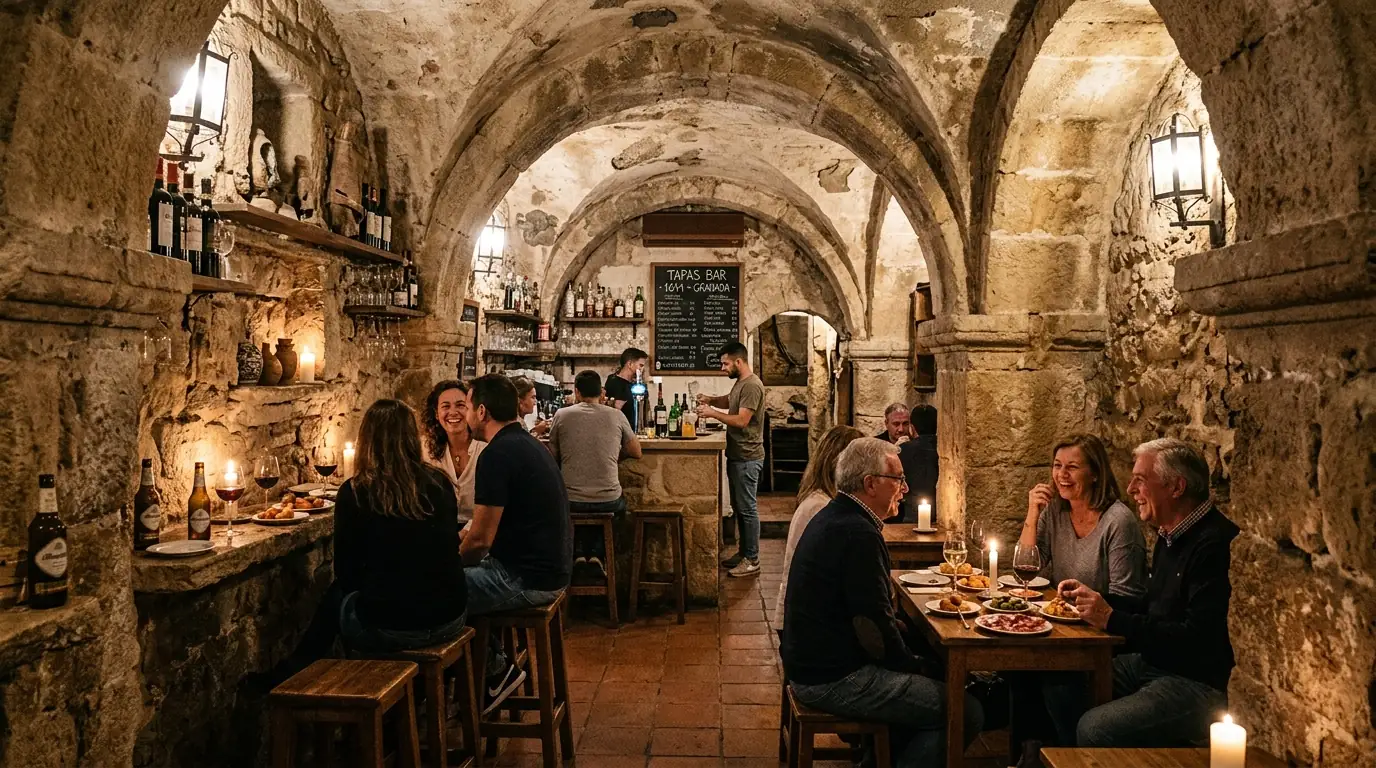
Historic interior dining room of Aljibe 1644 on Carrera del Darro, Granada, with stone walls and arched architecture

Where to eat · Restaurant

Aljibe 1644

Creative Andalusian menu on Carrera del Darro, inside the 1804 birthplace of Mariana Pineda. Chef Ángel Rodríguez. Three-ham board, seasonal fish. €30–50.

Trout came first, in 1963. Sturgeon followed in the 1980s, and the first caviar in 2001. Nearly four decades separate the first trout pools from the first roe, and the sturgeon alone took close to two. For a visitor that history explains the odd mix on site: a spring, trout-farm pools and a fish that will not repay the investment for years.

Organic caviar: who certified it, and when

The Andalusian Committee for Organic Agriculture (CAAE) certified Riofrío's caviar as organic in November 2001, according to Fernando Domezain, after the farm approached the committee because no organic aquaculture rules existed and the rules began to be written with it.[9] The label promises something different from the EU geographical indication on Jamón de Trevélez: an IGP protects a place. Organic certification audits the method.
The first harvest followed at Christmas 2001, with about 30 kilos of roe, and output rose to 400 kilos in 2002.[10] Riofrío's own account of its history puts the first organic certification a year earlier, in 2000.[11]
In July 2021 the Ministry of Agriculture, Fisheries and Food gave its Alimentos de España 2020 Organic Production prize to Riofrio 1963, SL, of Loja,[14] recognising the farm's organic sturgeon and caviar.[15] The prize confirms the organic standing; the claim to be first in the world remains the company's own. The Osborne Group, the Sherry house behind Cinco Jotas ham, bought the brand the same year.[16]

Why a sturgeon takes sixteen years to give caviar
A Riofrío sturgeon takes 16 years to reach the stage where its eggs can be harvested.[17] Only females give caviar, and a fish does not show its sex until it is 14 to 16 years old,[18] so the farm waits more than a decade before it learns which fish will ever produce roe.
Convent sweets Granada torno — whitewashed convent wall with wooden revolving hatch, small parcels of dulces conventuales including almendrados and tocinillos wrapped in brown paper, morning light through arched doorway

Deep dive · Article

Convent Sweets in Granada: Buying Dulces Through the Torno

Nine convents in Granada sell sweets through the torno, a revolving shelf in the convent wall. Cash only, mornings only, and the greeting ritual is mandatory.

A female Naccarii needs 16 to 18 years to develop roe, and beluga, which the farm raises alongside Russian osetra, can take up to 25.[19][20] Slow growth is not a flaw to be engineered away. The farm's veterinarian, Ignacio Alba Alejandre, says nothing is done to speed the process, so the animal produces caviar as it would in nature.[21]
That is the organic logic and the commercial constraint in one sentence: slow fish and small harvests. Spain had no Adriatic sturgeon left to breed from, so the founding stock came from Italy, and the first kilo of Riofrío caviar took about 16 to 17 years from the start of reproduction.[22] The latest dated figure is Euronews's, in February 2026: some 2 tonnes of caviar a year.[23] SeafoodSource gave 1.5 tonnes in April 2024[24] and a company spokesperson 750 to 800 kilos for 2020, a year he called disastrous,[25] so figures vary by source and year.
The farm also gives a third of its surface to keeping the water pure before it returns to the river.[26] Clean water out matters as much as clean water in, because the whole pitch rests on the spring: if the river below were not respected, the organic claim would lose its footing.

Visiting the farm near Loja and eating the caviar

The farm takes visitors all year, 35 minutes from Granada city by road, with experiences lasting from 45 minutes to three hours and priced from €30 to €690 per person depending on what you choose.[27] The producer's visits page lists a pool tour with one spoonful of caviar at €30 per person (45 minutes, minimum four people), a three-recipe tasting at €85 (1h30) and an immersion with the sturgeon at €690 (three hours), with prices depending on the season.[28][29][30]

The visit is built like this:

  • Private visits run every day of the year by reservation, in Spanish, English and French, in a reported 09:00 to 17:00 window.[31]
  • The route starts at the pools and ends with a tasting of three caviar recipes.
  • A VIP option puts guests in the water with the sturgeon.

Book before you drive out

Starting prices, opening hours and group minimums differ between the producer's visits page, the Andalucía tourist-board listing and the press, and they change with the season. Phone or book through the farm before driving out from Granada, and do not turn up unannounced: visits are by reservation.
The caviar is sturgeon eggs and salt, with no additives.[32] The standard serving advice is to eat it off the back of your hand or with a mother-of-pearl spoon, because metal can give caviar a metallic taste; the chef Diego Gallegos at Sollo in Fuengirola is among those who cook with it.[33] At the opposite end of Granada's food economy from the free tapa that arrives with a drink, even the cheapest tasting here is a planned outing.
Go for the pools and the story of the spring rather than for a shopfront. A farm where the main product takes a decade and a half to mature is hard to compare with anything else on a Granada food itinerary. Allow time for it: experiences run up to three hours, so treat the visit as a half-day outing rather than a stop on the way somewhere else.

Frequently asked questions

Is Riofrío caviar really organic, and who certifies it?

The Andalusian Committee for Organic Agriculture (CAAE) certified it, in November 2001 according to Fernando Domezain. The farm raises its sturgeon on an organic diet without antibiotics, and in 2021 it won the Ministry of Agriculture's Alimentos de España 2020 Organic Production prize. The claim to be the first organic caviar in the world is the company's own.

When did Riofrío caviar get its organic certificate: 2000, 2001 or 2009?

Fernando Domezain gives November 2001 for the CAAE certificate, while Riofrío's own history says 2000. The 2009 date belongs to the EU regulation on organic aquaculture, which applied only from 1 July 2010, so it did not certify Riofrío's caviar.

Where is Riofrío caviar made, and can you visit the farm?

It is made at the farm in Riofrío, a village in the Sierra de Loja about 35 minutes from Granada city. Visits run year-round by reservation, and tastings end with three caviar recipes. Prices and hours change with the season, so confirm with the farm before you go.

How long does a sturgeon take to produce Riofrío caviar?

A Riofrío sturgeon takes about 16 years to reach the stage where its eggs can be harvested, and a female Adriatic sturgeon needs 16 to 18 years to develop roe. Only females give caviar, and their sex shows only after 14 to 16 years. Beluga can take up to 25 years.

What is Acipenser naccarii, and why does Riofrío caviar use it?

Acipenser naccarii is the Adriatic sturgeon, a species native to southern Europe that SeafoodSource, repeating the brand's manager in April 2024, describes as rarely raised for caviar. Riofrío chose it after research showed it to be one of the three commonest sturgeon in the Guadalquivir, where it died out in the late 1960s. The founding stock came from Italy because none was left in Spain.

How much does a Riofrío caviar tour and tasting cost?

Published prices run from about €30 to €690 per person, depending on the experience, and experiences last from 45 minutes to three hours. Starting prices differ between the farm's own listings and press coverage, so check the current price when you book.

Why is Riofrío caviar eaten with a mother-of-pearl spoon?

Metal can give caviar a metallic flavour, so it is usually eaten off the back of the hand or with a spoon of mother-of-pearl.

Is Riofrío caviar farmed or wild?

It is farmed. Sturgeon fishing began to be banned in the 1990s because the fish were in danger of extinction, and Riofrío raises its sturgeon in spring-fed pools on an organic diet. The caviar contains only sturgeon eggs and salt.

Sources

33 references Show
  1. foodswinesfromspain.com — Caviar black gold made in spain (opens in a new tab)

    “a constant temperature of 14-15 degrees Celsius allows the fish to live in ideal conditions.”

  2. euronews.com (opens in a new tab)

    “Natural water comes from a spring just 300 metres upstream of the facilities.”

  3. caviarderiofrio.com — Quienes somos (opens in a new tab)

    “un médico de origen navarro que junto a dos socios funda en 1963 la marca Riofrío”

  4. consumer.es — Sierra nevada pioneros internacionales en acuicultura ecologica (opens in a new tab)

    “mediante un concurso público, descubrió que Riofrío reunía las condiciones idóneas y trasladó su negocio desde Navarra a la localidad granadina en 1963.”

  5. caviarderiofrio.com — Quienes somos (opens in a new tab)

    “En los años 80, los Domezain toman contacto con la cría de esturiones en cautividad para la producción de caviar.”

  6. foodswinesfromspain.com — Caviar black gold made in spain (opens in a new tab)

    “When sturgeon fishing began to be banned in the 1990s because the fish were in danger of extinction, a business model began to take shape”

  7. consumer.es — Sierra nevada pioneros internacionales en acuicultura ecologica (opens in a new tab)

    “acaban descubriendo que era uno de los tres esturiones más comunes en el Guadalquivir.”

  8. ekosnegocios.com (opens in a new tab)

    “este tipo de esturión vivía en el Guadalquivir hasta finales de los años 60, cuando se extinguió completamente por la imposibilidad de reproducirse por las represas en la parte de Coria del Río.”

  9. consumer.es — Sierra nevada pioneros internacionales en acuicultura ecologica (opens in a new tab)

    “Tras el estudio y aprobación esta empresa de acuicultura obtiene el certificado de producción ecológica por el CAAE en Noviembre de 2001.”

  10. consumer.es — Dos empresas espanolas han conseguido criar esturiones en piscifactoria para hacer caviar de calidad (opens in a new tab)

    “La elaboración comenzó en la navidad de 2001, que fue cuando salió la «primera cosecha» de la empresa Caviar de Riofrío, con 30 kilos de la valiosa hueva de esturión.”

  11. caviarderiofrio.com — Quienes somos (opens in a new tab)

    “en el año 2000 Caviar Riofrío se convierte en el primer caviar ecológico del mundo, logrando la primera certificación para caviar y para la cría de esturiones.”

  12. elespanol.com (opens in a new tab)

    “dio sus frutos en 2001, cuando la marca hizo historia al obtener el primer certificado de caviar ecológico del mundo.”

  13. boe.es — L00015 00034.pdf (opens in a new tab)

    “Será aplicable a partir del 1 de julio de 2010, con las siguientes excepciones:”

  14. boe.es — BOE A 2021 12306.pdf (opens in a new tab)

    “Producción Ecológica: Riofrio 1963, SL, de Loja (Granada).”

  15. foodswinesfromspain.com — Riofrio alimentos espana award (opens in a new tab)

    “The company took home the Alimentos de España 2020 award for its organic sturgeon and caviar in the Organic Production category of these distinctions.”

  16. foodswinesfromspain.com — Caviar black gold made in spain (opens in a new tab)

    “In 2021, the brand was acquired by the Osborne Group, famous for its Sherry wines and for one of the most renowned Ibérico hams in the world: Cinco Jotas.”

  17. seafoodsource.com (opens in a new tab)

    “taking 16 years to reach the stage where their eggs can be harvested.”

  18. elespanol.com (opens in a new tab)

    “un esturión hembra tarda entre 16 y 18 años en desarrollar sus codiciadas huevas en el caso de la variedad Naccarii”

  19. foodswinesfromspain.com — Riofrio alimentos espana award (opens in a new tab)

    “species like Adriatic sturgeon (Acipenser naccarii), Russian sturgeon (Acipenser gueldenstaedtii), and Beluga (Huso huso)”

  20. euronews.com (opens in a new tab)

    “We don’t accelerate the process in any way, letting the animal produce the caviar as it would do in nature”

  21. ekosnegocios.com (opens in a new tab)

    “Recuperamos esa tradición con animales traídos de Italia porque aquí ya no había, comenzamos la reproducción y tardamos unos 16-17 años en tener el primer kilo de caviar en Ríofrío”

  22. euronews.com (opens in a new tab)

    “Every year the company markets some two tonnes of three different varieties of caviar”

  23. seafoodsource.com (opens in a new tab)

    “Riofrío’s 1.5 metric tons of annual production limits how aggressive the company can be with expanding its sales”

  24. directoalpaladar.com (opens in a new tab)

    “hemos producido entre 750 y 800 kilos de caviar pero la piscifactoría tiene capacidad para producir hasta cinco toneladas, a las que esperamos llegar en 2024”

  25. caviarderiofrio.com — Quienes somos (opens in a new tab)

    “se dedica un tercio de la superficie de la piscifactoría a mantener la pureza del agua, que se devuelve al río limpia de nuevo”

  26. que.es (opens in a new tab)

    “presentan una amplia horquilla de precios, desde los 30 hasta los 690 euros por persona, en función del tipo de experiencia elegida.”

  27. caviarderiofrio.com — Visitas (opens in a new tab)

    “- 30€por persona - 4pax mínimo - 45min. duración”

  28. caviarderiofrio.com — Visitas (opens in a new tab)

    “- 85€ por persona - 2 pax mínimo - 1h 30 duración”

  29. caviarderiofrio.com — Visitas (opens in a new tab)

    “- 690€ por persona - 2 pax mínimo - 3h duración”

  30. elespanol.com (opens in a new tab)

    “las instalaciones organizan visitas privadas y exclusivas todos los días del año (bajo reserva previa) en horario de 09:00 a 17:00 horas, disponibles en español, inglés y francés.”

  31. euronews.com (opens in a new tab)

    “Organic caviar is made here with only sturgeon eggs and salt. There are no additives.”

  32. foodswinesfromspain.com — Caviar black gold made in spain (opens in a new tab)

    “it can be eaten directly off of your hand or with a mother-of-pearl spoon, as metal can give the caviar a metallic flavor.”