Grilled Prawns in Granada: Why the Plancha Wants Only Salt
Why Andalusian cooks grill prawns on a plancha over coarse salt with no oil, how long they take, and where to eat them on Granada's Costa Tropical coast.
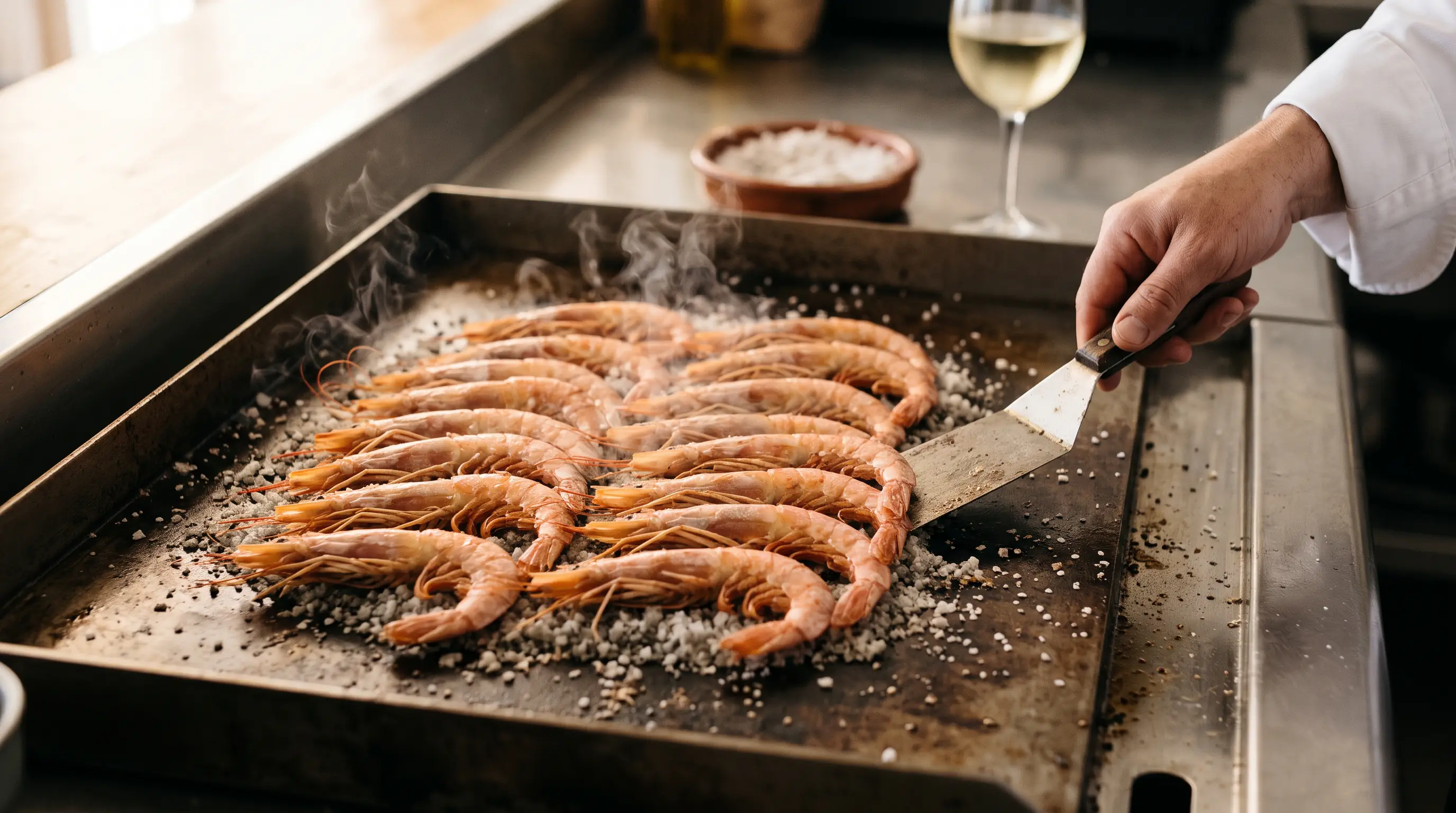
A white prawn needs three minutes at most on a very hot plancha lined with coarse salt, and a red prawn about five.
In this article
Jump to a section
Why salt does the job oil would spoil
Cooking them yourself: the salt-bed method at home
- Heat the plancha very hot and lay a bed of coarse salt over it.
- Set the prawns in a single layer and scatter a little more coarse salt on top.
- When the shells begin to colour, spray with water and cover loosely with foil, without pressing it down, so the prawns steam.[8]
- Pull them while they still show a hint of rawness, because the plancha's heat keeps cooking them for a moment.[10]
A cool plancha ruins prawns
Granada's own shrimp, the quisquilla de Motril
Taste of Granada · Dish
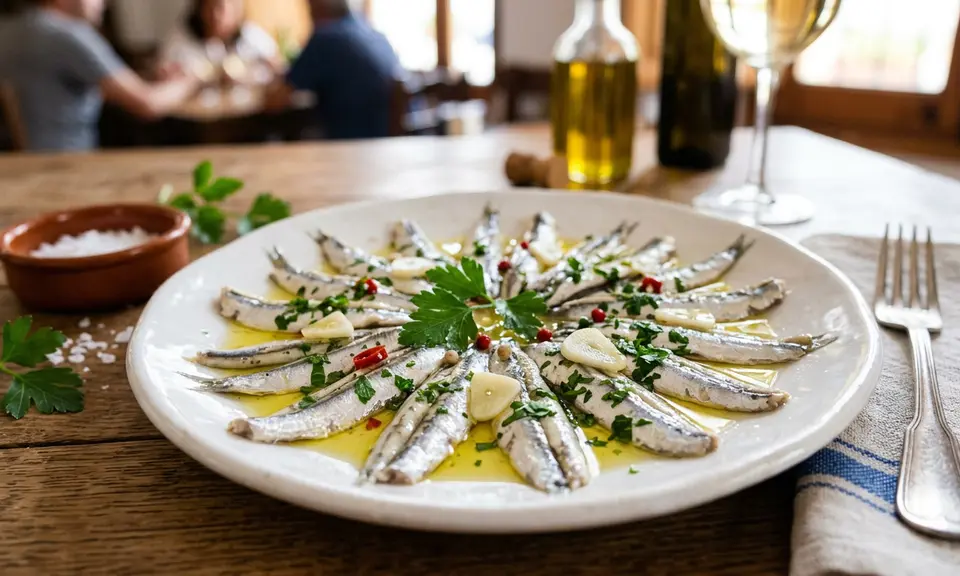
Boquerones de la Costa Tropical
Fresh anchovies landed at Motril served two ways: marinated in white wine vinegar (Granada-style) or fried pescaíto frito. Same-day coastal freshness.
Where to eat them on the Costa Tropical
- Katena, Playa de Poniente, Motril: where, as in the old days, the quisquillas and the cigalas are the stars.[18] Its own site lists 12:00 to 24:00, Sundays 12:00 to 18:00.[24]
- Mar de Plata, Calle Mar de Plata 3, Almuñécar: a dependable address for fish and shellfish a la plancha.[19][25]
- Miba, the hotel restaurant in Salobreña: local fish, the legendary quisquillas and a view of the Peñón.[20] Its own site promises views of Salobreña castle and the sea.[26]
Deep dive · Article
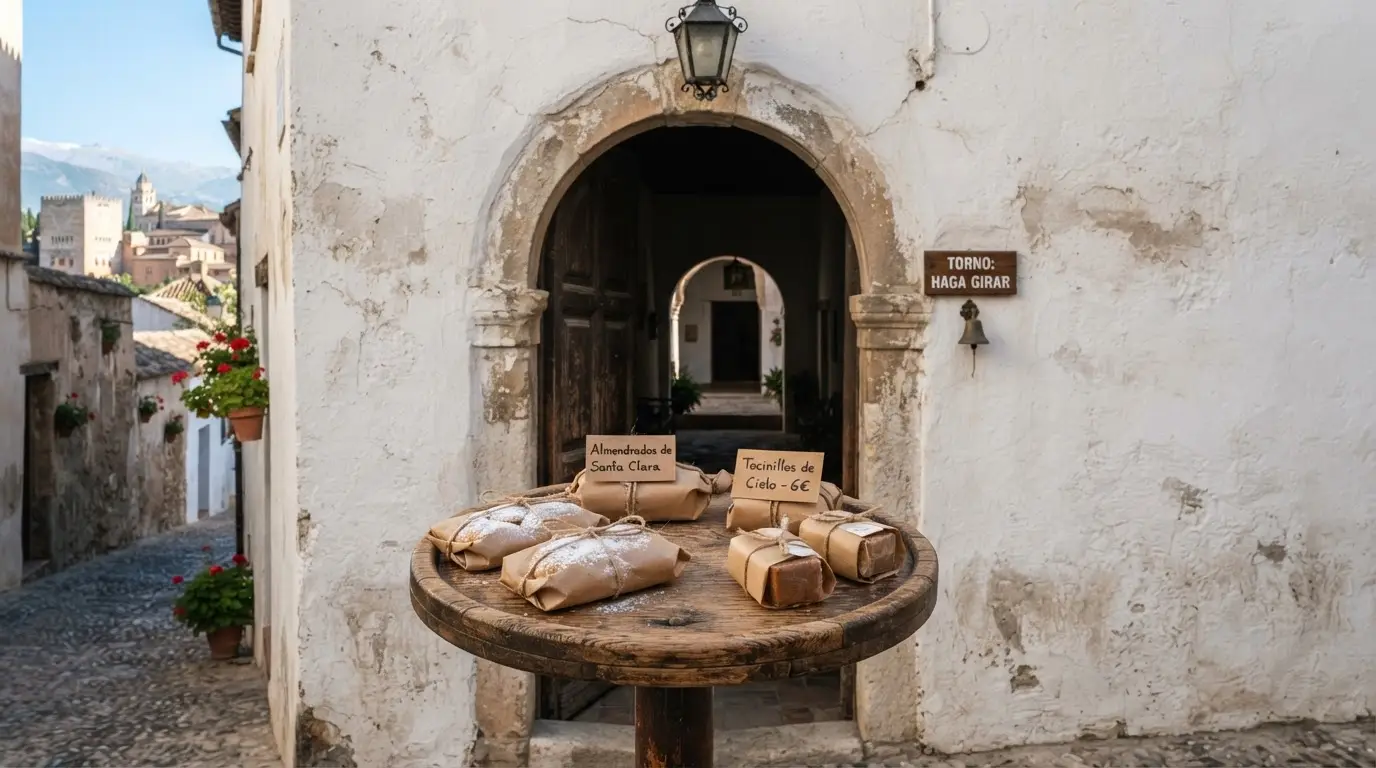
Convent Sweets in Granada: Buying Dulces Through the Torno
Nine convents in Granada sell sweets through the torno, a revolving shelf in the convent wall. Cash only, mornings only, and the greeting ritual is mandatory.
Ordering prawns in Granada city
Recommended tours
Tours are selected for quality, not commission. We earn a small fee if you book — at no extra cost to you.

Frequently asked questions
Where can I eat grilled prawns in Granada?
How long do prawns take on the plancha?
Do you need oil to grill prawns on the plancha?
What is the quisquilla de Motril?
Is Granada's prawn the same as Huelva's gamba blanca?
Can you visit the Motril fish auction?
How can you tell grilled prawns are fresh?
Sources
33 references Show Hide
- directoalpaladar.com — Trucos infalibles dani garcia para hacer mejores gambas a plancha no se puede echar aceite (opens in a new tab)
“calentando bien una buena plancha a alta temperatura, colocando una cama de sal gorda y poniendo las gambas en fila en una sola capa, poniendo algo más de sal gruesa por encima. Y sin gota de aceite.”
- andalucia.org (opens in a new tab)
“En la Costa Tropical de Granada, la especie tiene apellido propio: la quisquilla de Motril.”
- directoalpaladar.com — Trucos infalibles dani garcia para hacer mejores gambas a plancha no se puede echar aceite (opens in a new tab)
“Gamba blanca: tres minutos a lo sumo, dos minutos por el primer lado y solo uno más por el otro.”
- turismo.granada.org (opens in a new tab)
“Most bars include a tapa with your drink.”
- directoalpaladar.com — Trucos infalibles dani garcia para hacer mejores gambas a plancha no se puede echar aceite (opens in a new tab)
“echar aceite a una plancha que adquiere tan altas temperaturas es un error, pues se quema fácilmente y contamina el sabor del marisco.”
- Junta de Andalucía (opens in a new tab)
“Se recubre la plancha con una capa de sal gorda, se calienta y la sal difunde el calor de forma más uniforme y tenue.”
- consumer.es (opens in a new tab)
“asadas a la plancha vuelta y vuelta, en una sartén antiadherente, con un poco de aceite de oliva y sal gruesa.”
- directoalpaladar.com — Trucos infalibles dani garcia para hacer mejores gambas a plancha no se puede echar aceite (opens in a new tab)
“pulveriza con agua y las tapa con papel de aluminio, sin apretar, para crear el efecto vapor.”
- directoalpaladar.com — Trucos infalibles dani garcia para hacer mejores gambas a plancha no se puede echar aceite (opens in a new tab)
“Gamba roja: cinco minutos en total, tres minutos y medio por un lado y un minuto y medio por el otro.”
- directoalpaladar.com — Trucos infalibles dani garcia para hacer mejores gambas a plancha no se puede echar aceite (opens in a new tab)
“lo ideal es que al sacarlas de la plancha tengan todavía un puntito de crudo, pues continuará la cocción unos instantes debido a la alta temperatura de la plancha”
- Junta de Andalucía (opens in a new tab)
“Quedarán hechas y no hay que sazonarlas; ellas traen su sal.”
- andalucia.org (opens in a new tab)
“Imprescindible en cualquier lista de tapas que se precie, se sirve habitualmente frita o a la plancha, con sal gorda”
- motrilturismo.com — Products and recipes (opens in a new tab)
“Motril has a fishing port in which the best fresh fish and shellfish are unloaded daily, with the well-known prawn called Quisquilla as symbol of the local identity.”
- directoalpaladar.com — La quisquilla de motril (opens in a new tab)
“yo las he visto hacer poniendo un lecho de sal gorda en la sartén y guisando las quisquillas encima, lo cual las permite coger el punto de sal deseado.”
- andalucia.org (opens in a new tab)
“los fondos rocosos de la zona solo permiten capturarla por el método artesanal de las nasas, un arte de pesca muy singular y sostenible.”
- motrilturismo.com — Motril guia los secretos de la lonja.pdf (opens in a new tab)
“abre sus puertas al público general para mostrar las subastas de pescado, la variedad de capturas y los rostros que faenan en nuestras aguas”
- motrilturismo.com — Motril guia los secretos de la lonja.pdf (opens in a new tab)
“solo pueden comprar las personas que tengan negocios dedicados a la gastronomía o tengan una pescadería.”
- directoalpaladar.com — Donde comer almunecar motril salobrena mejores restaurantes chiringuitos costa tropical granada (opens in a new tab)
“Aquí, como antaño, las reinas del baile son las quisquillas y las cigalas”
- directoalpaladar.com — Donde comer almunecar motril salobrena mejores restaurantes chiringuitos costa tropical granada (opens in a new tab)
“otro infalible si se trata de comer pescados y mariscos a la plancha”
- directoalpaladar.com — Donde comer almunecar motril salobrena mejores restaurantes chiringuitos costa tropical granada (opens in a new tab)
“donde no faltan pescados locales, las legendarias quisquillas y, sobre todo, la panorámica del peñón.”
- consumer.es (opens in a new tab)
“Son signos de frescura la tersura al tacto, la fijación de la cabeza al cuerpo, su color brillante y homogéneo y su olor característico a mar.”
- andalucia.org (opens in a new tab)
“la mejor receta para elaborar la gamba blanca es condimentarla con la sal de la Costa de la Luz.”
- directoalpaladar.com — Donde comer almunecar motril salobrena mejores restaurantes chiringuitos costa tropical granada (opens in a new tab)
“aún pervive en lonjas como la de Motril, especialmente potente y que surte a buena parte de los restaurantes de la provincia.”
- restaurantekatena.es (opens in a new tab)
“Horario 12:00 a 24:00 h. Domingo: 12:00 a 18:00 h.”
- directoalpaladar.com — Donde comer almunecar motril salobrena mejores restaurantes chiringuitos costa tropical granada (opens in a new tab)
“Clásico de la zona es también el restaurante Mar de Plata (Calle Mar de Plata, 3)”
- hotelmiba.com (opens in a new tab)
“Restaurant Miba offers five distinct dining areas each with their unique charm and gorgeous views of Salobreña castle and the sea from different perspectives.”
- granadadirect.com — Motril (opens in a new tab)
“A 69 km de Granada y con más de 60.000 habitantes, es el mayor pueblo de toda la provincia.”
- granadadirect.com — Autobuses (opens in a new tab)
“El billete más barato de Granada a Almuñecar cuesta 6-8 euros y el viaje dura entre 1 h 15m y dos horas.”
- granadadirect.com — Autobuses (opens in a new tab)
“en Salobreña (55 minutos), La Caleta al lado de Salobreña (1 hora) y Taramay (1 h y 05 m, no siempre para aquí).”
- hola.com (opens in a new tab)
“Mientras la gamba tiene una cabeza alargada, con una especie de pico, la quisquilla no.”
- directoalpaladar.com — Como identificar verdadera gamba roja reina crustaceos espanoles donde comer mejores 1 (opens in a new tab)
“La complicación comienza a partir de Almería, donde los rayaos se imponen en la nomenclatura en las costas granadinas y malacitanas”
- barfm.es (opens in a new tab)
“Gamba blanca de Motril a la plancha (Parapenaeus longirostris) Consultar Precio”
- barfm.es (opens in a new tab)
“Gamba blanca de Motril fritas 27€”