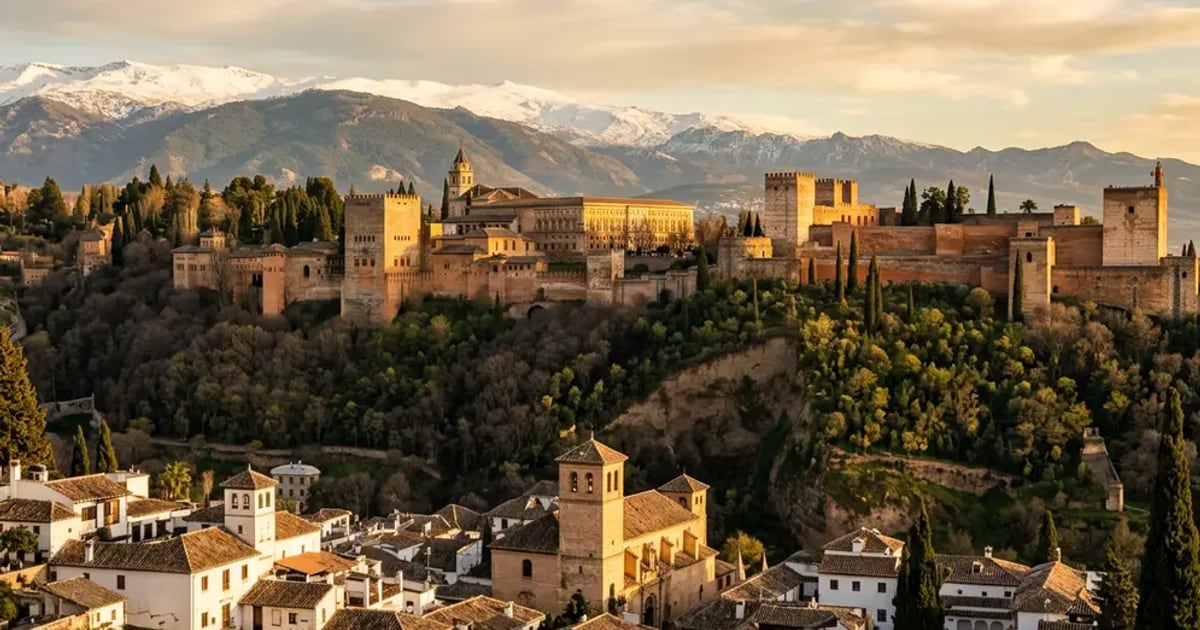

The Nasrid Palaces of the Alhambra at golden hour, red-and-white striped arches visible through a horseshoe arch doorway with Sierra Nevada in the distance
Monument guide

Top 10 monuments in Granada

Ranked by historical weight, not by how photogenic they are on Instagram — with 2026 prices, opening hours, and exactly how long you actually need at each one.

Granada has more historically significant monuments per square kilometre than almost anywhere in Spain. The problem is knowing which ones are genuinely worth your time and which ones the tourist board has dressed up as essential. This list is ranked by historical weight and visitor experience, with actual prices as they stand in June 2026 — not approximations from three years ago.

The short version: four of the ten are always free. Three require paid tickets between €5 and €22.27. One — the Alhambra — requires advance booking weeks ahead. The Alhambra tickets guide covers the booking process in full; the Granada passes and tickets page explains whether a combined ticket saves you money.

The must-sees: Alhambra, Albaicín, Cathedral

These three set the frame for everything else in Granada. If you have only two days, these are the only places that matter.

Hours: Summer (mid-Mar to mid-Oct): 08:30–20:00; night visits Tue–Sat 22:00–23:30. Winter: 08:30–18:00; night visits Fri–Sat 20:00–21:30. · Visit time: 3–4 hours minimum; full day for all three areas.

The Nasrid Palaces justify the trip to Granada on their own. The muqarnas dome in the Sala de los Abencerrajes — a 16-pointed stalactite ceiling built in the 14th century without modern engineering tools — produces a kind of silence in visitors that most other monuments do not. The Alcazaba is the fortified military core, the Generalife are the summer gardens above; together the three areas form a complete portrait of Nasrid court life from the 13th to the 15th centuries.

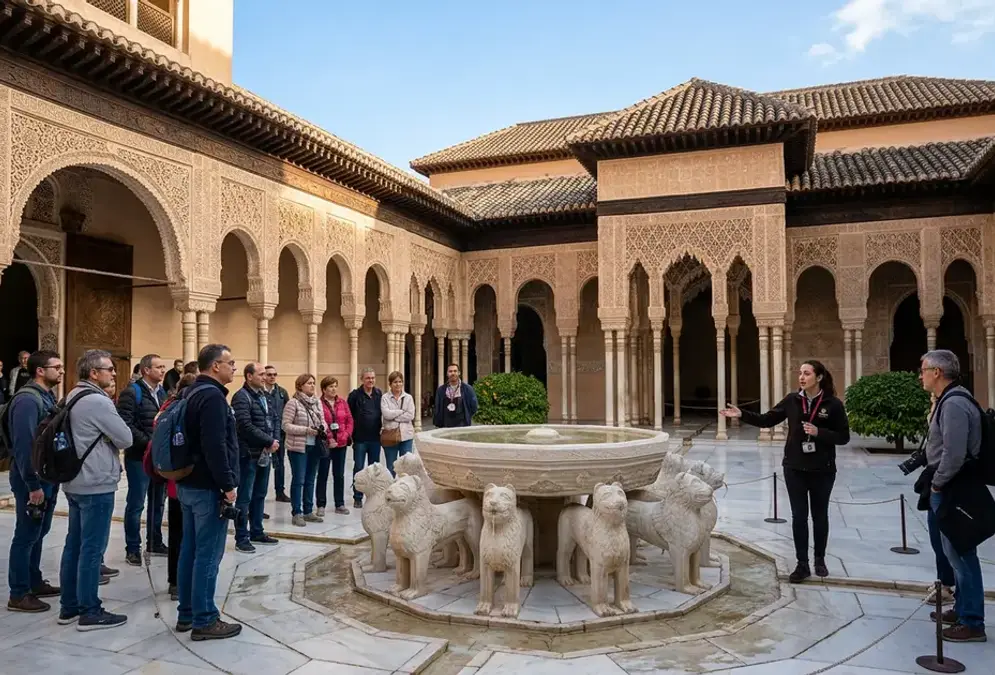
The Patio de los Leones photographs best at 08:30, immediately after opening, before the first large groups arrive. For the exterior shots — Alcazaba towers against the Sierra Nevada — stand on the Torre de la Vela parapet facing south-east.

Booking is essential. Nasrid Palace timed slots sell out weeks or months ahead from April to October. Book only through alhambra-patronato.es. The Alhambra architecture guide covers what to look for in each section.

Hours: Always accessible (open neighbourhood). Individual churches, tea houses, and museums within have their own hours. · Visit time: 2–3 hours for a leisurely walk to Mirador de San Nicolás and back.

Granada's medieval Moorish quarter shares UNESCO World Heritage status with the Alhambra — the only time the inscription covers both a monument and the surrounding living urban district. Its streets are steep, narrow, and white-washed; the Mirador de San Nicolás delivers the classic Alhambra-against-Sierra Nevada panorama that most people associate with Granada.

For the Alhambra-and-snow photograph, arrive at the Mirador before 09:00 in spring when snow lingers on the Veleta peak. In summer, the golden hour falls closer to 21:00. The Albaicín guide covers the route, the tea houses, and which streets to take to avoid the tourist crowds.

Accessibility note: The quarter's streets are steep, cobbled, and largely inaccessible to wheelchairs. The lower Calle Elvira area is more manageable.

€10 (2026) / ~€7 standard

Hours: Mon–Sat 10:00–18:15; Sun 15:00–18:15. · Visit time: 45–60 minutes.

The largest cathedral in Andalusia and the first Spanish Renaissance cathedral — begun in 1523 on the site of Granada's main mosque the year after the Reconquista. The transition from Gothic structure to Renaissance interior is most obvious in the Capilla Mayor, where Diego de Siloé's 15-metre gilded altarpiece and alabaster busts of Ferdinand and Isabella reach a level of finish that took decades to achieve. An audio guide is included with every ticket.

Note the current ticket price: €10 during the KERYGMA special exhibition, running 8 May–28 November 2026. The standard price outside that window is approximately €7. Children under 12 are free; Granada province residents enter free on Tuesdays with ID. The Renaissance facade on Plaza de las Pasiegas photographs best from across the plaza in mid-morning light.

Royal Chapel, Sacromonte Abbey, El Bañuelo

Three paid monuments that each justify the ticket on their own terms — one for concentrated history, one for views and underground atmosphere, one for architectural intimacy.

€5 · Free Wed 14:30–18:30

Hours: Mon–Sat 10:00–18:30; Sun & holidays 11:00–18:00. · Visit time: 30–45 minutes.

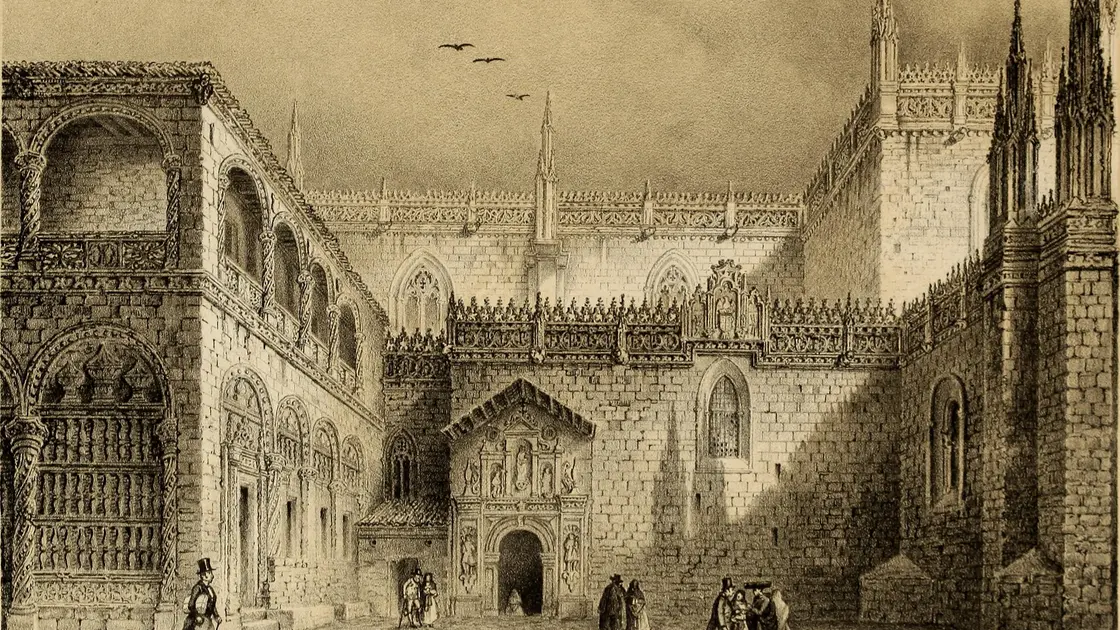
Built between 1505 and 1521 specifically to hold the tombs of Ferdinand and Isabella, this is the most historically loaded single room in Granada. The marble effigies of the Catholic Monarchs by Domenico Fancelli are among the finest funerary sculpture in Spain; the bronze reja (choir grille) by Master Bartolomé separating the nave from the tombs is technically extraordinary. In the sacristy museum: Isabella's personal crown and sceptre, and Ferdinand's sword. These are not replicas.

Photography inside is restricted to no flash and no tripod; the bronze reja rewards a close-up with a phone camera. Free entry on Wednesdays 14:30–18:30 requires advance booking through the Archdiocese booking system. Note that the Chapel occasionally closes briefly around 13:00–15:30 on some days.

5

Sacromonte Abbey (Abadía del Sacromonte)

€7

Hours: Summer (Apr–Oct): Mon–Sun 10:00–13:00 & 15:30–18:00. Winter (Nov–Mar): Mon–Sun 10:00–13:00 & 15:00–17:00. Church closes during Sunday noon mass; arrive before 11:30 or after service. · Visit time: 60–75 minutes.

Founded in 1600 on the hill where St Cecilius, Granada's patron saint, is said to have been martyred, the Abbey sits above the Sacromonte cave district with a clear view across the Albaicín to the Alhambra. The ticket gets you into the Santas Cuevas — underground catacombs where lead-bound books were discovered in the 1590s, touching off a pan-European theological controversy about whether they proved Islam had anticipated Christianity. They didn't, but the Vatican took decades to rule on it.

The cave chapel interiors are dimly lit and need a steady hand or a wall brace for photography. The terrace at the top of the Abbey path provides an east-facing view of the Albaicín with the Alhambra directly behind; best lit in late afternoon. A minibus (line C34) runs from Plaza Nueva if the steep uphill road from Sacromonte is not appealing.

€8.48 combined · Free Sundays

Hours: Summer (1 May–14 Sep): Mon–Sun 09:00–14:30 & 17:00–20:30. Winter (15 Sep–30 Apr): Mon–Sun 10:00–17:00. · Visit time: 20–30 minutes.

The oldest standing building in Granada, dating to the 11th century Zirid period — two hundred years before the Alhambra was begun. The ticket (part of the Patronato Andalusian Monuments combined pass, €8.48 with Dar al-Horra) buys you twenty minutes in one of the best-preserved Arab bathhouses in Spain. The columns were recycled from Roman and Visigothic structures; you are standing on layers of the city's full history.

The reason to visit: the star and octagonal skylights punched through the barrel-vaulted ceiling of the tepidarium. In mid-morning, sunlight falls through them in geometric pools onto the stone floor. Arrive before 11:00. On Sundays, entry is free under the Junta de Andalucía's Andalusian Monuments policy — which also makes Sunday the ideal day to combine it with Dar al-Horra next door.

Free monuments worth your time

Four monuments in this list cost nothing to enter — not on certain days, but every single day. All four carry genuine historical weight and none should be skipped on budget grounds.

Free on Sundays vs always free

El Bañuelo and Dar al-Horra (ranks 6 and 10) are free every Sunday under the Patronato's Andalusian Monuments policy, but otherwise cost €8.48 combined. The four monuments in this section — Corral del Carbón, Madraza, Carmen de los Mártires, and Dar al-Horra on Sundays — have no entry charge. The free things in Granada guide lists every no-cost entry option in the city.
Always free

Hours: Daily 09:00–20:00. Closed on public holidays. · Visit time: 15–25 minutes.

The oldest Arab monument in Granada — a 14th-century funduq (merchants' inn and warehouse) that survives more or less intact, making it the only building of its type still standing in Spain and possibly in Europe. The horseshoe-arched entrance portal with its sebka stonework (an interlocking diamond lattice) is a textbook example of Nasrid civil architecture. From there you step into a three-storey internal courtyard that gives a concrete sense of how the medieval Silk Road trade actually operated.

Stand inside the main portal facing outward: the horseshoe arch frames the street and provides the photograph most people come for. The inner courtyard is best in midday light, with the upper galleries evenly lit. Early morning gives you an empty courtyard. The ground floor and main courtyard are wheelchair-accessible; the upper gallery levels are not.

Always free

Hours: Mon–Fri 08:00–20:00. Closed weekends and public holidays. · Visit time: 15–20 minutes.

Founded in 1349 by Sultan Yusuf I as a Qur'anic school (madrasa), this is the only surviving pre-Reconquista Islamic civil building in Granada's city centre. Most people walk past it on Calle Oficios on their way to the Cathedral without knowing what it is. The reason to go inside: the 14th-century mihrab oratory on the ground floor, with stucco arabesque panels and a painted wooden ceiling that rival the Alhambra's decorative programme. Access is through an open doorway; conservation rules mean you view from the threshold, but the quality of the stonework is visible from two metres.

Photograph the mihrab oratory through the doorway, with the ornate stucco frieze as your focal plane. Visit in the first hour after opening (08:00) for empty rooms. The building is at street level and the main entrance and ground floor are accessible; the Knights' Hall on the first floor is reached by stairs only.

Always free

Hours: Spring/Summer (1 Apr–14 Oct): Mon–Fri 10:00–14:00 & 18:00–20:00; Sat–Sun & holidays 10:00–20:00. Autumn/Winter (15 Oct–31 Mar): Mon–Fri 10:00–14:00 & 16:00–18:00; Sat–Sun & holidays 10:00–18:00. · Visit time: 45–60 minutes.

A traditional Granada carmen — a private walled garden estate — open to the public, located on the Alhambra hill five minutes on foot from the fortress entrance. The eclectic grounds combine a formal French parterre, an English romantic garden, a lake, and a rose garden. It is the nearest thing to a private house garden that the city offers to visitors, and on a weekday morning the contrast with the Alhambra crowds one hill over is stark.

The rose garden peaks in May–June; the pair of resident black swans on the lake are present year-round and photograph well at dawn when the water is still. The upper garden terraces frame an Alhambra tower through the planting in late afternoon light. Gravel and stone paths on sloping terrain mean wheelchairs can access the lower sections only.

€8.48 combined · Free Sundays

Hours: Summer (1 May–14 Sep): Mon–Sun 09:00–14:30 & 17:00–20:30. Winter (15 Sep–30 Apr): Mon–Sun 10:00–17:00. · Visit time: 20–30 minutes.

A 15th-century Nasrid palace within the Albaicín, built for Aixa — mother of Boabdil, the last sultan of Granada — and reached via a narrow lane called Callejón de las Monjas. Its double porticoed courtyard and stucco halls are as close as you can get to a small-scale Alhambra inside the living quarter. The building is included in the Patronato Andalusian Monuments ticket (€8.48 combined with El Bañuelo); entry is free every Sunday.

The upper mirador portico on the first floor frames the Alhambra through paired arches with a view comparable to the Mirador de San Nicolás but at a fraction of the crowd density. Photograph from the upper portico looking down into the courtyard, using the arches as a natural frame. Arrive before 10:00 on Sundays when entry is free; queues form once tour groups discover the slot.

Practical tips for visiting

A few things that change the economics of visiting significantly.

The city-centre cluster

The Cathedral, Royal Chapel, Corral del Carbón, and Madraza are within a three-minute walk of each other. A focused two-hour morning covers all four. The Madraza is weekday-only (Mon–Fri 08:00–20:00), which makes the itinerary non-negotiable: midweek mornings, not weekends. The Royal Chapel free slot (Wednesday 14:30–18:30, advance booking required) can be combined with a paid Cathedral visit the same morning for maximum efficiency.

The Alhambra hill cluster

Carmen de los Mártires and the Alhambra entrance are 10 minutes apart on foot. After a morning in the Alhambra, the Carmen gardens offer a quiet 45-minute decompression before the walk down. If you are visiting Sacromonte Abbey on the same day, the C34 minibus connects Plaza Nueva, the Abbey, and the Albaicín.

The Albaicín cluster

El Bañuelo, Dar al-Horra, and the Albaicín neighbourhood are naturally combined. On a Sunday, both El Bañuelo and Dar al-Horra are free; combine with a visit to Mirador de San Nicolás and the neighbourhood's tea houses for a full morning at zero monument cost. The Albaicín guide covers the exact route and which tea houses are worth the stop.

Tickets and passes

The Dobla de Oro ticket (€30.48) covers the full Alhambra plus the Andalusian Monuments sites (El Bañuelo and Dar al-Horra). If you plan to visit all three, it costs €0.77 more than buying the Alhambra alone. The passes and tickets page has the full breakdown of when combined tickets save money and when they do not.

Reporter notebook

Insider tips

Practical observations gathered the way a local journalist would keep them: short, specific, and more useful than brochure copy.

Booking tip

Book the Alhambra 3–4 weeks out, not 3–4 days

Nasrid Palace slots disappear fast from April through October. The Patronato releases new availability at 08:00 Spanish time three months ahead — set a calendar reminder. If you find the standard ticket sold out, check for the Dobla de Oro combo or the night visit separately; these run on different allocation pools and sometimes have slots when the day ticket does not. Book at alhambra-patronato.es only.
Money tip

Visit El Bañuelo and Dar al-Horra on a Sunday — both are free

The Patronato Andalusian Monuments combined ticket is €8.48 for El Bañuelo and Dar al-Horra together. Every Sunday, both open for free under the Junta de Andalucía's free-entry policy. The Corral del Carbón and Madraza are always free, the Royal Chapel is free on Wednesday afternoons, and Carmen de los Mártires never charges. A Sunday visit to the Albaicín can combine all five free monuments in one morning without spending a euro on entry.

Best time

The Cathedral cluster is best tackled on a weekday morning

The Cathedral, Royal Chapel, Corral del Carbón, and Madraza sit within a three-minute walk of each other. On weekday mornings before 11:00 the crowds have not yet arrived from the cruise-coach circuit. The Madraza closes on weekends entirely — Monday to Friday 08:00–20:00 only — so a weekday visit is your only option. The Royal Chapel free slot is Wednesday afternoon; if you want both the free entry and a quiet cathedral, arrive at the Cathedral at 10:00 and the Royal Chapel at 14:30.

Photo spot

Dar al-Horra on a Sunday morning: the Alhambra view without the crowd

The upper portico of Dar al-Horra frames the Alhambra through paired arches with nobody in the shot. The Mirador de San Nicolás draws the crowds; this terrace, two hundred metres away and free on Sundays, rarely has more than ten people. Arrive before 10:00. The light from the east hits the Alhambra's towers directly at that hour.

Frequently asked questions

Frequently asked questions

Which Granada monument is most worth visiting?

The Alhambra — and it is not a close decision. The Nasrid Palaces contain some of the most technically refined decorative architecture produced anywhere in medieval Europe. The €22.27 ticket and the advance booking requirement (slots sell out weeks ahead) reflect genuine demand, not marketing. If you have limited time, the Alhambra is the only monument in the city that no amount of photographs adequately prepares you for. For everything else, see the Alhambra architecture guide.

How many monuments can I see in one day in Granada?

The Alhambra alone takes 3–4 hours minimum; add the Generalife gardens and you will lose most of a morning. On a second day, the Cathedral, Royal Chapel, Corral del Carbón, and Madraza are all within a five-minute walk of each other in the city centre — a focused two hours covers all four. For a day built around the Alhambra, plan that visit first and treat the rest of the list as afternoon stops.

Which Granada monuments are free to visit?

Four monuments are always free: the Albaicín neighbourhood (an open quarter, no ticket needed), Corral del Carbón (daily 09:00–20:00), Madraza de Granada (Mon–Fri 08:00–20:00), and Carmen de los Mártires gardens. El Bañuelo and Dar al-Horra are free every Sunday. The Royal Chapel offers free entry on Wednesdays 14:30–18:30, but requires advance booking. See the full free things in Granada guide for the complete picture.

Is the Alhambra worth the €22.27 ticket price?

Yes — unambiguously. The muqarnas ceiling in the Sala de los Abencerrajes, the proportion of the Patio de los Arrayanes, and the scale of the Alcazaba's Torre de la Vela produce an experience that is materially different from looking at photographs. The greater risk is visiting without a booked Nasrid Palace entry slot. Book through the official Patronato site at alhambra-patronato.es; avoid resellers. The Dobla de Oro ticket (€30.48) adds El Bañuelo and Dar al-Horra if you plan to visit both. See Granada passes and tickets to compare options.

What is the difference between Granada Cathedral and the Royal Chapel?

The Cathedral (€10 in 2026 during the KERYGMA exhibition, running to 28 November; approximately €7 outside that period) is the larger building — Andalusia's largest cathedral, begun in 1523, with a Renaissance interior built over the earlier Gothic structure. The Royal Chapel (€5; free Wednesdays 14:30–18:30 with booking) is a separate building attached to it, built to house the tombs of Ferdinand and Isabella. The Chapel is the more emotionally concentrated visit — one room, two marble effigies, the queen's actual crown and sceptre in the sacristy museum. The Cathedral is architecturally significant; the Chapel is where the history of modern Spain is physically present.