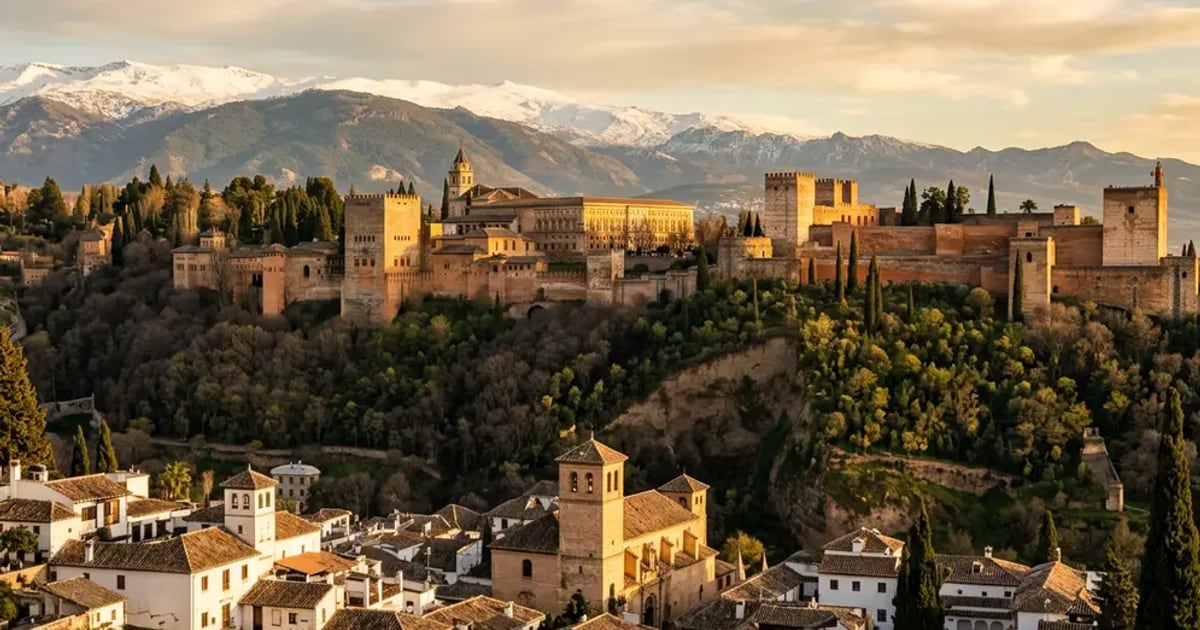
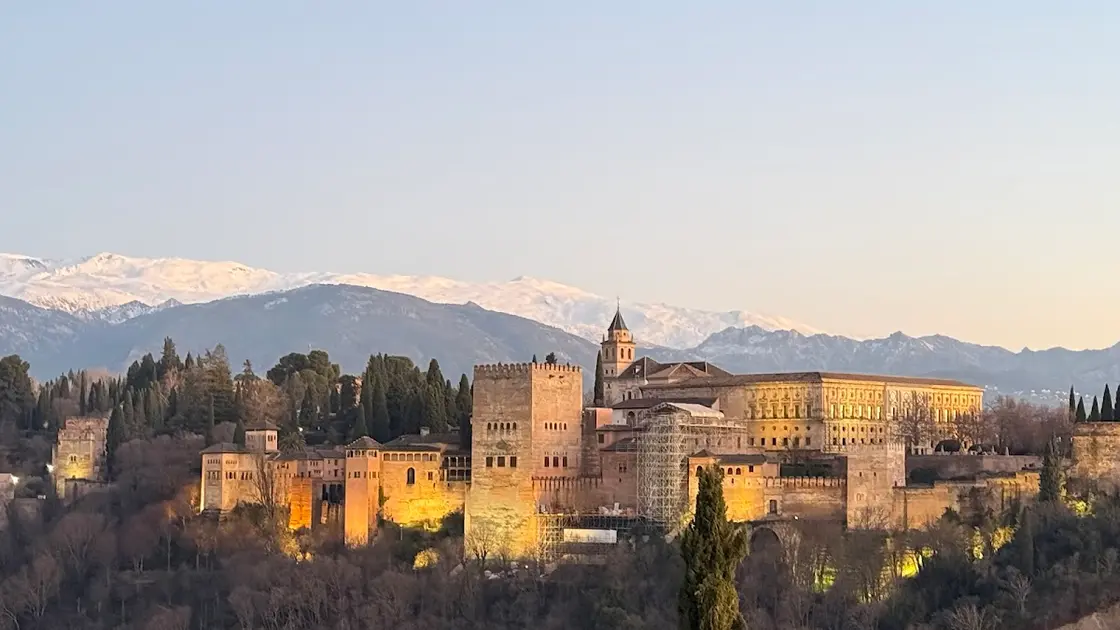
Granada panorama at sunrise from the Alhambra hill, the Albaicín rising opposite and the Sierra Nevada snowline visible above the city
10 days · 9 nights Pre-booking required

10 Days in Granada: The Complete Andalusia Base

Ten days is enough time to do the Alhambra properly, learn the Albaicín without a map, reach the Alpujarras and the Sierra Nevada and the coast, find a flamenco cave that isn't on tour-group circuits, and end with three days of deliberate slow travel.

Ten days in Granada is for people who want more than the Alhambra and a flamenco show. By Day 4 of a shorter trip, you've done the monuments; from Day 4 onward in this itinerary, you leave the city behind. The Alpujarras white villages sit on the Sierra Nevada's southern face at 1,000–1,400 metres. The Sierra Nevada itself reaches 3,479 metres: close enough that you can drive from the city to genuine alpine terrain in 45 minutes. The Costa Tropical coast is 50 kilometres south, a different climate, different light, different pace. Days 8–10 return to the city for the things that take time and can't be rushed: a Granada cooking class, a morning at the hammam, the Lorca birthplace, a serious afternoon in the artisan shops of the Alcaicería.

If 10 days is more than you have, see the 7-day itinerary for the compressed version. This one assumes one hotel for all nine nights, a car for at least four of the day trips, and both the Alhambra and the hammam booked before you leave home.

The city rewards people who stay long enough to stop performing tourism. By Day 6, you'll know which bar rotates its tapa well and which mirador to visit before the tour buses arrive. That's the version of Granada worth having.

Before you arrive: what to book first

Book the Alhambra 6–8 weeks before you travel

The Nasrid Palaces timed entry sells out 6–8 weeks ahead in spring and September, longer in July and August. Check tickets.alhambra-patronato.es before confirming travel dates. If your slot shows sold out, cancellations release nightly around midnight. Book the hammam and any cooking class in the same session: both fill 1–2 weeks ahead in peak season and neither is available on walk-up at short notice.

Car hire for Days 4–7 and Day 9 should be arranged a few days before each pickup, not weeks ahead. Most agencies near the city centre allow next-day bookings without surcharge. If you're using ALSA buses throughout, download the app before you leave and check timetables the evening prior to each day trip. Services to the Alpujarras upper villages and Guadix run 3–5 times daily; the return time matters.

See the day trips from Granada guide for transport logistics on every destination in this itinerary.

Days 1–3: City core

With 10 days, there's no reason to compress the city's three main areas into two days. Spread them. Each has a different mood at different times of day, and the extra margin means you stop at things you'd otherwise walk past.

Day 1: Arrival and Albaicín orientation

Arrive and check in, then walk rather than sightsee. Head into the Albaicín from Plaza Nueva without a fixed route. The point is to get a feel for the geography before the schedules begin. Climb to Mirador de San Nicolás (arrive by 5pm if possible, before the afternoon tour groups) for your first look at the Alhambra from across the valley. Evening: tapas along Calderería Nueva or in the Realejo — choose bars without laminated menus on the board outside, where the free tapa changes daily.

Day 1 budget: Transport from airport/station €5–20. Meals and tapas €15–25. Total: approx. €25–50.

Day 2: Full Alhambra complex

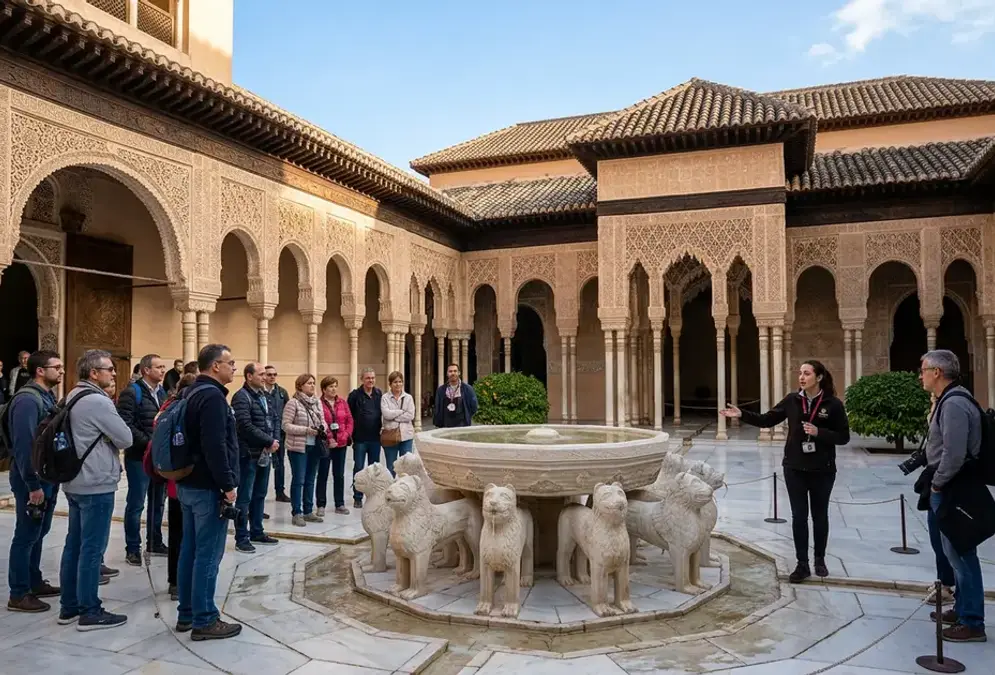
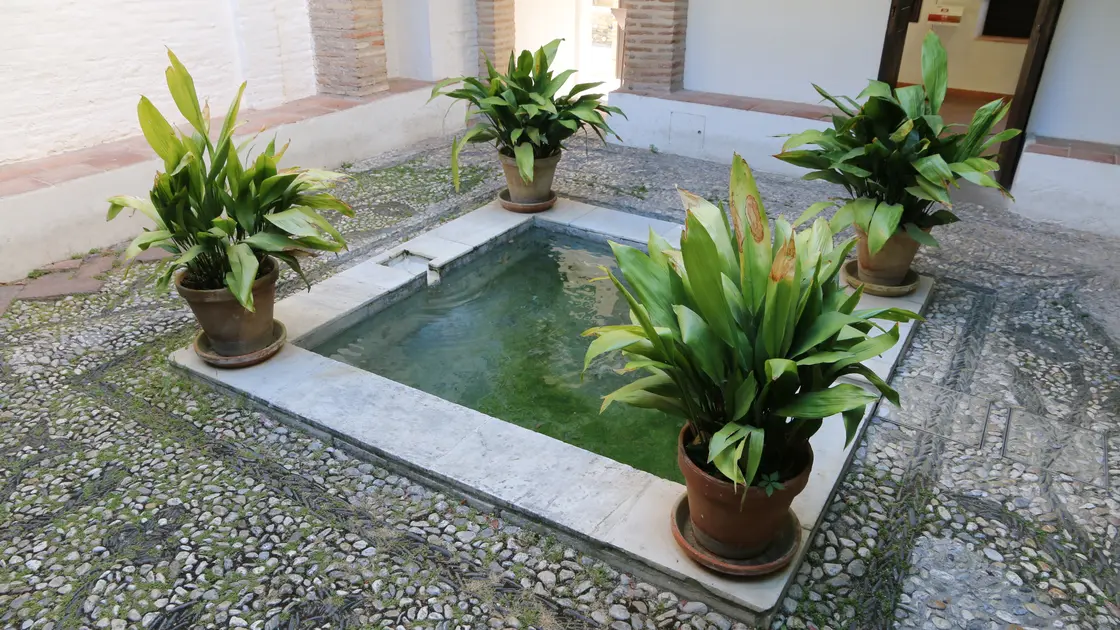
Arrive at the Alhambra 30 minutes before your timed slot. The full complex (Nasrid Palaces, Alcazaba, Partal, and Generalife gardens) takes 4–5 hours done without rushing. The Partal pool is the oldest surviving structure on the hill and the majority of visitors never reach it; the Generalife terraced gardens fill with the smell of jasmine from April through June. Come back to the city for a long lunch and a genuine afternoon rest — Day 3 starts with a new part of the city and you shouldn't arrive tired.

Day 2 budget: Alhambra €14–19. Lunch €8–12. Evening tapas €15–20. Total: approx. €40–55.

Day 3: Sacromonte flamenco and the Cathedral quarter

Morning at the Bañuelo on Carrera del Darro — the 11th-century Moorish hammam with star-shaped skylights, free entry, and almost no visitors. Then the Cathedral of Granada (€5, the first Renaissance cathedral built in Spain after the Reconquista) and the Royal Chapel next door (€4, Ferdinand and Isabella's tombs, with their actual crowns and swords in a side room). Afternoon free. Evening: cave flamenco in Sacromonte. The venues seat 20–40 people; book ahead. The walk up to Sacromonte from Plaza Nueva takes 25 minutes through the gorge path — go on foot rather than by taxi and you'll understand why the neighbourhood is where it is.

Day 3 budget: Bañuelo free. Cathedral €5, Royal Chapel €4. Flamenco show €15–30. Lunch €8–12. Total: approx. €35–55.

Days 4–5: Alpujarras and Sierra Nevada

The Sierra Nevada and the Alpujarras are the same mountain range seen from different angles. Together they make a logical two-day push: one day in the white villages on the southern slopes, one day higher on the range itself. See the full Alpujarras day-trip guide and the Sierra Nevada guide for detailed logistics on both.

Leave Granada by 8:00 AM on both days

Car parks at the Alpujarras villages fill by 10am on weekends. The Sierra Nevada high road closes in poor weather, so check sierra-nevada.es the evening before. Return to the city by 6–7pm to eat without rushing.

Day 4: Alpujarras villages

The three main villages, Pampaneira (1,050m), Bubión (1,300m), and Capileira (1,436m), sit above each other on the same ravine. In April and May the meadows above 1,500 metres are in flower; in July, the heat at valley level makes the altitude feel earned. Allow two hours in Capileira: the higher you go, the quieter it gets and the better the view back toward the Mediterranean. Lunch on a plato alpujarreño: blood sausage, pork loin, chorizo, jamón, fried egg, potatoes. It doesn't appear on menus anywhere else. On the way back, Trevélez (1,476m, the highest permanently inhabited village in Spain) is worth 45 minutes for the jamón-curing caves alone.

Day 4 budget: Car rental €25–40. Fuel €10–15. Lunch €12–18. Total: approx. €50–75.

Day 5: Sierra Nevada

The Sierra Nevada ski resort at 2,100 metres is the entry point, but the landscape above it is the destination. In summer (June–September), the high road runs to Pico del Veleta at 3,395 metres, the second-highest peak in mainland Spain. The drive takes you above the treeline into bare granite and alpine lakes; on clear days, the coast is visible 60 kilometres south. In winter (December–March), the resort runs 124 kilometres of piste and day lift passes cost €40–50. Spring and autumn are best for the Los Cahorros hiking trail: 8 kilometres of narrow cliff-side paths and hanging bridges over a river gorge, 30 minutes south of Granada at Monachil.

Day 5 budget: Car rental €25–40. Fuel €10–15. Lunch €12–18. Ski lift pass €40–50 (winter only). Total: approx. €50–85 depending on season.

Days 6–7: Coast and white towns

After two mountain days, the landscape shift is useful. Day 6 goes south to the coast; Day 7 goes west or east depending on how much driving you want and which landscape interests you more.

Day 6: Costa Tropical

The Costa Tropical sits 50 kilometres south of Granada, about 8–10°C cooler than the city in summer, with Mediterranean beaches between volcanic headlands. Salobreña is the one worth stopping for: a white town on a dark volcanic rock above a long gravel-and-sand beach, with a Moorish castle at the top that takes 20 minutes to walk up to and has views you won't forget. Almuñécar, 12 kilometres west, is larger and has better restaurants. Train from Granada to Almuñécar takes 45–50 minutes (€12–18 return); going by car gives you Salobreña on the way. Sea temperature in July runs around 24°C. Go early on a summer weekend: the beach fills by 11am.

Day 6 budget: Train return €12–18 (or car fuel €10–15). Lunch €12–18 on the coast. Total: approx. €25–40.

Day 7: Guadix cave district or Ronda

Option A: Guadix (90 km east, 1 hour)

Guadix is the stranger of the two options. The eastern barrio is built almost entirely underground: over 2,000 families still live in cave houses carved into chalky hills, with only their whitewashed facades and chimneys visible from the lane above. Temperature inside stays around 18°C year-round. Free to walk; some cave-house museums charge €3–5 entry. The Cathedral of Guadix (€4, 16th–18th century, Baroque facade) and the Moorish Alcazaba above the town are the formal monuments. On the return, stop at Purullena (7 km west of Guadix) for the roadside pottery workshops. By ALSA bus: 1h15m, €8–12 return.

Option B: Ronda (185 km west, 2h30m)

The longer trip. The Puente Nuevo is a 98-metre bridge built across the El Tajo gorge between 1759 and 1793. From the valley floor below the bridge, looking up, the span appears to defy what stone should be able to do. The old town has the 1785 Real Maestranza bullfighting ring (the oldest in Spain), 13th-century Arab baths, and a maze of streets that earns its reputation. By car: 2h30m via the A-92. By bus: ALSA to Ronda via Málaga, 3h, €20–25 return.

Day 7 budget: Guadix: €20–35 total. Ronda: €50–80 total by car, €40–60 by bus.

Days 8–10: Culture deep dive

The final three days are slower and more local. No early departures, no timed entry slots to sprint for. These are the days that separate a 10-day trip from a 7-day one.

Day 8: Hammam, cooking class, Lorca

Split between two halves. Morning: the Hammam Al Ándalus on Calle Santa Ana, three minutes from Plaza Nueva. The circuit (cold plunge, tepid pool, hot room) runs 1h30m. Book the optional massage (€35–50 extra) if you're mid-trip tired. You'll be done by noon. Afternoon: a Granada cooking class. Most reputable classes run 3–4 hours and start with a market visit to Mercado San Agustín where you buy the ingredients, then cook them. Dishes vary by school but expect gazpacho, rabo de toro or slow-cooked lamb, and some version of pionono (Santa Fe's dense cream-filled pastry). Prices: €40–65 per person. Book 1–2 weeks ahead. If the Lorca birthplace in Fuente Vaqueros (17 km west, €3 entry) fits the evening, the 30-minute drive is worth it. The house is preserved almost exactly as it was in the 1890s.

Day 8 budget: Hammam €25–40 (plus massage €35–50 optional). Cooking class €40–65. Lorca museum €3. Total: approx. €70–110.

Day 9: Antequera or a second day trip

If Day 7 was Guadix, Day 9 is the natural slot for Ronda or Antequera. Antequera is closer (1h30m west via the A-92) and offers two things most Andalusia itineraries skip: the Menga and Viera dolmens (Bronze Age megalithic tombs from around 3,500 BCE, UNESCO World Heritage, 45 minutes to visit) and El Torcal Natural Park, 14 km south — a limestone karst plateau at 1,300 metres with rock formations that look misplaced and a 2-hour marked hiking circuit. A half-day covers both. Back in Antequera by 2pm for lunch, and return to Granada by late afternoon. Alternatively, use Day 9 for an unhurried morning in the Albaicín's upper streets — the Alto Albaicín east of Placeta de San Miguel Bajo has carmen gardens, neighbourhood bars that open at 9am, and almost no other visitors.

Day 9 budget: Car rental €25–40 (or train to Antequera €15–20 return). Dolmens and El Torcal entry free. Lunch €10–15. Total: approx. €40–75.

Day 10: Granada on your own terms

The final day has no agenda. A few options depending on what's felt unfinished. The Monasterio de la Cartuja (2 km north of the centre, €5, churrigueresque sacristy of almost unsettling richness, usually empty before 11am) is the strongest candidate for a missed monument. Carmen de los Mártires, the garden beside the Hotel Alhambra Palace, has flamingos, peacocks, and a terrace bench looking through cypress trees toward the Alhambra. It's free and almost never visited despite sitting 300 metres from the Alhambra ticket office. The Alcaicería, the rebuilt silk souk near the Cathedral, is the place for artisan shopping: ceramic plates, olive wood kitchen tools, the better quality textile work. Go before noon when the lane fills up. The final evening belongs to the Realejo: Campo del Príncipe at a low table, the last of Granada's free-tapas rounds, whatever the bar recommends.

Day 10 budget: Cartuja €5 (optional). Meals and tapas €20–30. Total: approx. €25–40.

What it costs: daily budgets and totals

The figures below are per person. They exclude flights and assume a solo traveller at mid-range; couples sharing accommodation and car hire should halve the per-person transport and accommodation costs.

Day Focus Budget range
Day 1 Arrival, Albaicín walk, tapas €25–50
Day 2 Full Alhambra complex €40–55
Day 3 Bañuelo, Cathedral, Royal Chapel, flamenco €35–55
Day 4 Alpujarras villages (car) €50–75
Day 5 Sierra Nevada (car) €50–85
Day 6 Costa Tropical coast €25–40
Day 7 Guadix or Ronda €20–80
Day 8 Hammam, cooking class, Lorca €70–110
Day 9 Antequera or free day trip €40–75
Day 10 Free day, city at leisure €25–40
Activities subtotal (10 days) €380–665

Total trip cost: three tiers

Budget €900–1,100. Hostel dorms (€18–25/night), free-tapas evenings, ALSA buses throughout, all entry tickets. No car hire.
Mid-range €1,600–2,100. Hotel in Realejo or lower Albaicín (€70–90/night), car for four day trips, one sit-down restaurant lunch daily, hammam and cooking class.
Comfortable €2,400–2,900. Hotel €100–140/night, car most days, mix of restaurants and tapas, hammam with massage, cooking class, one private Alhambra tour.

Biggest variables: Accommodation (€25 hostel vs €120 hotel = €855 difference over 9 nights). Car hire for 4 days (€100–160 rental + fuel). The Alhambra is €14–19 per person regardless of budget tier; there's no cheaper version. Granada's free-tapas tradition genuinely covers evening meals for €10–20 per person if you use it, which shifts the food budget significantly.

Book guided experiences for your 10 days

Tours are selected for quality, not commission. We earn a small fee if you book — at no extra cost to you.

Alhambra with expert commentary, Albaicín and Sacromonte walking tours, Sacromonte cave flamenco, Granada tapas tour, and the Hammam Al Ándalus

Frequently asked questions

Frequently asked questions

Is 10 days in Granada too long?

Not if you use the days well. Most visitors covering the city's obvious monuments (Alhambra, Albaicín, Cathedral) exhaust those in three days. The 10-day itinerary earns its length through the regional landscape: the Alpujarras villages, the Sierra Nevada at altitude, the Costa Tropical coast, and the white-town day trips in the second half of the trip. Days 8–10 are slower: a hammam afternoon, a cooking class, the Lorca birthplace, time to wander without a list. If you want to sightsee at pace and move on, 10 days is too long. If you want Granada as a base for understanding southern Andalusia, it's the right amount. The 7-day itinerary is the shorter alternative if you're uncertain.

What is the best time of year for a 10-day Granada itinerary?

April and May are the practical optimum. Crowds are manageable, the Sierra Nevada is walkable, the Alpujarras meadows are in flower, and temperatures stay between 18–25°C. September and October are the next best: summer heat has cleared, the coast is still warm enough for swimming, and the Alhambra queues are shorter. Avoid July and August for a 10-day trip: the heat exceeds 38°C by midday, making day trips exhausting rather than pleasant. The exception: if you want beach days on the Costa Tropical, summer heat is the point. Winter (December–February) works if you want the Sierra Nevada ski resort and low-season Alhambra tickets; just know that several mountain roads and village restaurants close in January.

Can I add Seville or Málaga as side trips?

You can, but it changes the character of the itinerary. Seville is 2h45m from Granada by bus or 3h by car, a long day trip that works on paper but leaves you tired and having seen neither city properly. A better structure: if you want Seville, build a two-centre trip (4 nights Granada, 4 nights Seville) rather than trying to day-trip it. Málaga is closer at 1h30m by bus and is reasonable as a half-day coast excursion, though the Costa Tropical day trip covers similar ground for less travel time. Ronda (Day 9) is the natural Málaga-province addition to this itinerary, getting you into the interior province without the coastal commute. Adding Córdoba (1h50m by bus) is genuinely possible on Day 9 as an alternative to Ronda; the Mezquita-Catedral is worth the journey.

Do I need a rental car for 10 days in Granada?

For Days 1–3 and Days 8–10, no. The city is walkable and bus access to the Alhambra is reliable. For the day trips, a car matters most for the Alpujarras (the upper villages, Trevélez and Capileira, are poorly served by bus), the Sierra Nevada above the resort, and any combination day (Sierra Nevada in the morning, Alpujarras in the afternoon). For Ronda and Antequera, ALSA buses run direct and the journey times are tolerable. If renting, 4–5 days spread across the itinerary is the practical option. Avoid paying for the car on city days. Pick up on Day 4, return on Day 5, pick up again on Day 6, return Day 7, then again for Day 9 if you need it. Most central agencies allow multiple short rentals without surcharge.

How far ahead do I need to book the Alhambra?

Six to eight weeks minimum in spring (April–May) and September. In July and August, slots can go 10–12 weeks out. The Nasrid Palaces entry is the constraint; the Alcazaba, Partal, and Generalife gardens are slightly more flexible, but the full complex ticket covers all areas on a single timed-entry slot. Book at tickets.alhambra-patronato.es directly. Third-party resellers charge €10–20 on top and are sometimes selling slots the official site still has available. If your dates show as sold out, check again around midnight: a batch of cancellations releases nightly at that time. The cooking class (Day 8) and the hammam (Day 8 or 9) both book out 1–2 weeks ahead in peak season; arrange them before you leave, not on arrival.

What is the total cost of a 10-day trip to Granada?

Budget (hostel dorms, free tapas bars throughout, ALSA buses for day trips, walking the city): €900–1,100 for 10 nights excluding flights. Mid-range (€70–90/night hotel in Realejo or lower Albaicín, one sit-down meal daily, car hire for four of the day trip days, all entry tickets, hammam and cooking class): €1,600–2,100. Comfortable (€100–140/night hotel, mix of restaurants and tapas, car for most days, one private Alhambra tour, cooking class, hammam with massage): €2,400–2,900. The Alhambra (€14–19) is non-negotiable at any budget level. The biggest variable after accommodation is transport: using ALSA buses throughout saves €120–200 versus car hire across four days. See the costs section for the full daily breakdown.

How do I combine the Sierra Nevada and the Alpujarras in one day?

This is possible but a long drive. The Sierra Nevada ski resort sits at 2,100 metres, 45 minutes south of Granada on the A-395. The Alpujarras villages (Pampaneira, Bubión, Capileira) are on the southern face of the same range, accessed via the A-44 south and then the A-4132 east. A combined route: leave Granada by 7:30am, drive to Capileira (1h15m), spend two hours in the upper village, then drive the high mountain road (GR-421, open summer only) over the ridge toward the Sierra Nevada resort at 2,500 metres, descend on the ski-station side, and return to Granada by 6pm. Total driving: around 3h30m. The Alpujarras guide has the village-by-village detail; the Sierra Nevada guide covers the resort approach. If you only have one day for both, prioritise the Alpujarras in the morning (cooler, better for walking) and the mountain road in the afternoon.

Reporter notebook

Insider tips

Practical observations gathered the way a local journalist would keep them: short, specific, and more useful than brochure copy.

Booking tip

Book the Alhambra before the flights, if possible

Nasrid Palace timed slots sell out 6–8 weeks ahead in April, May, and September. Go to tickets.alhambra-patronato.es before committing to dates. Once those slots are locked, book the hammam (Day 8) and cooking class (Day 8) in the same session: both sell out 1–2 weeks ahead in peak season and neither is walkable. Everything else in this itinerary is flexible. These three are not.

Pairing tip

Run Sierra Nevada and Alpujarras as one trip, not two

With a car, Day 4 (Alpujarras) and Day 5 (Sierra Nevada) work better combined into one long mountain day and one recovery half-day in the city. The GR-421 high mountain road connects Capileira to the Sierra Nevada resort in summer: drive up from the Alpujarras side, come back down the ski-station road. Single rental, one tank of fuel, and you see both landscapes in one outing. The other day frees up for Guadix or an unscheduled city morning.

Best time

Keep Day 10 genuinely free

After nine days of scheduled departures and booked entry slots, Day 10 should belong entirely to you. If the Alhambra was the highlight, you can buy a same-day garden-only ticket at the gate (no Nasrid Palaces, but the Generalife and Alcazaba) for €8–10. If the Albaicín was the highlight, go back without an agenda. If Sacromonte flamenco was the highlight, find a small bar that runs a Friday or Saturday afternoon session with ten people in the room. The best day-10 decision is usually the one that revisits something rather than ticking something new.