
Busy daytime street in central Granada near the Cathedral with tourists and locals
Safety guide

Is Granada safe?

Yes. One real risk: petty theft in tourist crowds. Here is exactly where it happens and how to avoid it.

Granada is safe. It ranks among Spain's least crime-affected cities, and Spain itself sits at 25th globally on the 2025 Global Peace Index. Violent crime against visitors is rare enough to be a non-factor in practical trip planning. The one real risk is petty theft, and it concentrates in predictable places.

The honest picture is this: the Alhambra queues, the Cathedral area, and the crowded buses to the hill are where pickpockets work. The Albaicín alleys feel quiet after dark but are not dangerous. Sacromonte at night is fine on a cueva tour and inadvisable alone. Everything else in this city (the tapas streets, the Realejo, the city centre) runs on the normal baseline of any European city.

This guide explains where the risk concentrates, how to handle it, and what to do if something goes wrong. Granada is genuinely comfortable to move around in; the specifics are worth knowing before you arrive, not after.

Where pickpocketing happens

Petty theft in Granada is almost entirely location-specific. The methods are the same as in any Spanish city (distraction, crowded-bus jostle, bag-snatch from chairs), but the hotspots are worth knowing precisely.

Alhambra queues and ticket area

The most concentrated group of tourists in the city. The wait outside the Nasrid Palaces entrance is 10-20 minutes, long enough for a patient pickpocket to work through the crowd. Front pockets, zipped bag across the body, and awareness of anyone standing unusually close. This is where the risk is highest in Granada.

Cathedral area and Gran Vía

The steps outside the Cathedral on Plaza de las Pasiegas and the stretch of Gran Vía de Colón are where distraction routines operate most visibly. Someone offers a sprig of rosemary or asks you to sign a petition; their associate is already close to your bag. A firm "no" and continued walking ends it.

Crowded city buses

The C3 bus up to the Alhambra and the C1/C2 into the Albaicín pack tightly during peak hours. On a full bus, hold your bag in front of you, not behind. The back pocket of your jeans is not secure on a crowded bus anywhere in Spain.

Plaza Nueva, Bib-Rambla, and the Alcaicería

The main tourist plazas and the souk lanes of the Alcaicería are busy, disorienting, and worth the same awareness as the Cathedral area. Bag-snatching from café chairs is the main method here: keep bags on your lap or between your feet, not hanging from a chair back.

Albaicín narrow alleys

The winding streets of the upper Albaicín are a pickpocket risk because they are disorienting and isolated from main streets. During the day the area is busy and the risk is low. After dark, the alleys thin out and navigation is harder. Stick to the main routes and avoid consulting your phone with it visibly in hand on an empty lane.

The good news about Granada's theft rate

Granada's petty theft rate is lower than Seville, Barcelona, or Madrid. The pickpocketing networks in those cities operate more aggressively and at larger scale. In Granada, staying alert in the five locations above is genuinely sufficient. The rest of the city runs at background-noise risk levels.

Albaicín and Sacromonte at night

These two neighbourhoods are the ones that generate most safety questions. The answers are different for each.

Albaicín after dark

Police statistics show lower crime rates in the Albaicín than the rest of Granada. The neighbourhood empties after 11 PM in its upper lanes, which can feel unsettling. Quiet streets are not unsafe streets. The main lit routes (Calle Elvira along the base, Carrera del Darro along the river, the main climbing streets toward Mirador de San Nicolás) stay comfortable. Women travelling alone consistently report the Albaicín as fine at night.

Avoid: poorly lit dead-end alleys off the main routes after midnight

Sacromonte after dark

Sacromonte is on a steep hill above the Darro valley with narrow paths and no street lighting in its upper section. Nighttime visits without a guide are not recommended. Crime is not frequent there, but darkness, remote location, and difficult terrain create conditions where something going wrong has no easy resolution. All the reputable flamenco cave operators handle logistics for you. Use them.

Daytime visits: entirely fine, interesting walk

Staying on lit streets is the practical rule

Both neighbourhoods are safe on their main thoroughfares. The precaution is specifically about unlit alleys and paths, not the neighbourhoods as a whole. Most of Granada's Albaicín restaurants, viewpoints, and bars are on streets that are adequately lit and have foot traffic until late. The Albaicín guide covers the main routes.

How Granada compares to other Spanish cities

Spain is a safe country. The concern most travellers bring to Granada is shaped by warnings about Barcelona or Seville, where professional pickpocketing is a more organised industry. Granada sits below both in reported theft rates. A few specific comparisons:

Barcelona

The Las Ramblas-Barceloneta corridor has Europe's highest concentration of tourist-facing pickpockets. Granada is a fraction of that risk level.

Seville

The Santa Cruz quarter around the Alcázar sees similar distraction-scam activity to Granada's Cathedral area, at comparable or slightly higher frequency.

Málaga

The port area and tourist centre of Málaga have moderate theft risk, roughly comparable to Granada's Cathedral zone. Overall city safety levels are similar.

Granada's university population (around 60,000 students in a city of 230,000) keeps the social atmosphere mixed and generally relaxed. The lack of large-scale cruise tourism keeps crowding lower than Barcelona or Seville. The crowds that form are tourist-visiting-monuments crowds rather than transit-volume crowds. Slightly easier to manage.

Practical precautions

None of this requires special equipment or paranoia. The list is short:

  • Bag across body, not over one shoulder. A shoulder bag swings behind you on a crowded street. A cross-body bag stays in your field of vision.
  • Keep the bag zipped. Open-top totes are straightforward to reach into without the carrier noticing.
  • Phone in a front pocket or inside bag. Phones left on restaurant or bar tables disappear. Same with phones in the back pocket of jeans.
  • Don't carry all your cards. Leave backup cards at the hotel. Most of Granada takes contactless payment, so you rarely need more than one card.
  • Don't carry large amounts of cash. If you plan to use the tapas bars (drink-by-drink at €2-3 each), €30-40 is enough for a full evening. There are ATMs throughout the city centre.
  • Walk away from distraction approaches. Anyone who approaches you unsolicited on Plaza Nueva or the Cathedral steps with something to offer is working a distraction routine. No engagement required.

After dark, the additional step is staying on the main lit streets in the Albaicín and using guided options for Sacromonte. That is the complete list. It doesn't require a money belt, a hidden pouch, or anything beyond awareness. Visitors with specific safety concerns will find targeted guidance in the solo female travel guide and the LGBTQ Granada guide — both cover the city's reputation and practical experience for their audiences in detail.

Emergency numbers and tourist police

Save these before you arrive. You probably will not need them, but knowing where the tourist police office is takes 30 seconds.

112

Universal emergency (Spain)

Police, ambulance, fire. English operators available. Use for anything urgent.

092

Local police (Policía Local)

Non-emergency incidents. Filing a theft report (denuncia) for insurance purposes.

Tourist police (Policía Nacional)

Granada has tourist police based in the city centre, accessible for visitors needing assistance with theft reports or other incidents. If your passport, wallet, or cards are stolen, the first step is a denuncia (crime report), required by most travel insurance policies to make a claim. The tourist police office can provide this. Your hotel reception can direct you to the nearest office.

Patrols operate regularly in and around the main plazas, shopping streets, and the Cathedral area. Police presence on Gran Vía and around Bib-Rambla is consistent during daytime hours.

Freeze your card immediately if stolen

Most banks allow you to freeze a card via their app in under a minute. If you notice a card missing, freeze it before calling the bank. The card can be unfrozen if you find it later. For reported thefts, keep a copy of the denuncia. Your insurance company will ask for the date, incident number, and what was taken.

Frequently asked questions

Frequently asked questions

Is Granada safe for tourists?

Yes. Granada ranks among Spain's safest cities. Spain placed 25th on the Global Peace Index 2025. Violent crime against tourists is rare. The main concern is petty theft: pickpocketing and bag-snatching in crowded areas near the Cathedral, Alhambra queues, and busy buses. Standard precautions (bag across body, phone in pocket) handle most of the risk. See the solo travel guide for additional practical framing.

Is the Albaicín safe at night?

Largely yes. Police crime statistics show lower rates in the Albaicín than the city average. The neighbourhood feels deserted after 11 PM in its upper lanes, which unsettles some visitors, but quiet is not the same as dangerous. Stick to the main lit streets (Calle Elvira, Carrera del Darro, and the routes toward Mirador de San Nicolás) and avoid the poorly lit alleys off the main circuits. Women travelling solo report the Albaicín as comfortable. Sacromonte after midnight is a different matter (see below).

Is Sacromonte dangerous?

Sacromonte is not dangerous during the day or on a guided evening visit. The cave district is on a steep hill above the Darro valley. At night, nighttime visits without a guided tour are not recommended. The darkness, narrow paths, and remote location combine in ways that feel uncomfortable. The reputable flamenco cave operators include transport or clear directions; use them rather than wandering up alone.

What are the pickpocket methods used in Granada?

The most common techniques: distraction routines (someone approaches asking you to sign a petition or offers a "lucky" sprig of rosemary while an accomplice works your bag), crowded-bus jostle, and straightforward bag-snatching from café chairs and restaurant tables. Don't leave your phone on a café table. Keep bags zipped and worn across the body. On the crowded bus up to the Alhambra, hold your bag in front.

What is the emergency number in Spain?

112 is the universal emergency number for Spain. It covers police (Policía Nacional and Guardia Civil), ambulance, and fire services. English-speaking operators are available. For non-emergency tourist assistance, the tourist police are based in the city centre. Local police (Policía Local) can be reached on 092 for minor incidents like reporting theft.

Is it safe to walk around Granada alone at night?

Yes on the main streets. Gran Vía de Colón, the area around Calle Navas, Realejo, and the city centre tapas streets are active until 1 AM or later and feel safe. The upper Albaicín alleys are quiet after 11 PM: fine with awareness, less comfortable for anyone unfamiliar with the geography. Avoid the area around the bus station late at night, as it is less well-lit and more isolated than the historic centre.

Reporter notebook

Insider tips

Practical observations gathered the way a local journalist would keep them: short, specific, and more useful than brochure copy.

Crowd tip

The Alhambra queue is the highest-risk moment for pickpockets

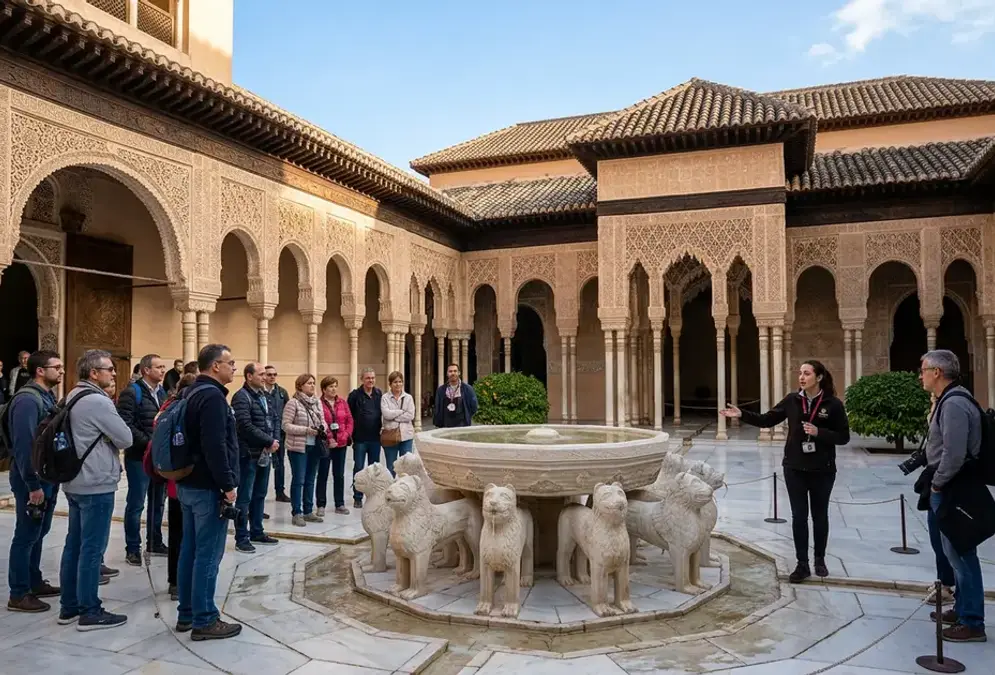
The crowd waiting to enter the Nasrid Palaces is the most concentrated group of tourists in Granada. It is also where pickpockets work most actively. Before you join the queue, move wallet and phone to front pockets, zip your bag fully, and wear the strap across your body rather than over one shoulder. The waiting time is 10-20 minutes, long enough for someone to work through the crowd twice. This is the one spot where the risk is genuinely elevated.
Local custom

Distraction scammers target Plaza Nueva and Cathedral steps

Two places where distraction routines are most likely: Plaza Nueva (near the taxi rank and the base of the Alhambra hill) and the steps outside the Cathedral on Plaza de las Pasiegas. If someone approaches with a sprig of plant material, a petition, or an offer to read your fortune, decline with a firm no and keep walking. The approach itself is the distraction; a second person is often already near your bag. This is not specific to Granada; it operates across all major Spanish cities.

Money tip

Carry one card, not all of them

Granada is card-friendly. Virtually every bar, restaurant, and museum accepts contactless payment. Leave your backup card and most cash in your hotel room. If your wallet is stolen, losing one card and €30 in cash is recoverable; losing everything is not. Most banks allow you to freeze a card via app within seconds if you notice it gone. The tourist police office in the city centre can issue a crime report (denuncia) for insurance purposes.

Best time

Sacromonte visits work best on a cueva tour

Going to Sacromonte for flamenco is perfectly safe when you book a proper cave venue. Reputable operators (Venta El Gallo, Cueva La Rocío, Zambra María la Canastera) are well-lit, have staff at the entrance, and either provide transport or have taxis waiting outside. Wandering up the hill alone after midnight looking for a spontaneous show is not advisable. Book in advance and treat the hill approach as part of the evening, not an afterthought.