Ten years in food journalism specialising in Spanish and Andalusian cuisine. Four years focused on Granada's food scene.
Updated Published
Jump to a section
⌄
Granada as an LGBTQ+ destination
Granada has a smaller and less internationally known LGBTQ+ scene than Barcelona or Madrid, but it has something those cities do not in quite the same way: a scene that is primarily local rather than tourist-facing. The University of Granada is one of Spain's largest, with around 55,000 students, and the resulting population skews young and cosmopolitan. The city's LGBTQ+ venues have operated for decades, serving a community that exists independently of tourism.
What that means in practice: the bars in the Realejo are not themed for visitors. They are places where Granada's queer community goes out, and visitors are welcome in them as guests in someone else's neighbourhood rather than consumers in a commercial district. The experience is more intimate than anything available in Spain's larger gay districts.
Granada also has the Realejo neighbourhood, the old Jewish quarter south of the Cathedral, which has evolved into the most reliably welcoming area of the city for LGBTQ+ travellers. It is not exclusively gay — the Realejo is a working neighbourhood with cafés, restaurants, and residential streets — but the concentration of LGBTQ+-friendly venues and the general atmosphere make it the natural base for any queer visit.
The Realejo: where the scene is
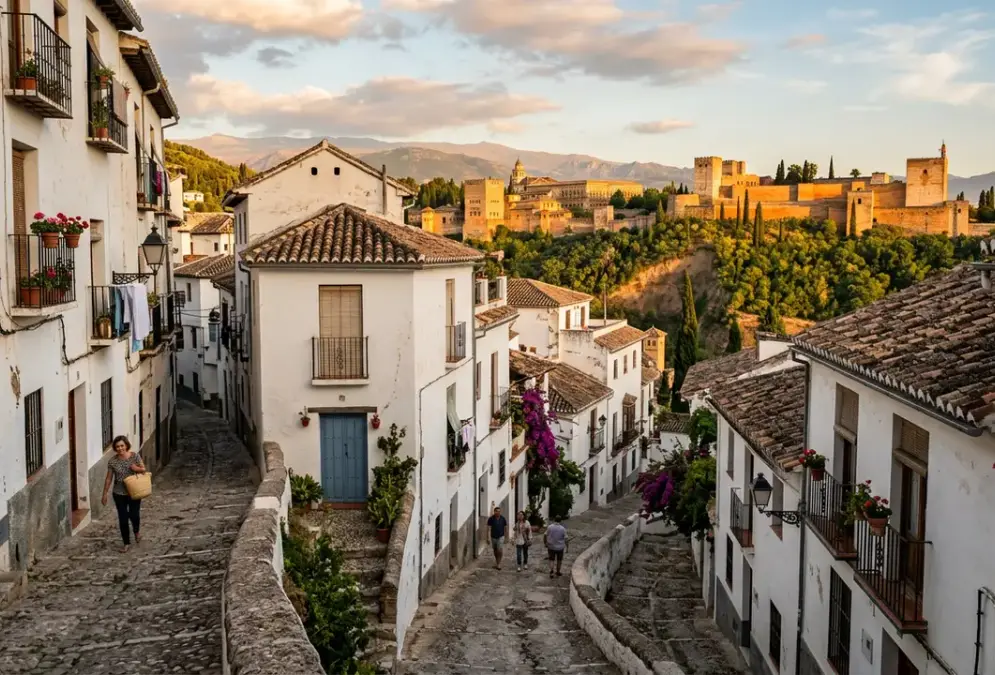
The Realejo sits between the Cathedral to the north, the Alhambra hill to the east, and Campo del Príncipe to the south. It was Granada's Jewish quarter before the expulsion of 1492 — Realejo means "royal quarter" — and has been a mixed, working neighbourhood ever since. Today it has the city's most concentrated LGBTQ+ bar scene alongside regular tapas bars, independent restaurants, and residential streets.
The neighbourhood is walkable from Plaza Nueva in 10 minutes and from the Cathedral in 5. It is not self-contained in the way that some European gay districts are: the LGBTQ+ venues are distributed among general neighbourhood streets rather than clustered on one street. Calle Horno de Haza has several of the key nightlife venues and is the closest thing to a central corridor, but the neighbourhood as a whole is the point rather than one specific street.
Daytime in the Realejo is quiet. The bars open in the evening; the neighbourhood's daytime character is more local errands and café culture than anything specifically LGBTQ+. Come in the evening for the bar scene. The Granada nightlife guide covers the broader city after dark for those who want to combine the Realejo with other areas.
Neighbouring to Hicuri Art Vegan
The Realejo is also home to Hicuri Art Vegan on Plaza de los Gironés — one of Granada's few fully vegan restaurants, known for its mural-covered walls and creative plant-based cooking. It is a good dinner option before the evening bar circuit.
LGBTQ+ bars and venues
The established venues in Granada have operated for long enough to have real histories. This is not a scene built around recent openings.
Six Colours (Seis Colores)
Cocktail bar with a mixed LGBTQ+ and straight-friendly crowd. Central Granada, accessible early in the evening. Euro-pop and mainstream music; affordable cocktails. A good starting point for the evening rather than a destination for the full night. For more central options in the same style, see our cocktail bars guide.
La Sal
The longest-established LGBTQ+ venue in Granada, with over 25 years of history. Primarily lesbian-focused, especially on Friday nights, though the crowd is mixed throughout the week. Low-lit interior, welcoming staff, local clientele. Located in the Realejo area. Friday evenings here have a community atmosphere that newer venues rarely replicate.
Pub TicTac
Gay bar on Calle Horno de Haza 19 known for drag entertainment. Shows typically begin around 12:30 to 01:00 AM and run almost every night. Good-value drinks. High-energy once the shows start. This is the venue for Granada's drag scene; nothing else in the city matches it for performance culture.
Mens Pub
Established gay bar with a local clientele. Less tourist-facing than some venues, with an established regular crowd. Located in the Realejo area.
All venues follow Spanish nightlife timing: most open around 20:00 to 22:00 but remain quiet until midnight or later. If you arrive at 21:00 expecting a full bar, you will find an empty room. The scene runs late and the useful hours are midnight to 03:00 or 04:00.
Drag shows and nightlife
Pub TicTac anchors Granada's drag scene. Shows run most nights and attract a mix of locals and visitors — drag is not a special-occasion event here but a regular part of the bar's programming. The format is bar-style rather than club-style: you are sitting or standing with a drink watching the performance in an intimate space rather than watching from a seated theatre. Shows start after midnight, which means arriving before the show starts at around 23:30 to 00:00 to get a good position.
Calle Horno de Haza as a whole has a festive atmosphere on weekend nights, with multiple bars and the sound of music crossing between venues. It is a short street and easy to navigate, with Pub TicTac as the primary destination but other options nearby if the main bar is too full.
Granada's nightlife guide covers the broader city — the Calle de Elvira bar corridor, the university district around Calle Pedro Antonio de Alarcón, and the late-night options for those who want to continue beyond the Realejo. The LGBTQ+ scene connects to the general nightlife culture; the same late-night timing applies across the city.
Orgullo Granada — Pride in late June
Orgullo Granada takes place in late June, aligned with international Pride Month. The event has grown over recent years and now includes a parade through Gran Vía de Colón and the central plazas, open-air concerts, and community gatherings across several days.
The parade is the centrepiece: floats, performers, LGBTQ+ associations from across Andalusia, and a significant turnout of local residents and visitors. The atmosphere combines celebration with political advocacy — Orgullo Granada has not lost the rights-focused dimension that some larger Pride events have diluted into pure carnival.
Practical planning: June is already high season in Granada. The combination of standard summer tourism, Alhambra visitors, and Pride weekend means hotels fill completely. The window for reasonable prices closes two to three months before the event. Check the Orgullo Granada website or Granada's tourism office for confirmed 2026 dates; exact timing shifts year to year within the last week of June.
Where to watch the parade
Gran Vía de Colón is the main parade route. For a less crowded viewpoint, position yourself at one of the cross streets leading to Plaza Isabel la Católica, where the route concentrates. Arrive 45 minutes before the scheduled start time for a clear view. The parade typically begins in late afternoon to avoid peak heat.
General atmosphere and safety
Granada is a safe city for LGBTQ+ travellers. The university population creates a social environment in which same-sex couples and queer expression are unremarkable in central areas and the Realejo. Public displays of affection between same-sex couples are common in tourist and university areas.
The standard urban precautions apply: be aware of surroundings in quiet streets late at night, keep valuables secure in crowded bar areas, and use licensed taxis or ride-hailing services (Cabify, Uber) for late-night travel rather than walking unfamiliar routes alone. These are generic safety practices for any European city at night, not LGBTQ+-specific concerns.
English is widely spoken in Realejo venues and tourist-facing bars. Spanish is still useful in more local establishments like La Sal. Basic Spanish for ordering drinks and asking for directions is enough for most interactions; Granada's hospitality industry is well-practised with international visitors.
For LGBTQ+-specific accommodation recommendations, several guesthouses in the Realejo market themselves explicitly as gay-friendly. Standard booking platforms allow filtering for LGBTQ+-welcoming properties. The best hotels in Granada guide covers accommodation options across the city, including the Realejo area.
Reporter notebook
Insider tips
Practical observations gathered the way a local journalist would keep them: short, specific, and more useful than brochure copy.
Best time
Start at Six Colours and move to Pub TicTac after midnight
Six Colours has a relaxed mixed crowd that makes it a good first stop — it opens at a reasonable hour and the drink prices are affordable. Pub TicTac on Calle Horno de Haza is where the drag shows happen, typically starting around 12:30 to 01:00 AM. The sequence of: early drinks at Six Colours, dinner in the Realejo, then Pub TicTac from midnight gives you the full range of the neighbourhood without arriving anywhere too early.
Local custom
La Sal on Fridays draws the most established crowd
La Sal has been the central lesbian venue in Granada for over 25 years. Friday nights draw a reliably local crowd — mostly residents rather than tourists, which gives the bar a different energy from places that cater primarily to visitors. If you want to meet Granada's LGBTQ+ community rather than pass through the tourist surface of it, La Sal on a Friday is the most direct way in.
Practical tip
Orgullo Granada: book accommodation two to three months ahead
Pride weekend in late June combines with high-season tourism to fill every hotel in Granada. The parade and concerts draw visitors from across Andalusia, not just local residents. If you plan to be in Granada for Orgullo, June accommodation needs to be booked well in advance — not one month, but two to three. The best-value options at any price point are gone earliest. Use hotel booking platforms to set price alerts and book as soon as the dates are confirmed.
Frequently asked questions
Is Granada gay-friendly?
Granada is generally welcoming for LGBTQ+ travellers. As a large university city — home to Universidad de Granada, one of Spain's largest universities — it has a young, mixed, progressive population. The Realejo neighbourhood has an established LGBTQ+ bar scene that has operated for decades. Same-sex couples are a visible part of city life and tourist areas. The level of acceptance is high relative to other Spanish cities of similar size.
Where is the LGBTQ+ area in Granada?
The Realejo neighbourhood is the main LGBTQ+-friendly area. It sits south of the Cathedral and Gran Vía de Colón, between the Cathedral and the Alhambra hill. The area is not exclusively gay but has the highest concentration of LGBTQ+ venues and a longstanding reputation as a welcoming neighbourhood. Calle Horno de Haza, within the Realejo, has several of the key nightlife venues. The area is walkable from central Granada in 10 to 15 minutes.
What LGBTQ+ bars are in Granada?
The main venues include Pub TicTac (Calle Horno de Haza 19, known for drag shows), La Sal (longstanding lesbian-focused bar, particularly busy on Fridays), and Six Colours / Seis Colores (cocktail bar with a mixed LGBTQ+ and straight-friendly crowd). These venues have operated for years and represent the established scene rather than new openings. Opening times follow Spanish nightlife customs: bars open around 20:00–22:00 but become busy from midnight onward.
When is Granada Pride (Orgullo Granada)?
Orgullo Granada takes place in late June, aligned with international Pride Month. The event typically includes a parade along Gran Vía de Colón and central plazas, open-air concerts, and community gatherings. Exact dates shift year to year; check with Granada's tourism office (turismo.granada.org) for confirmed 2026 dates. June is high season for Granada tourism generally — book accommodation at least two to three months ahead if you plan to attend Pride weekend.
Is Granada safe for LGBTQ+ travellers?
Granada is safe. The city has a young population shaped by decades of university life, and public displays of affection between same-sex couples are normal in the Realejo and central areas. Standard urban precautions apply — as in any European city, be aware of surroundings late at night in quieter streets. No specific LGBTQ+ safety concerns distinguish Granada from other Spanish cities of similar size and character.
Recommended Tours & Activities
Tours are selected for quality, not commission. We earn a small fee if you book — at no extra cost to you.