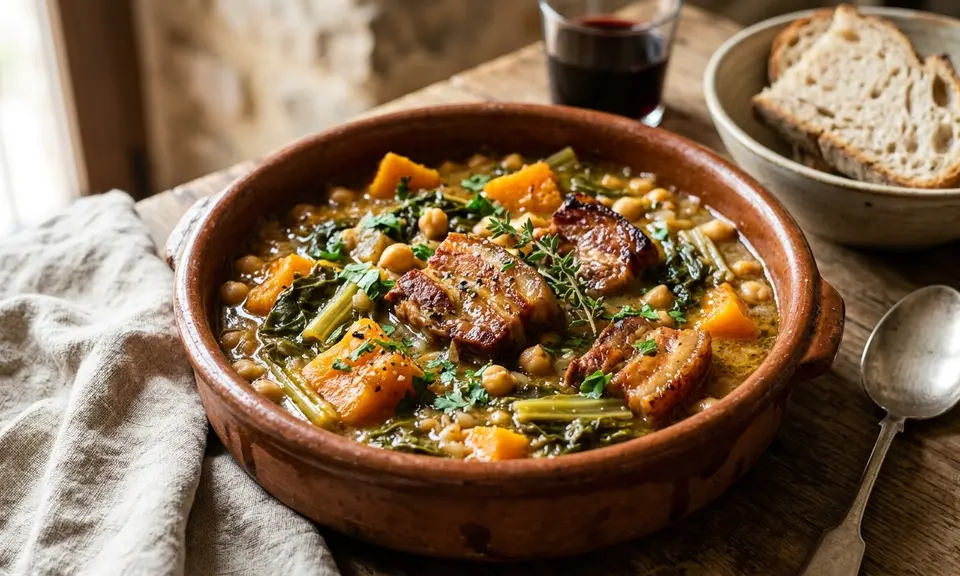
The olla granadina arrives in an earthenware cazuela, deep orange-brown from the pumpkin, with a surface that catches the light from the oil. Before you lift your spoon, you can smell the picada — ground bread and garlic fried together until golden, then stirred into the pot to thicken the broth in a way that flour never quite replicates. That detail, the picada, is what separates olla granadina from every other chickpea stew in Andalusia.
The composition is straightforward but specific. Garbanzos form the base, soaked overnight and slow-cooked until they give a little when pressed. The pork is not elegant: morcilla, chorizo, tocino, and spare ribs go in together, the fat rendering out over a long simmer. Pumpkin or butternut squash adds a gentle sweetness, chard brings a slightly bitter green note, and green beans add texture. The picada goes in toward the end, binding everything into a thick, glossy consistency that coats the back of a spoon. Some cooks add a pinch of cumin or a dried ñora pepper; those are house variations, not deviations.
Compared to puchero granadino, olla granadina is more robustly spiced and has a sweeter, earthier character from the pumpkin and chard. Puchero is quieter, built around the broth; olla is built around the body of the stew itself. They share chickpeas and pork, but the picada technique and the winter vegetables give olla a different register entirely.
History and origins
The word olla goes back to Roman clay cooking pots, and slow-cooked meat and legume stews have been part of Iberian kitchens since at least the Roman occupation of the peninsula. The specific Granada version absorbed influences from the Moorish kitchen: the combination of sweet vegetables like pumpkin with savoury pork, and the use of bread-and-garlic thickening, both point to culinary layers laid down over centuries of Nasrid and Castilian cooking in the same city.
Pumpkin cultivation in the Granada highlands intensified after the Columbian exchange brought New World varieties to Andalusia in the 16th century. By the 17th century, pumpkin was a staple winter crop in the mountain villages around Granada, and the olla absorbed it permanently. The picada technique is older, a pan-Mediterranean approach to enriching soups and stews found from Catalonia to Morocco in different forms.
The dish never became fashionable or exported. It stayed in Granada's domestic kitchen and in the tabernas that fed working families through cold months. That's part of its character: it's food that wasn't trying to impress anyone.
When and how to eat it
Olla granadina is a winter dish, October through March at the outside. Order it in May and a traditional kitchen will tell you the pumpkin isn't right and the chard is past its best. The cold matters: this is the kind of food that makes sense when the temperature drops off the Sierra Nevada at dusk and the city feels suddenly different from its summer self.
It's a one-pot main course, generous enough that a full portion is lunch done. The stew arrives hot in the cazuela, with bread alongside. There's no first course and no dessert necessary; the olla is the meal. Expect to pay €9–12 in a traditional taberna, more in a restaurant dressing it up.
Where to eat it in Granada
The tabernas in the old Jewish quarter are the most reliable for olla granadina. Realejo is Granada's old Jewish quarter, a residential district without much tourist traffic, and the bars there cook what locals actually eat. Walk south from the cathedral, past the Calle Santiago, and look for chalked boards or handwritten menus in the window.
In the city centre, the bars near the Mercado San Agustín sometimes carry it as a weekday special in winter. Ask when you arrive whether they have it: '¿Tienen olla granadina hoy?' If the answer involves any uncertainty, it's probably not worth the risk.
Any restaurant advertising cocina tradicional granadina is a reasonable bet. What you want to verify is that they're making it from scratch rather than from a jar: the texture of the broth, whether it has that opacity from the picada, is the tell.
Practical notes
Olla granadina contains pork in multiple forms and is not suitable for vegetarians. The picada is made from bread, so the dish contains gluten. It's naturally dairy-free. If you're avoiding gluten, ask whether a bar uses a different thickening approach, though most traditional versions use bread-based picada.
For other Granada dishes built around slow-cooked legumes and pork, habas con jamón is the spring counterpart and the mountain mixed-grill plate is the mountain platter version of the same larder logic. Both share olla's preference for real pork over generic cuts. Morcilla de Granada, the province's own spiced blood sausage, is one of the pork components that goes into the pot alongside the chorizo and tocino.