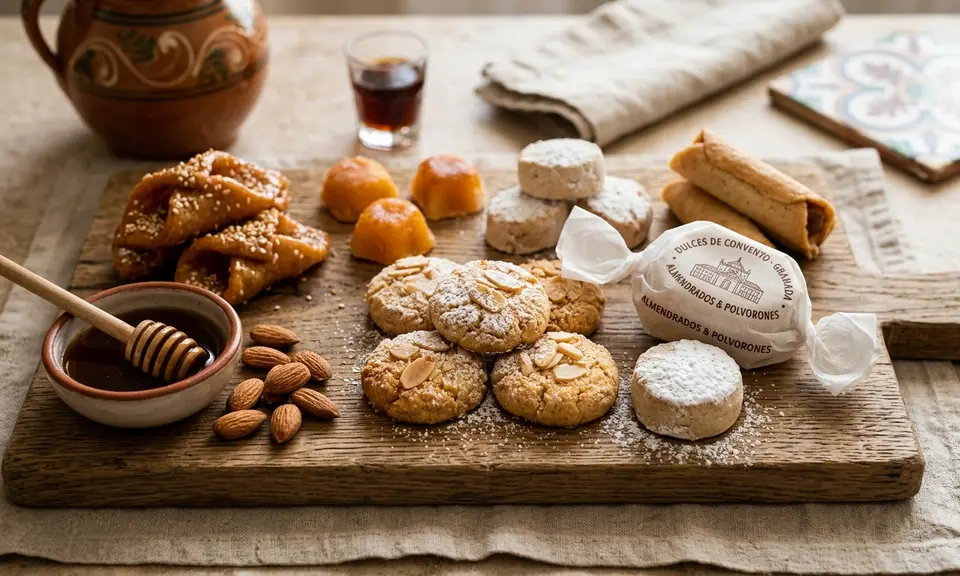
In several convents across Granada, a small wooden wheel is set into the wall at roughly waist height. You ring the bell, state what you want, leave money in the wheel, and it rotates. A wrapped package comes back. The nuns remain unseen. This is the torno, and it has been how Granada's cloistered communities have sold their sweets since the 15th century.
The sweets themselves — collectively known as dulces de convento — are among the most direct link the city has to its pre-Reconquista culinary inheritance. Almonds, honey, and sugar arrived in Andalusia with the Moors; after 1492, the nuns of the new Christian convents absorbed the recipes and kept them. What you buy from a torno today is recognisably descended from the almond confectionery that filled the souks of Moorish Granada.
The main types
The range varies by convent and by season, but the core types appear consistently:
- Almendrados: soft almond cookies, slightly chewy, with a whole blanched almond pressed into the top. The texture is closer to an amaretti than a shortbread — moist inside, lightly cracked on the surface.
- Polvorones de convento: crumbly almond shortbread that falls apart in your hand. Paler and less sweet than commercial versions, with a drier, more powdery texture. The name comes from polvo — dust — for obvious reasons.
- Roscos: ring-shaped pastries dusted in icing sugar, sometimes flavoured with anise or lemon. Lighter than the almendrados, with a slight crisp to the exterior.
- Mazapán: marzipan shaped into fruits, fish, or abstract forms. Granada's version is less sweet than Toledo's, with a higher almond-to-sugar ratio and a slightly coarser grind that lets the nut flavour through.
Some convents also make bienmesabe — the thick almond cream served cold — and seasonal specialities around Christmas and Easter.
Where to buy them
The most active convent tornos are in the old Moorish district and the area immediately around the Cathedral. The Convento de Santa Catalina de Zafra on Carrera del Darro is one of the most visited. The Convento de Santa Inés near the Cathedral cloister, and several others along Cuesta del Chapiz, are worth a detour on foot.
Hours are irregular and not posted online. Most tornos operate mid-morning (around 10:00–13:00) and mid-afternoon (16:00–19:00), but this varies by convent and by day of week. Go on a Tuesday, Wednesday or Thursday morning for the best chance of finding the torno staffed. Saturdays are possible; Sundays and feast days, the nuns are otherwise occupied.
Pastelerías in the centro — particularly López-Mezquita on Calle Reyes Católicos — sell versions of the same sweets. These are made commercially and reliably good, but lack the slight austerity of the convent originals. Convent sweets are less sweet: the nuns do not adjust for modern palates.
Seasonal peaks
Christmas brings the biggest variety: polvorones, mantecados, roscos, and marzipan nativity figures. Semana Santa (Holy Week) is the other peak — almendrados and torrijas (egg-soaked fried bread) appear in windows across the city. The rest of the year, the selection is smaller but consistent.
Prices are low by any standard: €4–8 for a bag of a dozen almendrados; €6–10 for a box of mixed sweets. Cash only at the torno. Pastelerías accept cards.
Practical details
Allergens: all convent sweets contain tree nuts (almonds). Polvorones and roscos contain gluten (wheat flour). Almendrados may or may not contain flour depending on the recipe — some are flourless and naturally gluten-free, but ask before assuming. Mazapán is typically just almonds and sugar, making it gluten-free.
These sweets pair with mint tea at an Albaicín tetería, with strong black coffee in a city-centre café, or with a small glass of sweet sherry. See pionono for Granada's other great almond-and-sugar tradition, and bienmesabe granadino for the cream version of the same convent heritage.
The convent kitchens themselves sit in the same Albaicín and Realejo streets where carne en salsa granadina still simmers on Sunday menus — dessert and main course from the same neighbourhood tradition.