The barrel-lined room off Plaza Nueva
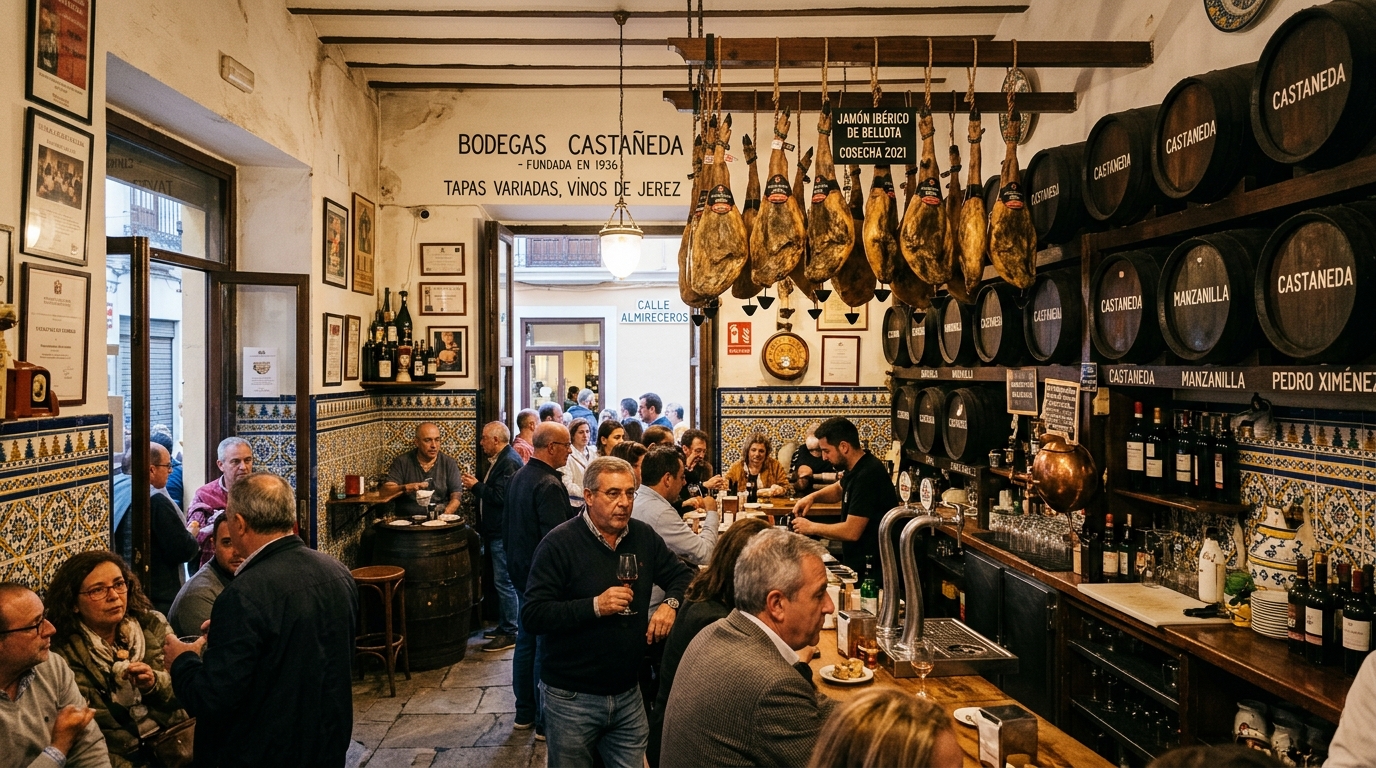
Bodegas Castañeda sits on Calle Almireceros, one block from Plaza Nueva toward the Albaicín. From the outside, the signage is minimal; from the inside, the room tells you immediately what you are dealing with: wooden barrels stacked floor to ceiling, azulejo tilework, hams hanging above the bar, the smell of wine and cured meat that you do not get in newly opened places because it takes decades to embed itself in the walls.
The bar opened in the early 20th century. One hundred-plus years of the same trade in the same space accumulates a particular kind of atmosphere that cannot be manufactured or recreated. Granada has other bodegas. None of them has this one's particular combination of age, consistency, and central location.
Calicasas and the house wine tradition
The calicasas is Bodegas Castañeda's own wine blend, available by the glass or carafe. It is a red wine blended in-house, not a single-estate wine, and it is not designed to compete with anything on the Granada wine list. It is designed to go with food and to be the correct thing to order when you are standing at the bar at a bodega that has been making its own blend since before you were born.
There are also sherries, vermouths, and local wines from the Alpujarras on the list. The bodega has never pretended to be a wine bar in the contemporary sense. It is a bar that takes its wine seriously without making it the performance.
Free tapas and the charcuterie boards
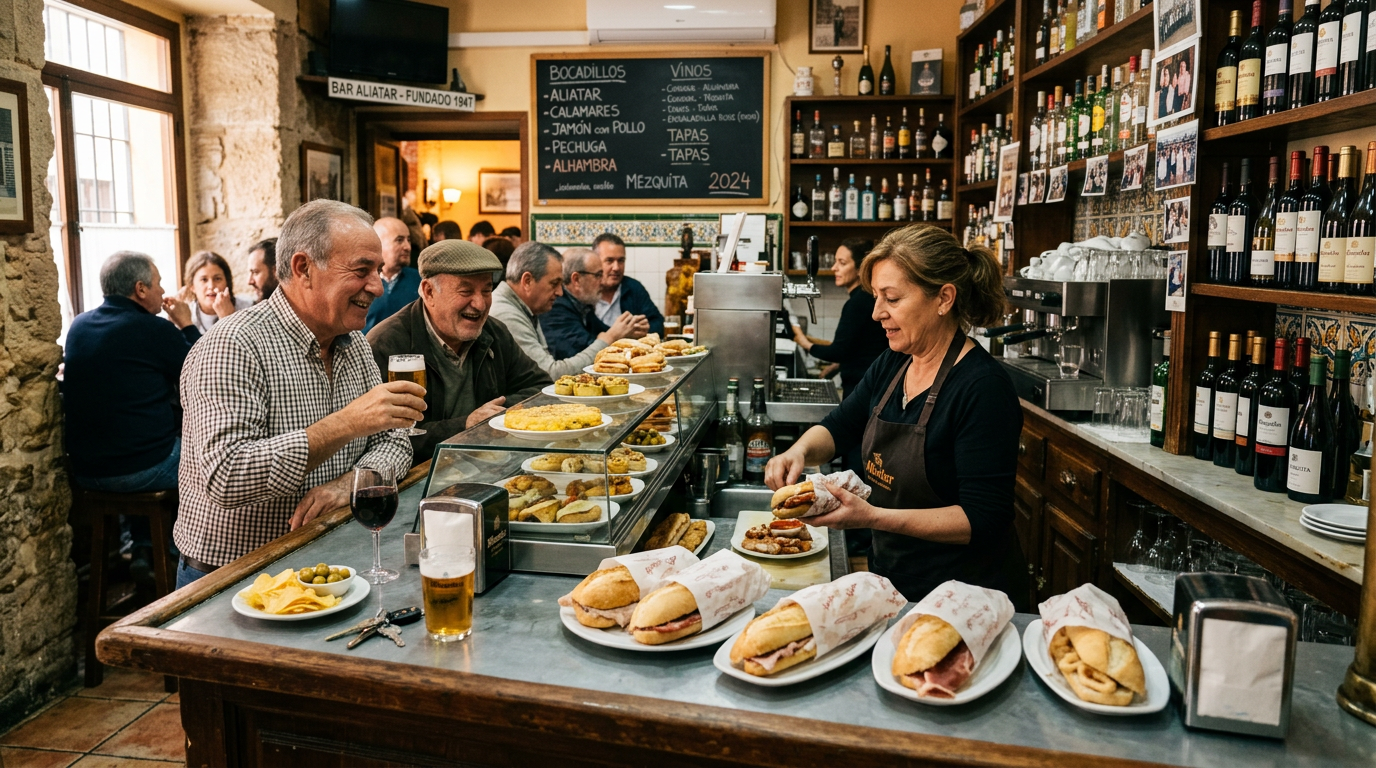
Granada is famous for the free tapas tradition: every drink comes with a complimentary tapa, rotating daily, served without being asked for. Bodegas Castañeda participates in this tradition with more commitment than most. The tapas are not bowl of chips and an olive. On a good day they are a mini stew, a rice dish, a ración of something cooked that morning. The quality rotates.
For something you choose yourself, the charcuterie and cheese boards (tablas) are the house speciality. The cured meats are sourced properly — jamón ibérico, cecina, lomo, chorizo — and the board is served cold with bread and a carafe of whatever wine you are drinking. It is not complicated. That is the point.
For a specifically Granadan context, a board with jamón de Trevélez — cured in the mountain villages of the Sierra Nevada south of the city — is available at the counter if you ask.
Who goes there
The mix is genuinely varied: local residents who have been coming for thirty years, visitors who read that this is the place to go, students from the nearby university, workers on lunch break. The bar is large enough that it absorbs all of them without feeling overcrowded on most days. On Friday evenings in summer it fills up, and the queue at the bar can be six deep.
The location — a block from the most central square in the city, but on a side street — means it has never fully surrendered to the tourist trade. There are English-language menus and staff who can help in multiple languages, but the bar is not performing itself for visitors.
Hours and logistics
The bodega opens at 11:30 for lunch service through the afternoon, closes briefly, then reopens in the evening until well past midnight. No reservations for the bar; tables in the rear room can sometimes be booked. Walk in, find a position at the bar or a table if one is free, and order.