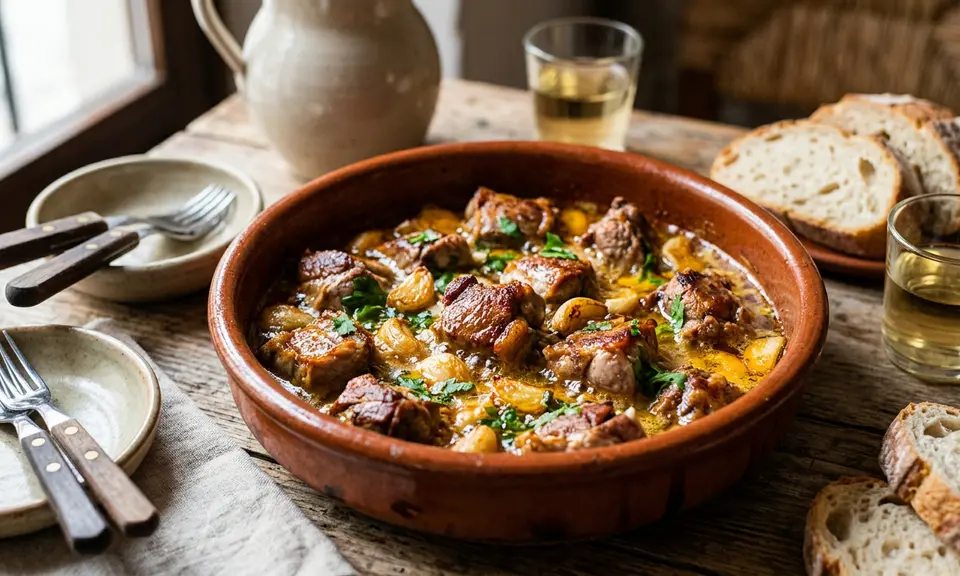
The first thing you notice when choto al ajillo arrives at the table is the smell: garlic that has cooked long enough to lose its sharpness and turn sweet, pooled in golden oil with white wine. The dish is not elegant to look at. The kid goat pieces sit in a terracotta cazuela, pale brown and swimming in sauce, some still on the bone. Then you taste it, and the whole thing makes sense.
Choto is the Spanish word for a suckling kid goat, usually under three months old and still fed on its mother's milk. The meat is lighter than lamb, less fatty than adult goat, with a clean, mild flavour that takes garlic and wine without being overwhelmed. This is its best use: slow-cooked in a cazuela until the meat falls from the bone and the garlic has dissolved into the sauce.
How it is cooked
The method is simple and the execution takes patience. The choto pieces are browned in extra virgin olive oil until golden, then set aside. Into the same oil goes a full head of garlic, sometimes more: twenty cloves is not unusual, left whole or roughly crushed. The meat returns to the pot with a splash of dry white wine, a bay leaf, a few sprigs of thyme, and salt. The lid goes on and it cooks over low heat for 60 to 90 minutes.
The garlic doesn't stay harsh. After an hour of slow heat it mellows completely, turning soft and almost sweet. The wine reduces, the pan juices concentrate, and the result is a thick, golden sauce that coats the meat and pools around it. You eat it with bread. The bread is not optional.
Some kitchens add a pinch of black pepper or a splash of manzanilla sherry towards the end. A few Alpujarras versions include dried thyme from the mountainside rather than fresh. The core never changes: fat, garlic, wine, kid goat.
Origins in the Alpujarras
Choto al ajillo comes from the mountain villages on the southern slopes of the Sierra Nevada: the Alpujarras. After 1492, when the Moorish population was resettled in the highlands, the villages of this range, from Lanjarón in the west to Ugíjar in the east, developed around subsistence farming. Goats were the primary livestock. They handled the steep terrain, provided milk and cheese, and their young made the most ceremonial meat available in communities with no cattle and little game.
Choto al ajillo was the celebratory version. It was killed and cooked for Easter, weddings, and baptisms: occasions that justified using the youngest and most tender animal. The garlic and wine were storecupboard ingredients; the technique required nothing beyond a clay pot and a slow fire.
The dish belongs to the same mountain tradition as the plato alpujarreño platter, which consolidates the Alpujarras larder into a single platter. Choto al ajillo is more specific: a single animal, a single occasion, a single technique that the villages have not changed.
When to eat it
You can find it year-round in Granada, but the dish carries a seasonal logic. Easter and spring are when it appears most naturally: kid goats born in late winter reach slaughter weight just as Holy Week arrives, which is why choto al ajillo has been the traditional Easter Sunday dish across Andalusia for generations. In Granada, the Alpujarras villages still keep this rhythm.
In the city, the restaurants that do it properly serve it as a weekend special or a set lunch main course. It's heavier than most Andalusian food; order it at midday rather than late at night, when a full cazuela of braised goat makes less sense.
Where to find it in Granada
The historic hillside quarter has several tabernas that rotate choto al ajillo through their menus in spring and autumn. Look for handwritten boards or chalk specials above the bar, which usually mean the kitchen is cooking to season rather than a fixed laminated menu.
A handful of restaurants in the city centre near the Mercado de San Agustín also serve it, particularly those that market themselves around mountain food or Alpujarras produce. For the most complete version, the villages themselves are worth the bus ride: Pampaneira, Capileira, and Trevélez all have bars that serve choto al ajillo when the season is right.
If you are choosing between choto al ajillo and carne en salsa granadina, the difference is this: the carne is a Moorish-spiced stew with almonds and paprika, warm and complex; the choto is garlic and wine, clean and direct. Both are worth ordering, but not on the same day.
At home
Brown the choto pieces in olive oil in batches, then remove. Add 20 whole garlic cloves to the same oil and let them colour gently for three minutes. Return the meat, pour over a glass of dry white wine, add a bay leaf and thyme. Cover and cook on the lowest heat your stove can manage for 75 to 90 minutes, turning the pieces once. The sauce should be golden and reduced but not dry. Season with salt at the end, not the beginning.
The same Sierra Nevada larder shows up in puchero granadino, the winter chickpea stew, and in habas con jamón, the spring broad-bean dish that trades choto's whole head of garlic for a lighter hand with Trevélez ham.